Let me ask you something.
When was the last time you needed a plumber, a dentist, or a decent restaurant and just… drove around hoping to find one?
You didn't. You picked up your phone and searched. Your customers are doing the exact same thing - right now, at this very moment — to find businesses like yours.
That's exactly what local SEO is about. And if your business isn't showing up when they search, someone else is getting that call, that booking, and that sale.
This guide breaks down local SEO services in plain English - what they are, what's actually included, how much you should expect to pay, and how to tell if someone's worth hiring or just wasting your money. No jargon, no filler.
1. What Is Local SEO — And Why Should You Care?
Local SEO (Search Engine Optimization) is the process of making your business show up when someone nearby searches for what you offer.
Think: "emergency electrician Chicago," "best sushi near me," or "dog groomer open Saturday."
It's different from regular SEO, which tries to rank nationally or globally. Local SEO is neighborhood-level stuff — getting you in front of people who are ready to buy and are physically close enough to actually visit or call you.
The numbers back this up in a big way.
98% of consumers now search online to find local businesses — up from 90% in 2019. And it's not passive browsing. 76% of consumers who search for "near me" visit a business within a day.
Let that sink in. Three-quarters of people who do a "near me" search walk through someone's door within 24 hours.
Every single day, 50 million people conduct "near me" searches. And 28% of those local searches result in a purchase within 24 hours.
So no, local SEO isn't a "nice to have." For any business that serves a local area — whether you're a contractor, a dental clinic, a restaurant, or a law firm — it's one of the highest-ROI marketing activities you can invest in.
Yet here's what's wild: 58% of companies still don't optimize for local search, and merely 30% have an actual plan to capitalize on high-converting local traffic.
That's your window.
2. How Local Search Actually Works (The 3-Pack Explained)
When someone searches for a local business on Google, they don't just see a list of websites. They see something more powerful — and something you absolutely need to be in.
The Google Map Pack (The "3-Pack")
At the top of local search results, Google shows a map with three business listings. This is called the Local 3-Pack or Map Pack. It shows your business name, star rating, address, phone number, hours, and a link to your website or directions.
42% of searchers click on Google Map Pack results for local queries. That's nearly half of all clicks going to just three listings. If you're not one of those three, you're essentially invisible to a massive chunk of your potential customers.
Getting into the 3-Pack comes down to three things Google weighs:
- Relevance — How well your business matches what the person is searching for
- Distance — How close you are to the searcher's location
- Prominence — How well-known, trusted, and active your business appears to be online
Local Organic Results
Just below the map, there are also traditional blue-link website results. These are called local organic results. They tend to attract people who are doing a bit more research before committing — comparing options, checking reviews, reading service pages.
You want to rank in both places — the Map Pack and the organic results. The businesses that do both dominate their local market.
AI Overviews — The New Variable
There's a new player in local search you can't ignore. 40.16% of local business queries now trigger Google's AI Overviews, significantly impacting traditional organic click-through rates.
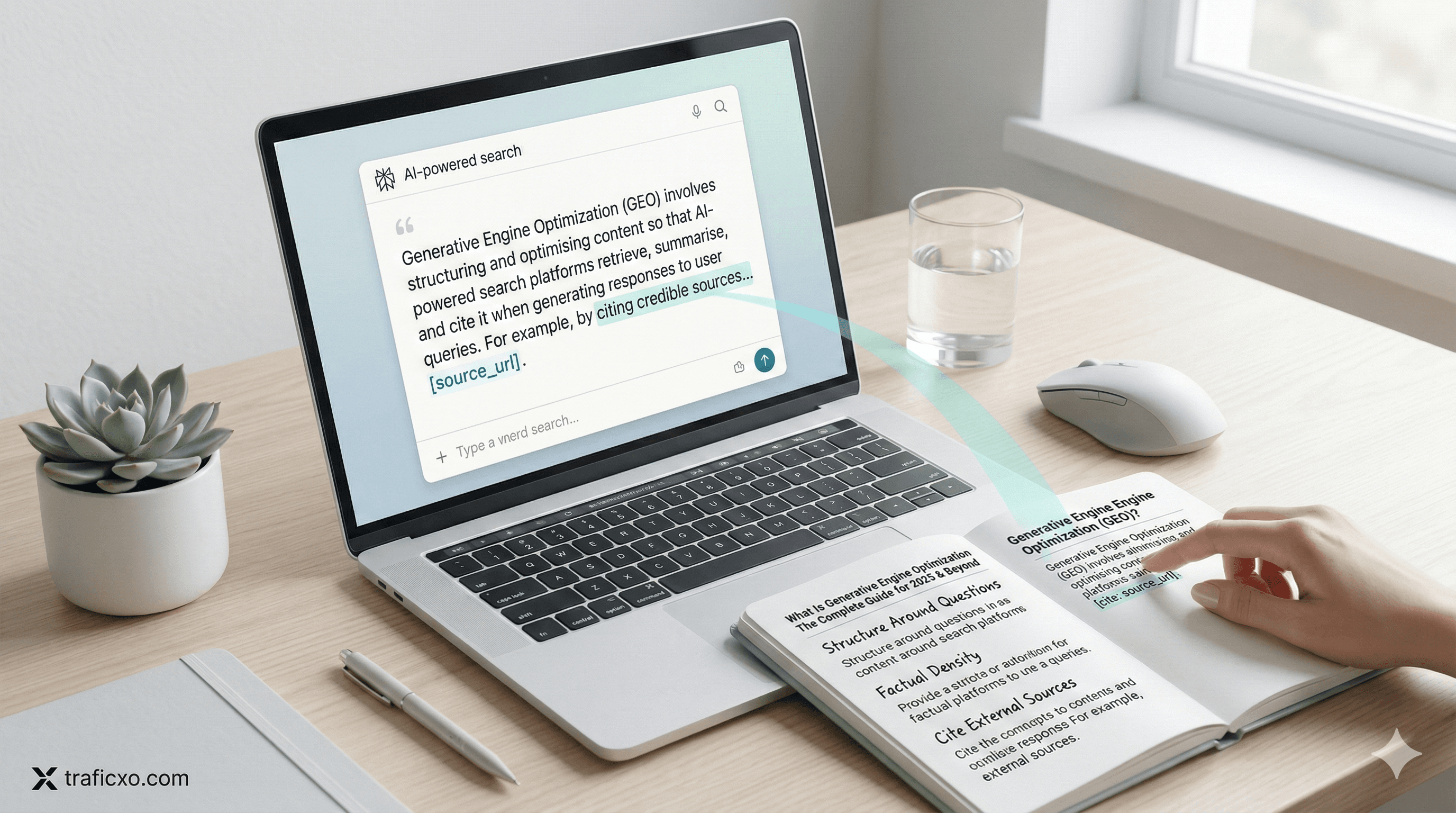
This means Google is increasingly answering search questions directly on the results page using AI-generated summaries. Getting your business cited in those answers — a practice now called Generative Engine Optimization (GEO) — is becoming part of a complete local SEO strategy in 2026.
3. What Local SEO Services Actually Include
Most agencies bundle local SEO into packages, but not all of them include the same things. Here's a breakdown of what good local SEO services should cover:
Google Business Profile (GBP) Optimization
This is the foundation of everything. Your Google Business Profile is the free listing that appears in the Map Pack and on Google Maps. A fully optimized GBP is the single most impactful thing you can do for local visibility.
Customers are 70% more likely to visit and 50% more likely to consider purchasing from businesses with a complete Business Profile.
Optimization includes:
- Accurate business name, address, phone number, and hours
- Choosing the right primary and secondary business categories
- Writing a keyword-rich (but natural-sounding) business description
- Uploading high-quality photos and videos regularly
- Publishing Google Posts (promotions, updates, events)
- Setting up the Q&A section with common questions
- Monitoring and responding to reviews
According to marketers, the most valuable local SEO service is Google Business Profile management, cited by 76% of professionals. Your GBP isn't a "set it and forget it" thing — it needs consistent attention.
Local Keyword Research
Before any content gets written or any page gets optimized, a good local SEO service starts with research. Which search terms are people in your area actually using? What do they type when they need what you offer?
This isn't just "dentist" — it's "emergency dentist near me," "dental implants [city name]," or "affordable dentist open Sunday [neighborhood]." The specificity is what drives qualified traffic.
On-Page Optimization
This is the work done directly on your website to signal to Google where you are and what you do. It includes:
- Adding your city/region to page titles, headings, and meta descriptions
- Creating dedicated service area pages for each location you serve
- Writing local content that speaks to your specific community
- Embedding a Google Map on your contact or location page
- Adding your NAP (Name, Address, Phone Number) in consistent text format
Citation Building and Management
A citation is any online mention of your business name, address, and phone number — on directories like Yelp, Yellow Pages, Apple Maps, Bing Places, industry-specific directories, and more.
Accurate and consistent NAP information is critical across every listing — Yelp, Bing Places, Apple Maps, and local business directories. Inaccurate or mismatched data dilutes trust and can hurt rankings.
Good citation management means building new listings in the right directories AND cleaning up incorrect or duplicate information that already exists.
Review Strategy and Reputation Management
Reviews aren't just about making you look good — they're a direct ranking factor.
67% of consumers 'often' or 'always' look at business reviews after conducting a local business search. And 71% of customers say they usually skip over brands that have less than a 3-star average rating.
A proper review strategy includes:
- A systematic process for asking every satisfied customer to leave a review
- Monitoring reviews across Google, Yelp, Facebook, and industry platforms
- Responding to every review — positive and negative — professionally
- Integrating review feeds on your website for added social proof
One underrated stat here: 88% of consumers said they would use a business that replies to all of its reviews, with only 47% who would go to a business that didn't reply. Responding to reviews isn't just good manners — it literally influences whether people choose you.
Local Link Building
Getting other local websites — news outlets, community organizations, local blogs, business associations — to link back to your site signals authority to Google.
Citation and backlink strategies in 2026 demand a strategic, quality-focused approach. Gone are the days when you could simply spam citations and backlinks to build authority and increase rankings.
Good local link building in 2026 includes sponsoring local events, getting mentioned in local press, partnering with complementary businesses, and joining local chambers of commerce.
Technical SEO
The behind-the-scenes stuff that makes sure Google can actually crawl and understand your site. This includes:
- Mobile-friendliness (non-negotiable — most local searches happen on phones)
- Page speed optimization
- Schema markup (structured data that helps Google display rich snippets)
- Fixing broken links and crawl errors
Local Content Creation
Blog posts, service area pages, FAQs, neighborhood guides — content that speaks directly to your local audience and the questions they actually have. This is how you attract organic search traffic beyond just the Map Pack.
Reporting and Tracking
Any legitimate local SEO service will send you regular reports showing what's moving — your keyword rankings, website traffic, phone calls from Google, map pack visibility, and more. Without this, you have no way of knowing if your investment is working.
4. Local SEO Ranking Factors That Matter in 2026
Not all efforts carry equal weight. Here's where the biggest ranking signals sit right now, based on the most recent industry research.
For the Map Pack:
According to surveyed marketers, the most impactful ranking factors on Google's local pack include the primary Google Business Profile category, keywords in the Google Business Profile title, and the proximity of address to the point of search.
In plain terms:
- Your GBP category — Choose carefully. Your primary category is one of the most powerful signals you have.
- Reviews — Volume, recency, and your response rate all matter.
- Proximity — You can't control where the searcher is standing. But you can make sure your address is correctly listed.
- Activity — Businesses that regularly post updates, add photos, and engage on GBP rank better than inactive ones.
For Local Organic Results:
Local organic rankings are most influenced by: dedicated pages for each service, geographic keyword relevance of content, and quality/authority of inbound links.
What this means practically: you need separate pages for each service you offer, those pages should mention your location naturally, and other reputable sites should link to you.
5. How Much Do Local SEO Services Cost?
This is the question everyone wants answered, and it's also one of the most frustrating ones because the range is so wide.
Here's the honest breakdown.
Monthly Retainer (Most Common Model)
Most small businesses should expect to invest between $1,500 to $5,000 per month for effective local SEO services.
But not every business needs the same level of investment:
- Small local shops (low competition): $300–$800/month
- Medium businesses competing regionally: $800–$1,500/month
- Competitive niches (law, healthcare, finance): $1,500–$5,000+/month
Insurance and law firms need to invest 30–50% more than less competitive niches simply because the competition is stiffer and the rewards per customer are higher.
Hourly Consulting
The average hourly rate for local SEO services in the USA is $128. This model works well for one-time audits, specific technical fixes, or strategy sessions rather than ongoing campaigns.
Project-Based Pricing
For a defined scope of work — say, a full GBP setup, initial citation building, and a local SEO audit — agencies often charge a flat project fee. This typically ranges from $500 to $3,000+ depending on what's involved.
What Makes the Price Go Up?
Several things push your local SEO cost higher:
- Industry competition — A roofer in a small town pays less than a personal injury attorney in Los Angeles.
- Number of locations — Each location needs its own GBP, citations, and potentially its own landing page.
- Current website condition — If your site needs major technical work, that adds to the budget.
- How aggressive you want to be — Faster results require more resources.
A Caution on Cheap Packages
In 2026, spammy or automated tactics can quickly trigger algorithm penalties and waste your entire budget — or worse, cause lasting damage to your site's reputation with search engines.
If someone offers "full local SEO" for $99/month, ask yourself: what corners are they cutting? Legitimate SEO takes real human time and effort. You don't always get what you pay for in SEO, but you almost always get what you deserve for what you don't pay.
6. DIY vs. Hiring a Local SEO Agency
Some business owners successfully manage their own local SEO, especially in low-competition areas. Others hand it over to a professional and never look back. Here's how to think about it.
When DIY Makes Sense
- You have more time than budget right now
- Your local competition is low (small town, niche industry)
- You're in the early stages and just need the basics done
- You're willing to learn and stay updated on changes
The basics — claiming and optimizing your GBP, building consistent citations, asking customers for reviews — can genuinely be handled without an agency if you're committed.
When Hiring Professionals Makes More Sense
- You're in a competitive market
- You've tried DIY and your rankings haven't moved
- Your time is worth more spent on running your business
- You need results within a reasonable timeframe
Competent local SEO companies can provide the expertise and resources needed to effectively implement these strategies. Plus, they stay updated on the latest SEO trends and algorithm changes so you don't need to.
The real question isn't just "can I do this myself?" — it's "what's the opportunity cost of not having this done professionally while I try to figure it out?"
7. Red Flags to Avoid When Hiring a Local SEO Company
The local SEO space has more than its fair share of shady operators. Before you sign anything, watch out for these warning signs.
Guaranteed #1 rankings — No legitimate SEO professional can promise a specific ranking. Anyone who does is either lying or planning to use tactics that could eventually get your site penalized.
Suspiciously low pricing — If the price seems impossible, the work probably is too. Real local SEO work involves real human time.
No reporting or transparency — If they can't show you exactly what they're doing and what results it's producing, that's a problem.
Vague deliverables — "We'll do SEO work on your site" isn't a deliverable. Good agencies give you a clear scope: how many citations, what content is being created, what technical items are being addressed.
Keyword stuffing your business name — Google only permits your legal business name, with no exceptions. Adding keywords or location names to your business name artificially violates Google's anti-spam policies, and Google actively penalizes businesses that engage in name manipulation.
No case studies or verifiable client results — Ask to see real examples of businesses they've helped rank locally.
8. How Long Does Local SEO Take to Work?
Honest answer: it depends. But here are realistic expectations.
Month 1–2: Foundation work — GBP optimization, citation cleanup, on-page fixes. You won't see dramatic ranking changes yet, but the groundwork matters.
Month 3–4: You might start seeing early movement in rankings, especially for less competitive terms. GBP visibility often improves faster than organic.
Month 4–6: Most businesses with a solid strategy start seeing meaningful results here. More calls, more map pack appearances, more website traffic from local searches.
6–12+ months: The compounding effect kicks in. Reviews build up, content gains authority, backlinks accumulate. This is where the real ROI shows up.
Most businesses see meaningful results in 4–6 months with proper local SEO implementation. But the businesses that stick with it past a year consistently outperform the ones who quit early.
A critical mindset shift: local SEO isn't advertising. Advertising stops working the moment you stop paying. SEO compounds. The work you do today keeps paying dividends for years.
9. How to Measure If Your Local SEO Is Working
Rankings are just one metric. Here's what you should actually be tracking:
GBP Insights
- How many people searched for your business (direct searches)
- How many discovered you via a category or keyword search (discovery searches)
- How many clicked for directions, called your number, or visited your website
- How many requested appointments
Website Analytics
- Organic traffic from local searches
- Which pages are getting local traffic
- Bounce rates on location pages (high bounce = something's off)
Phone Call Tracking
- How many calls came from Google vs. your website vs. directories
Keyword Rankings
- Your position in the Map Pack for target keywords
- Your organic rank for local service pages
- Use tools like BrightLocal or Google Search Console to track these
Review Growth
- Total review count month over month
- Average star rating trend
- Response rate (you should be at 100%)
The top five local SEO metrics that marketers consider most important are rankings in the Google Local Pack (52%), new leads and enquiries (42%), and Google organic rankings (41%).
10. Local SEO for Different Business Types
Not all businesses use local SEO the same way. Here's how it breaks down by type.
Brick-and-Mortar with Physical Address
Restaurants, retail shops, salons, gyms — if customers come to you, showing your verified address is a significant ranking advantage. Your proximity to searchers is a direct signal. Focus heavily on your GBP, photos, reviews, and local content.
Service-Area Businesses (No Storefront)
Plumbers, electricians, landscapers, cleaners — you go to your customers. Google allows you to hide your home address and instead show your service areas. You'll still create a GBP, but your strategy shifts toward serving a wider radius with service area pages for each city or neighborhood you cover.
Multi-Location Businesses
Each location needs its own GBP, its own dedicated landing page, and its own citation profile. The more consistent you are across locations, the better. Each location will need its own unique address and phone number, and landing pages.
Professional Services (Lawyers, Doctors, Accountants)
These industries are highly competitive and often heavily regulated. They also have one of the highest customer lifetime values, which makes local SEO ROI particularly strong. Budget more, expect a longer runway, and make sure your content meets Google's E-E-A-T standards (Experience, Expertise, Authoritativeness, Trustworthiness).
11. The Biggest Gaps Most Businesses Miss
After analyzing what's currently ranking for "local seo services" in the US, most articles cover the basics reasonably well. But they consistently miss these points that make the biggest real-world difference:
The Social-Search Gap Nobody Talks About
37% of US consumers use Instagram to find local business reviews, and 29% use TikTok as alternative local business review platforms. Among 18–24 year olds specifically, 67% use Instagram for local searches and 62% use TikTok.
If your customers skew younger and you're only optimizing for Google, you're missing a generation that's already shopping differently. Local SEO in 2026 includes your presence on social platforms, not just traditional search engines.
Responding to Reviews Is Itself a Ranking Signal
Most businesses know they need reviews. Fewer know that responding to those reviews is also a ranking factor. Google tracks engagement. Businesses that actively respond to reviews are demonstrating to both Google and future customers that they're attentive and trustworthy.
Voice Search Is Already Here — Most Businesses Aren't Ready
72% of consumers use voice assistants to search for local businesses, and 76% of voice searches are related to "near me" and local inquiries.
Voice searches are conversational. Nobody says "dentist Chicago" to Siri — they say "Hey Siri, find me a dentist near me that's open on Saturday." Your content and GBP need to answer those natural language questions directly. A dedicated FAQ section on your website and GBP is one of the best ways to capture voice search traffic.
Your GBP Posts Are Free Marketing You're Ignoring
Most businesses claim their GBP and then leave it completely static. But Google rewards activity. Regular posts — whether it's a weekly offer, a new service announcement, a seasonal promotion, or a behind-the-scenes update — signal that your business is active and engaged. It's free, it takes 10 minutes a week, and almost nobody does it consistently.
The Wrong Business Category Can Tank Your Rankings
Your primary GBP category is one of the single most important ranking factors in the Map Pack. Many businesses choose something generic ("Business") or slightly off ("Home Services" instead of "Plumber"). Take the time to research what category your highest-ranking local competitors are using. That one change alone has moved businesses from Page 3 into the top 3.
Not All Citations Are Equal
Submitting your business to 200 random directories isn't a strategy — it's noise. The modern approach is to handpick high-quality, locally-relevant citations rather than spamming directories. Focus on Yelp, Apple Maps, Bing Places, your industry-specific directories (like Healthgrades for healthcare or Avvo for lawyers), and your local Chamber of Commerce.
Conclusion
Local SEO isn't a mystery and it isn't magic. It's a set of consistent, practical actions that make your business more visible, more trusted, and more accessible to people who are already looking for what you offer.
The businesses winning at local search in 2026 aren't necessarily the biggest or the best-funded. They're the ones who show up consistently — keeping their profiles updated, earning reviews, creating useful local content, and building their reputation online the same way they'd build it in person.
Start with the foundations: your Google Business Profile, your NAP consistency, and your review strategy. Get those right, and you'll already be ahead of more than half your competition who haven't bothered.
Then, as you're ready to go deeper — or if you want to move faster than your competition — bring in professionals who can do the technical work, build the right links, and track the right metrics.
Either way, don't wait. Every month you spend without a local SEO strategy is another month that your competitors are getting the calls that should have been yours.
Ready to Scale Your Brand?
Transform your digital presence into a revenue-generating machine. Our expert team combines high-impact SEO, targeted paid ads, and creative video storytelling to drive real growth for your business.
Explore Our SEO Services