TL;DR — Generative Engine Optimization (GEO) is the practice of optimizing your content so that AI-powered platforms — ChatGPT, Perplexity, Google AI Overviews, Gemini, and Copilot — select it as a cited source when answering user queries. As AI-referred traffic surged 527% in the first half of 2025, GEO is no longer optional. This guide explains what GEO is, why it matters, how it differs from traditional SEO, and exactly how to implement it.
Something changed in how people search — and most marketers haven't caught up yet.
When a potential customer types "best CRM for startups" into Google today, they don't always get a list of ten blue links. Increasingly, they get a single AI-generated paragraph at the top of the page, synthesising recommendations from multiple sources, and citing two or three websites that informed the answer. If your site isn't one of those cited sources, you are invisible — even if you rank #1 in the traditional results below.
This is the new reality of search. And it has a name: Generative Engine Optimization, or GEO.
This guide will give you a complete, up-to-date understanding of what GEO is, the academic research behind it, how it differs from traditional SEO and Answer Engine Optimization (AEO), and a step-by-step framework you can apply today to make your content a source AI engines consistently cite.
1. The Search Landscape Has Fundamentally Shifted
To understand why GEO matters, you first need to appreciate the scale of change happening in how people find information online.
|
Metric |
Data Point |
|
Google AI Overviews monthly users |
2+ billion (2025) |
|
ChatGPT weekly active users |
800 million (2025) |
|
AI-referred traffic growth (H1 2025) |
+527% year-over-year |
|
AI Overview query coverage |
13.14% of all Google searches |
|
Organic CTR drop when AI Overview appears |
−34.5% for top-ranking pages |
|
AI-referred visitor conversion rate vs organic |
4.4× higher conversion rate |
|
Traditional search volume predicted drop by 2026 |
−25% (Gartner) |
The story those numbers tell is stark: traditional SEO is still important, but it is no longer sufficient. An enormous and fast-growing share of user queries are now answered directly by AI — no click required. The businesses that appear inside those AI answers are the ones building authority, trust, and ultimately revenue in this new environment.
"It's no longer just about click-through rates; it's about reference rates — how often your brand or content is cited or used as a source in model-generated answers." — Andreessen Horowitz (a16z), 2025
2. What Is Generative Engine Optimization (GEO)? — A Clear Definition
Generative Engine Optimization (GEO) is the discipline of structuring and optimising your content so that AI-powered search platforms retrieve it, summarise it, and cite it when generating responses to user queries.
The term was formally introduced in a landmark 2024 paper by researchers at Princeton University, Georgia Tech, the Allen Institute for AI, and IIT Delhi, presented at the ACM SIGKDD Conference on Knowledge Discovery and Data Mining. Their study — titled simply "GEO: Generative Engine Optimization" — was the first systematic academic framework for understanding how content creators can improve their visibility specifically within generative AI engines.
Key definition: GEO = optimising for when and how AI engines cite your content, rather than just where your page ranks in a list of blue links.
Where traditional SEO asks "How do I rank higher?", GEO asks "How do I become the source AI uses to answer this question?" These are meaningfully different goals requiring meaningfully different strategies.
Which Platforms Does GEO Cover?
GEO encompasses optimisation for any AI-powered system that generates answers by pulling from web content, including:
- ChatGPT (with web search enabled — now on by default)
- Google AI Overviews (formerly Search Generative Experience / SGE)
- Perplexity AI
- Google Gemini
- Microsoft Copilot (Bing-powered)
- Claude (Anthropic)
- Apple Intelligence search
3. GEO vs. SEO vs. AEO — Understanding the Differences
These three disciplines overlap significantly but have distinct goals. Here is a clear breakdown:
|
|
SEO |
AEO |
GEO |
|
Goal |
Rank in search results |
Capture featured snippets & voice answers |
Get cited inside AI-generated responses |
|
Primary metric |
Ranking position |
Featured snippet wins |
Citation frequency in AI answers |
|
Target platforms |
Google, Bing organic results |
Google, Alexa, Siri voice results |
ChatGPT, Perplexity, AI Overviews, Gemini |
|
Core strategy |
Keywords, backlinks, technical optimisation |
Direct Q&A formatting, schema markup |
Authority, citations, source credibility, structure |
|
Still relevant? |
Yes — foundational |
Yes — complements GEO |
Increasingly essential |
The key takeaway: SEO, AEO, and GEO are not competing strategies — they are complementary layers of a modern search visibility framework. You need all three. But GEO is the layer that most brands are missing right now.
4. How AI Engines Actually Select Sources — The Technology Behind GEO
To optimise for AI search, you need to understand how these systems retrieve and rank content. Most major AI search platforms use a technology called Retrieval-Augmented Generation (RAG).
What Is RAG?
Retrieval-Augmented Generation (RAG) is a two-stage AI process:
- Retrieval: The AI searches an indexed knowledge base (which includes current web content) for documents that are semantically relevant to the user's query. This is not simple keyword matching — it is concept matching, using vector embeddings.
- Generation: The AI reads the retrieved documents, synthesises the information, rewrites it in natural language, and attributes specific facts back to specific source URLs as citations.
This is critical to understand: the AI is not copying your text. It is understanding your content conceptually and then generating a new response that draws on your expertise. This means traditional tactics like keyword stuffing are counterproductive — AI engines identify concepts, not keyword density.
What Makes AI Engines Select One Source Over Another?
The Princeton study and subsequent research have identified several clear factors that determine whether your content gets retrieved and cited:
- Semantic clarity: Concepts are explained without unnecessary jargon, making them easy for the model to parse and reproduce
- Structural organisation: Clear headings, logical flow, and bulleted lists help AI extract specific answers
- Factual density: Statistics, data points, and cited sources increase trust and citation probability
- Authoritative tone: Content written with confidence and expertise is prioritised
- Source credibility: External citations to reputable sources signal trustworthiness
- Entity recognition: Clear establishment of who you are, what you do, and in what domain
The Princeton study found that the three most universally effective GEO tactics — regardless of industry — were: citing credible sources, adding statistics, and including expert quotations. These three changes alone boosted AI visibility by 30–40% in their benchmark tests.
5. The Academic Foundation: What the Princeton Study Actually Found
Understanding the original research helps you separate evidence-based GEO tactics from marketing speculation. The 2024 Princeton study (Aggarwal, Murahari, Rajpurohit et al.) was the first rigorous evaluation of what actually improves content visibility in generative AI search.
Methodology
The researchers used GEO-bench, a benchmark of 10,000 diverse user queries across multiple domains. For each query, they tested nine different content optimisation methods against two generative AI search platforms: Perplexity AI and a model based on Bing Chat. Performance was measured on citation position, word count contribution to the AI response, and overall visibility score.
The Nine GEO Methods Tested
|
Method |
Description |
Effectiveness |
|
Cite Sources |
Add citations to credible external sources |
★★★★★ Universal |
|
Statistics Addition |
Replace qualitative claims with quantified data |
★★★★★ Universal |
|
Quotation Addition |
Include quotes from domain experts |
★★★★★ Universal |
|
Authoritative Tone |
Rewrite content to sound more confident and expert |
★★★★ Domain-specific |
|
Technical Terms |
Use precise industry terminology |
★★★★ Domain-specific |
|
Easy to Understand |
Simplify language and structure |
★★★ Moderate |
|
Fluency Optimisation |
Improve readability and flow |
★★★ Moderate |
|
Unique Vocabulary |
Add distinctive, memorable language |
★★ Limited |
|
Keyword Stuffing |
Insert more query-matching keywords |
★ Minimal / Harmful |
The Most Surprising Finding
Perhaps the most important insight from the Princeton study is this: GEO can significantly level the playing field for smaller websites. Sites that ranked poorly in traditional search engines gained up to 115% more visibility in AI responses after implementing GEO strategies — while some high-ranking traditional sites saw their AI visibility decline. This suggests that content quality and structure matter far more than domain authority alone when it comes to AI citations.
6. How to Implement GEO: A Practical Step-by-Step Framework
Armed with the research, here is a concrete implementation framework you can start applying today. These strategies are relevant for both new content creation and optimising existing pages.
Step 1: Structure Content Around Questions, Not Just Keywords
AI engines are fundamentally query-answering machines. They work best with content structured to answer questions directly and completely. For every piece of content you create, identify the core question it answers and make that question explicit — either in a heading or in the opening paragraph.
Format your content so that the answer to the primary question appears within the first 100–150 words. AI systems use this to determine relevance quickly. Use clear H2 and H3 subheadings that are themselves questions or direct answers.
Step 2: Become Statistically Dense
Replace every qualitative claim with a quantified one where possible. "Many businesses benefit from SEO" becomes "According to BrightEdge, 53% of all website traffic comes from organic search." This isn't just good writing — it is specifically what the Princeton study identified as one of the three most impactful GEO tactics.
Use precise, specific numbers. "Customers convert 4.4x higher from AI-referred traffic" is far more citable than "AI brings better quality traffic." AI engines prefer content they can extract facts from.
Step 3: Cite External Sources Throughout Your Content
One of the counterintuitive realities of GEO is that linking out to authoritative sources actually increases the likelihood that AI engines will cite you. By citing credible external research, you signal to the AI that your content is rigorously sourced and trustworthy — the same quality signal the AI is looking for in its own citations.
For each major factual claim in your content, attribute it. "A 2025 Capgemini study found that 58% of users now use AI tools for product discovery" is far more citable than the same statistic presented without attribution.
Step 4: Add Expert Quotations
Incorporating direct quotes from industry experts, researchers, or thought leaders — properly attributed — is the third of the three universally effective GEO methods. These quotations signal expertise and add a layer of trustworthiness that AI engines reward.
You don't need to interview celebrities. Quotes from academic research, industry reports, or well-known practitioners in your niche are all effective. The key is attribution: name, title, and context.
Step 5: Build a Strong Entity Profile
AI engines need to understand who you are as an entity — not just what your page says. This means ensuring your brand, your domain, and your subject matter expertise are clearly established across multiple signals:
- Complete, consistent business information in your Google Business Profile
- A well-structured About page that clearly states what you do, who you serve, and your credentials
- A Wikipedia-style entity entry (if applicable) or Wikidata presence
- Mentions and citations on third-party authoritative sites in your industry
- Schema markup (Organization, Person, FAQ, HowTo) implemented correctly across your site
Step 6: Earn Mentions in High-Ranking List Articles
Research consistently shows that the most direct path to AI citation is being mentioned in high-ranking "best of" and comparison articles in your niche. When ChatGPT answers "what are the best SEO agencies?", it draws heavily from the top-ranking Google results for that query.
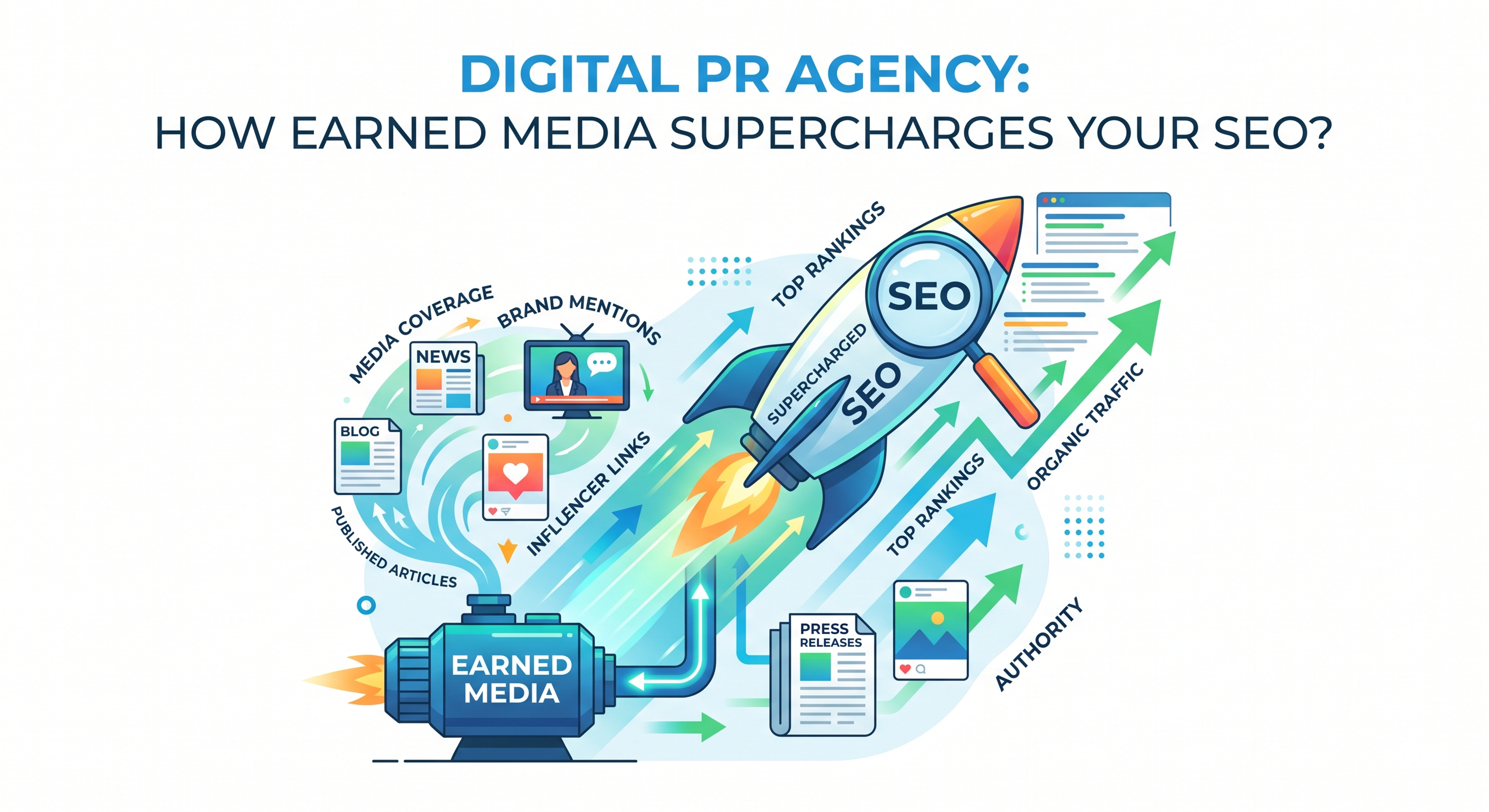
This means digital PR is now a direct GEO strategy. Getting mentioned in listicles on Clutch, G2, Forbes, and industry-specific publications directly increases your probability of being recommended by AI engines. Think of it as backlink building, but for AI visibility.
Step 7: Implement Technical GEO Optimisations
Beyond content, there are several technical factors that improve how AI engines crawl and index your site:
- Allow AI crawlers: Ensure your robots.txt does not block GPTBot (OpenAI), PerplexityBot, or Google-Extended. Many sites inadvertently block AI crawlers.
- Schema markup: FAQ, HowTo, and Article schema help AI engines understand your content structure
- Fast load times: AI crawlers, like search crawlers, deprioritise slow pages
- Clean HTML structure: Well-formed semantic HTML (proper heading hierarchy, clear main content areas) improves AI parsing
- Llms.txt file: A newer standard (similar to robots.txt but for LLMs) that communicates permissions and key information about your site to AI systems
Step 8: Optimise for Conversational, Long-Form Queries
AI search queries are significantly longer and more conversational than traditional search queries. Research shows that AI queries average 23 words, compared to four words for traditional Google searches. Your content needs to answer the kinds of questions people actually ask in conversation, not just the short-form keyword variations you'd optimise for in traditional SEO.
This means creating content that answers follow-up questions proactively. A good GEO-optimised article anticipates "what is it?", "why does it matter?", "how do I do it?", and "what are the common mistakes?" — all in one comprehensive resource.
7. Measuring GEO Performance
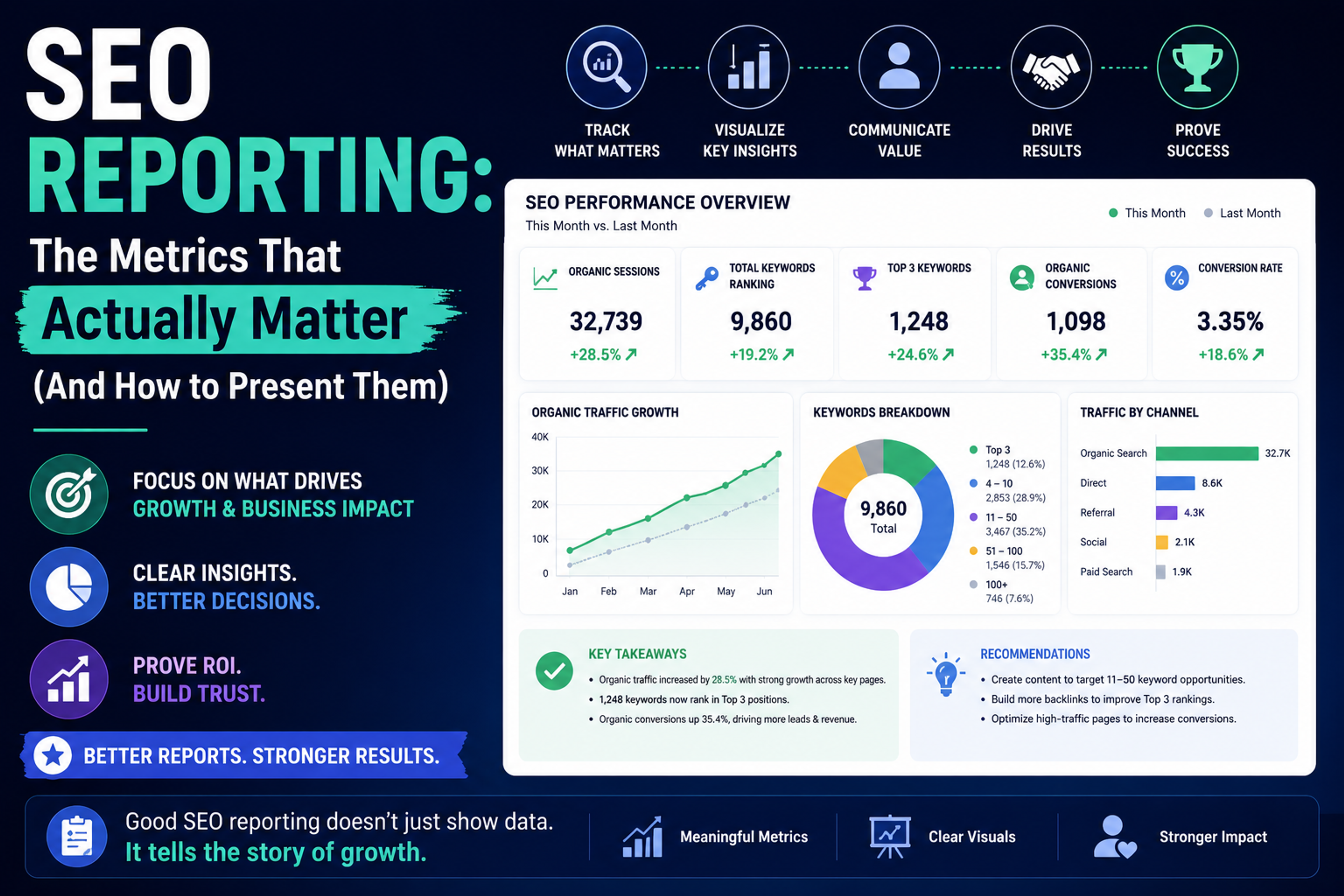
One of the genuine challenges of GEO is that traditional SEO analytics tools were not built to measure it. You cannot see your "ranking" in a ChatGPT answer the way you can track a Google position. However, there are meaningful signals you can track:
Primary GEO Metrics
- AI-referred traffic: Track sessions in GA4 that originate from ChatGPT, Perplexity, and other AI platforms. These will appear as referral traffic from their domains.
- Direct traffic uplift: As brand awareness from AI mentions grows, direct traffic and branded search volume tend to increase
- Citation monitoring: Tools like Profound, AthenaHQ, LLMrefs, and SE Ranking can track whether and where your brand appears in AI-generated answers
- AI visibility score: Platforms like Evertune provide a quantified AI Brand Score across multiple LLM platforms
Important: Most organisations see initial AI citations within 4–8 weeks of implementing proper GEO strategies. Building consistent, high-frequency citations typically requires 3–6 months of sustained effort.
Connecting GEO to Revenue
While AI citations don't always produce immediate clicks, the quality signal is strong. AI-referred visitors convert at 4.4x the rate of traditional organic visitors — suggesting they arrive with higher intent and more trust. Track AI-attributed conversions by setting up referral source goals for ChatGPT.com, Perplexity.ai, and Gemini in GA4.
8. GEO by Platform — Key Differences to Know
While the core GEO principles apply across AI platforms, each system has distinct characteristics:
ChatGPT (OpenAI)
ChatGPT with web search enabled draws primarily from Bing's index. Optimising for Bing SEO is therefore directly relevant. It tends to prefer recent, authoritative content and draws heavily from high-ranking list articles when making recommendations.
Google AI Overviews
Google AI Overviews are deeply integrated with traditional Google ranking signals. Strong traditional SEO remains important here. Google prioritises content from its own index, and the sites it cites in AI Overviews often — but not always — rank well in the organic results below.
Perplexity AI
Perplexity was used in the original Princeton GEO study and is known for favouring well-structured, fact-dense content with clear citations. It is particularly strong on technical and research-oriented queries.
Gemini
Google Gemini integrates with the broader Google ecosystem and Knowledge Graph. Strong entity establishment — business profiles, Wikipedia presence, structured data — is particularly important for Gemini visibility.
9. Common GEO Mistakes to Avoid
- Blocking AI crawlers in robots.txt: Many site owners, unaware of the implications, have blanket 'disallow all bots' rules that prevent GPTBot and PerplexityBot from indexing their content.
- Treating GEO as a one-time content update: GEO requires ongoing optimisation as AI model behaviours evolve. What earns citations today may shift as models are updated.
- Ignoring third-party mentions: Your own website is only one GEO lever. The reviews, list articles, and publications that mention your brand are often more influential.
- Writing for density, not clarity: Stuffing content with keywords, statistics, or citations without genuine analytical value confuses AI systems. Quality and coherence matter more than volume.
- Treating GEO and SEO as separate strategies: The most effective brands integrate both. Strong traditional SEO signals (domain authority, quality backlinks) reinforce GEO performance.
10. The Future of GEO: What Comes Next
GEO is a rapidly evolving discipline. Several emerging trends will shape its development over the next 12–24 months:
Personalised AI Answers
AI engines are increasingly personalising responses based on user history and preferences. This will likely require more granular GEO strategies tailored to specific audience segments rather than generic queries.
Multimodal Search
As AI engines incorporate image, video, and audio understanding, GEO will extend beyond text. Optimising video content, images with proper alt text and captions, and podcast transcripts will all become relevant GEO signals.
AI-Native Advertising
Just as search engines introduced paid placements alongside organic results, AI platforms are beginning to introduce sponsored content within AI-generated answers. Brands that invest in organic GEO now are building the authority profile that will advantage them in paid AI placements later.
The Convergence of SEO and GEO
Over time, the distinction between SEO and GEO will likely narrow. Google's integration of AI Overviews into its core product means that traditional Google optimisation already incorporates GEO principles. Brands that treat search optimisation holistically — covering both ranking and citation — will be best positioned for whatever comes next.
GEO Quick-Reference Checklist
Content Quality
- Every factual claim is attributed to a specific source
- Statistics replace qualitative assertions throughout
- At least two expert quotations per 1,000 words
- Primary question answered directly within first 150 words
- Content is comprehensive enough to be a definitive resource on its topic
Technical Setup
- GPTBot, PerplexityBot, and Google-Extended are permitted in robots.txt
- FAQ and Article schema markup implemented
- Heading hierarchy (H1 → H2 → H3) is clean and logical
- Page load time under 2 seconds on mobile
- Llms.txt file created and published
Authority Building
- Brand mentioned in at least 3 top-10 ranking list articles in your niche
- Google Business Profile complete and regularly updated
- Positive reviews average 4+ stars across review platforms
- Structured data establishes entity clearly (Organisation schema)
Measurement
- GA4 tracking for ChatGPT.com and Perplexity.ai referrals
- At least one AI visibility monitoring tool active (Profound, LLMrefs, etc.)
- Monthly review of branded queries for AI citation growth
Conclusion
Generative Engine Optimization is not a future consideration — it is a present-day competitive advantage. With AI-referred traffic having grown 527% in the first half of 2025 alone, and AI Overviews now appearing on over 13% of all Google queries, the brands that appear inside AI answers are earning visibility, trust, and conversions that their competitors are missing.
The good news is that GEO does not require a complete reinvention of your content strategy. The core principles — accuracy, authority, clarity, and depth — are the same qualities that have always distinguished excellent content from average content. What GEO adds is specificity: cite your sources, quantify your claims, structure for comprehension, and build the entity profile that tells AI engines you are a trustworthy, credible source in your field.
The window for establishing early GEO authority is still open. The brands that act now will compound that authority over time, becoming the default citations that AI engines reach for whenever someone in their niche asks a question.
Traficxo helps growth-focused brands implement GEO as part of a full-stack SEO strategy. If you want your content cited by ChatGPT, Perplexity, and Google AI Overviews — contact us at traficxo.com.
Explore Related Services
Enterprise Technical SEO
Drive sustainable, high intent organic traffic and dominate search rankings with our advanced search engine optimization frameworks.
Accelerate organic growthData Driven Paid Advertising
Lower your customer acquisition costs and maximize return on ad spend with highly targeted Google and Meta PPC campaigns.
Scale your ROAS