If you've been running a business for any length of time, someone has probably told you, "You need to be on social media." And they're right — but that advice alone is about as useful as telling someone they need to eat better without explaining what that means.
Social media marketing services aren't just about posting pretty pictures and hoping for likes. Done right, they drive real revenue, build brand trust, and put your business in front of people who are actively looking for what you sell. Done wrong, they burn your budget and leave you wondering why nothing's working.
This guide is for business owners, marketing managers, and anyone tired of vague answers. We're going to break down what social media marketing services actually include, how they connect to your bigger digital strategy (including SEO services, PPC services, and video), and what you need to look for before hiring anyone.
What Are Social Media Marketing Services, Really?
Let's cut through the buzzwords first.
Social media marketing services refer to a range of professional activities designed to grow your brand's presence, audience, and revenue through social platforms — Facebook, Instagram, LinkedIn, TikTok, YouTube, X (formerly Twitter), Pinterest, and others.
A proper social media marketing setup from a digital marketing agency typically includes:
- Strategy and account auditing — Reviewing what's working, what isn't, and building a plan based on your goals
- Content creation — Writing captions, designing visuals, producing short-form videos
- Community management — Responding to comments, DMs, and mentions
- Paid social advertising — Running targeted ad campaigns across platforms
- Analytics and reporting — Showing you what the numbers actually mean for your business
- Influencer outreach — Finding the right creator partnerships for your niche
- Social commerce management — Setting up and managing shoppable posts
What separates a surface-level provider from a serious one is whether they treat these as isolated tasks or as a connected system built around your business goals.
Why the Numbers Make This Impossible to Ignore?
Before we get into the "how," let's talk about the scale of opportunity here — because it's genuinely staggering.
The global social media market reached $208.08 billion in 2026 and has grown to $234.34 billion in 2026, with analysts forecasting it to hit $389.36 billion by 2030. That's not a niche channel anymore. That's a core part of the global economy.
As of 2026, there are an estimated 5.24 billion social media users worldwide — roughly 64% of the global population — and the average person uses about 6.83 different social platforms every month.
Here's what matters for your business specifically:
72.3% to 72.9% of internet users aged 16+ use social media to research products and brands before making a purchase decision. If your brand isn't showing up in that research phase, your competitor is.
According to Statista, social networks generated 17.11% of total online sales in 2026. The global social commerce sector is growing at a 13.7% compound annual growth rate (CAGR) and is projected to pass $1 trillion by 2028.
About 96% of American small businesses use social media in 2026 — which tells you two things. First, your competitors are already there. Second, standing out requires more than just showing up.
The Core Components of Social Media Marketing Services
1. Social Media Strategy
Every effective campaign starts here. Without a strategy, you're just posting into the void.
A good strategy session from a digital marketing agency will involve understanding your target audience in detail — not just demographics, but behavior, pain points, and where they spend their time online. It also involves a competitive audit: what are your competitors doing, what gaps exist, and where can you position yourself differently?
One thing most agencies skip — and it's a costly miss — is platform-specific strategy. What works on Instagram absolutely does not work on LinkedIn. The content format, tone, posting cadence, and audience expectations are completely different. Any agency that hands you the same content calendar for all six platforms isn't doing strategy work. They're doing cut-and-paste.
2. Content Creation and Management
This is where most of your budget goes, and rightfully so — content is the engine of everything.
Short-form social videos drive the highest ROI among video formats for B2B marketers at 41%, followed by brand storytelling at 38% and testimonials at 34%.
This is why video services have become non-negotiable. Whether it's 30-second Reels, TikTok explainers, or YouTube Shorts, brands that are not producing video content in 2026 are operating at a serious disadvantage.
Most marketers — 92% — plan to spend the same or more on video marketing in 2026. Marketers also report that video has helped them improve user understanding of products or services (93%), increase brand awareness (93%), generate leads (85%), increase sales (83%), and boost website traffic (82%).
Beyond video, content creation includes static image posts, carousels, infographics, long-form thought leadership for LinkedIn, and story content that disappears after 24 hours but drives engagement in the moment.
3. Paid Social Advertising (PPC Services)
Organic reach is valuable, but on most platforms, it only gets you so far. Paid social — which falls under the broader umbrella of PPC services — is how you scale.
79% of advertisers say paid social is necessary for growth, and social ads now account for 33% of total digital ad spend.
Paid social advertising involves creating and managing targeted ad campaigns across Meta (Facebook and Instagram), LinkedIn, TikTok, Pinterest, and YouTube. You can target by age, location, interest, behavior, job title, device type, and even retarget people who visited your website but didn't convert.
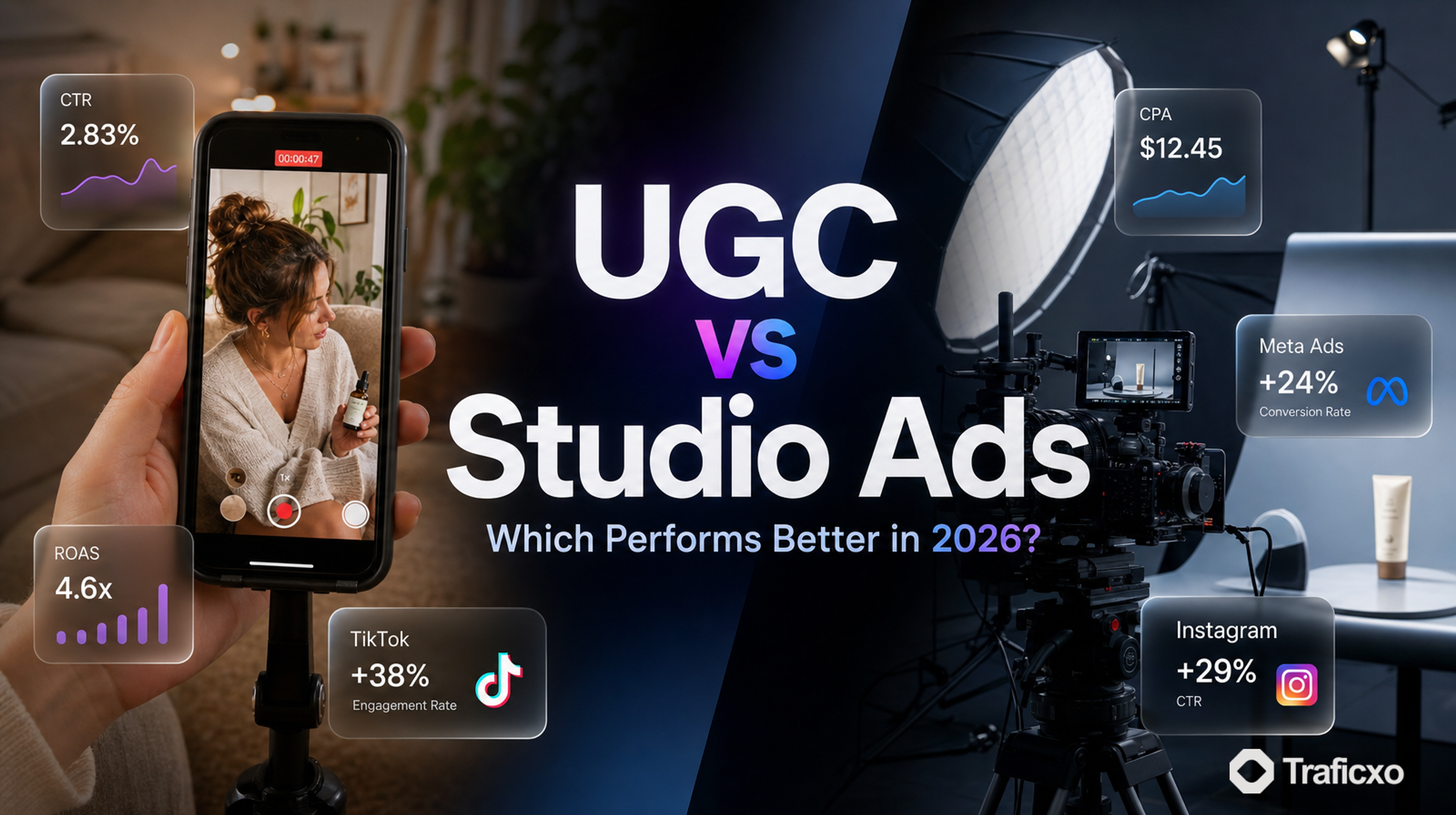
A well-run Facebook Ads campaign, according to HawkSEM, can yield ROI between 4x and 5x of spend. TikTok's own research highlights an impressive short-term ROI of 11.8%, with 75% of advertisers reporting their highest ROI on TikTok compared to other social channels.
The critical thing here is the connection between paid social and your broader marketing ecosystem. Standalone social ads rarely tell the full story. When you tie them to your SEO services, landing page strategy, and email funnels, the results compound significantly.
4. Community Management
This one gets underestimated constantly. Community management means actively monitoring your profiles, responding to comments and DMs, flagging negative feedback before it becomes a reputation issue, and building genuine relationships with your audience.
79% of consumers expect a brand to respond on social media within 24 hours, but in 2024, only half of businesses were meeting this expectation. 71% of people who had a positive customer service experience on social media recommended the brand to others.
That's a word-of-mouth engine sitting idle for most businesses. Fast, human responses to customer questions and concerns directly translate to trust — and trust converts.
5. Analytics, Reporting, and Growth Optimization
If an agency can't show you what your money is doing, that's a red flag. Period.
Real growth optimization in social media marketing means tracking performance at every stage — reach, engagement, click-through rate, cost-per-click, conversion rate, and revenue attributed to social — then using those insights to continuously improve.
In 2026 Sprout Social Index reveals that 65% of marketing leaders want to see direct connections between social media campaigns and business goals. If your reporting just shows follower counts and impressions, you're not getting what you paid for.
Growth optimization is an ongoing process. It's A/B testing your ad creatives. It's analyzing which content formats are earning the most shares. It's adjusting posting times based on when your audience is actually online. An experienced digital marketing agency will make these adjustments monthly, sometimes weekly.
How Social Media Marketing Connects to SEO?
This is something most agencies either don't explain clearly, or actively ignore — and it matters.
Social media marketing and SEO services are not competing channels. They reinforce each other.
When your content gets shared on social platforms, it earns backlinks and signals to search engines that your brand has authority. When people search for your brand name on Google after seeing you on Instagram, your search rankings improve. When your blog posts are consistently promoted on LinkedIn and Pinterest, they get indexed faster and rank higher.
If you're working with an SEO company in India or anywhere globally, the best ones understand that organic search and social media are two sides of the same coin. Social media drives traffic that lowers your bounce rate and increases time-on-site — both of which are signals Google uses when evaluating where to rank your pages.
Here's a practical example: a business publishing educational content — say, a how-to article optimized for a specific search keyword — should simultaneously be promoting snippets of that content as carousels on Instagram, short video summaries on TikTok, and detailed breakdowns on LinkedIn. Each platform feeds the other. A siloed approach throws away a huge amount of potential value.
Platform-by-Platform Breakdown
Not every platform deserves equal attention or budget. Here's an honest look at what each one offers:
Facebook remains the most-used platform for paid social, with over 3 billion monthly active users. As of 2026, Facebook still delivers the highest ROI for advertisers among all major social media platforms. Best for local businesses, B2C products, and retargeting campaigns.
Instagram is still a powerhouse for visual brands, lifestyle products, fashion, food, and DTC ecommerce. Reels made up more than half of all ads shared on Instagram in 2026, and 61% of Instagram users open the app specifically to find their next purchase.
LinkedIn is the non-negotiable platform for B2B. Multi-image posts pull 6.6% engagement on LinkedIn, native documents 5.85%, and video 5.6% — numbers that crush most other platforms for professional audiences.
TikTok now has close to 2 billion monthly users and dominates among younger demographics. Over 40% of Gen Z use TikTok and Instagram as their primary search engines for product discovery and local recommendations, rather than Google. If you're trying to reach anyone under 30, TikTok is not optional.
YouTube is still the second-largest search engine in the world and is increasingly critical for long-form educational video, product reviews, and how-to content. YouTube Shorts drives an impressive 5.91% engagement, closing in on TikTok.
Pinterest is underrated for ecommerce and lifestyle brands. Around 70% of Pinterest users interact with brand content at least once a week, and among Gen Z that number rises to 78%.
What Good Video Services Actually Look Like?
Let's talk about video because it's now the biggest driver of social media performance — and most businesses are still doing it wrong.
"Video" doesn't mean expensive production shoots with a big crew. In 2026, the content that performs best on social platforms tends to be authentic, fast-moving, and directly useful or entertaining to the viewer.
Here's what a serious video services component of your social media strategy should include:
Short-form vertical video (Reels, Shorts, TikToks) — Under 60 seconds, optimized for mobile viewing, with strong hooks in the first 3 seconds. These drive discoverability and reach new audiences.
Educational explainers — Quick breakdowns of a problem your audience faces and how your product or service solves it. These build trust and position your brand as knowledgeable.
Testimonials and case studies — Real customers telling real stories. Testimonial-style video drives 34% ROI for B2B marketers, and the more authentic they look, the better they perform.
Behind-the-scenes content — How your product is made, how your team works, what your office culture looks like. This type of content humanizes your brand and builds emotional connection.
Live video — 57% of brands believe Facebook Live is the most effective video marketing channel. Live sessions for product launches, Q&As, and announcements consistently outperform pre-recorded content in terms of real-time engagement.
A digital marketing agency offering complete video services will handle scripting, filming (or directing client-side filming), editing, captioning, platform-specific formatting, and performance tracking.
What Does This Cost? A Realistic Look?
One of the most common questions — and one that most agency websites deliberately avoid answering clearly.
Social media marketing services can range widely based on scope, team size, and whether you're working with a boutique or a larger agency. Here's a rough framework based on what the market looks like:
Starter packages (content creation + basic management for 2 platforms): $500 – $1,500/month
Mid-tier packages (strategy, content, community management, paid ads management for 3–4 platforms): $2,000 – $5,000/month
Full-service packages (multi-platform, video production, influencer outreach, analytics, PPC management): $5,000 – $15,000+/month
Ad spend is typically separate from management fees. A good rule of thumb: spend at least as much on ads as you do on management. A $1,000/month management fee with a $200/month ad budget is not a recipe for meaningful results.
Working with an SEO company in India or a digital marketing agency based in South Asia can significantly lower your management costs — often by 40–60% compared to equivalent agencies in the US or UK — without necessarily sacrificing quality, especially for established agencies with strong client track records and transparent reporting.
How to Choose the Right Digital Marketing Agency
You'll find no shortage of agencies willing to take your money. Here's how to separate the ones worth hiring from the rest.
Look at actual results, not just promises. Any agency can show you a beautiful deck with big projections. Ask for case studies from clients in your industry, and ask specifically what numbers moved and over what time frame.
Ask about their content process. Who actually creates the content? Is it in-house or outsourced? What's the approval workflow? How many revisions do you get? These are practical questions that reveal how the agency actually operates day-to-day.
Clarify what "reporting" means to them. If their monthly report is a PDF with follower counts and post impressions, that's not enough. You want to see data tied to website traffic, lead generation, and ideally revenue.
Understand platform specialization. Some agencies are genuinely great at Instagram and mediocre at LinkedIn. Some dominate paid social but have weak organic strategy. Know what your business needs most before you start conversations.
Ask about their integration approach. Do they work in coordination with your SEO services provider? Do they understand PPC services and how social fits into the broader paid media strategy? Do they factor video services into their planning? The best agencies think holistically.
Check their own social media. If an agency is pitching you on growing your Instagram following and their own account hasn't been updated in three months — that tells you something.
Common Mistakes Businesses Make with Social Media Marketing
These come up time and again, regardless of industry or business size:
Trying to be on every platform at once. Better to do two platforms really well than six platforms poorly. Start focused, prove ROI, then expand.
Confusing activity with results. Posting every day feels productive. But if those posts aren't reaching your target audience or driving any action, the activity is an illusion. Metrics need to tie back to business outcomes.
Treating social media as a broadcast channel. Social media is a two-way conversation. Brands that only push promotional content without engaging back see dramatically lower performance than brands that genuinely participate in conversations.
Ignoring the relationship between platforms. Social media doesn't live in a bubble. It's connected to your SEO, your email list, your website traffic, and your ad campaigns. Siloing it off from the rest of your marketing is a structural mistake.
Not giving it enough time. Social media marketing is not an overnight solution. Organic growth takes months. Ad campaigns need testing cycles. Realistic expectations are: some engagement improvements in the first 30 days, meaningful lead generation by months 3–4, and compounding returns by month 6 and beyond. Many clients see improved engagement within the first month; significant business results typically follow within 2–3 months.
The Integration Advantage: Why Full-Service Wins
The businesses seeing the strongest results from social media marketing in 2026 aren't treating it as a standalone service. They're integrating it fully with:
SEO services — So that content created for social also drives organic search traffic, and keyword research informs content topics
PPC services — So that paid search campaigns and paid social campaigns complement each other and avoid cannibalizing the same audience at the same price
Video services — So that a single video asset can be repurposed into a YouTube long-form, Instagram Reels, LinkedIn snippet, and email newsletter clip
Growth optimization — So that data from every channel informs decisions across all channels, and the budget always flows toward what's actually working
This is the difference between a vendor relationship and a true digital marketing agency partnership. The latter actively looks for ways your channels can reinforce each other. The former just delivers the service you asked for.
Conclusion
Social media marketing services are not a shortcut, and they're not magic. But they are one of the most direct paths available right now to building brand visibility, generating qualified leads, and growing a loyal customer base - especially when they're integrated thoughtfully with your broader digital strategy.
The businesses that treat social media as part of a connected system - alongside SEO services, PPC services, video production, and ongoing growth optimization - are the ones consistently pulling ahead of competitors who are still winging it.
If you're evaluating your options, take the time to ask hard questions. Look at real results. Understand how a potential agency connects social to the rest of your marketing. And don't let the sheer number of options - or the amount of noise in the industry - delay you from getting started.
The audience is out there. They're spending more than two hours a day on social platforms. The question is whether your brand is showing up for them.
Explore Services & Solutions
Video Production Hub
Access our comprehensive vertical strategies, core processes, and expert resources.
View service hub Specialized SolutionProfessional Video Editing
Scale your brand narrative with explainer videos, social media reels, and motion graphics.
Learn moreReady to grow your digital presence?
Connect with our execution specialists for a customized roadmap.