If you have spent any time reading marketing blogs this year, you have probably run into three letters that did not exist in most people's vocabulary five years ago: GEO, AEO, and SEO. Throw in the fact that they all promise the same outcome, more visibility for your business, and it is easy to see why business owners feel stuck. Should you still be paying for SEO services? Is AEO something new you need to budget for? Does GEO replace everything you have been doing?
Here is the short answer. SEO is not going away, and good SEO services remain the backbone of any visibility strategy. But it is no longer the only game on the field. Search has split into three connected but distinct disciplines, and understanding the difference between them is now a basic requirement for anyone running a serious online marketing program in 2026.
In this guide, we will break down what each term actually means, where they overlap, where they pull apart, and how a smart Digital Marketing Agency builds a strategy that covers all three at once instead of betting everything on just one.
Why This Conversation Is Happening Now?
A few years ago, ranking on Google's first page was the finish line. You wrote good content, built some backlinks, fixed your site speed, and waited for traffic to climb. That playbook still works, but it is no longer the whole picture.
The reason is simple. People search differently now. A growing share of users are not typing short keywords into Google and scrolling through ten blue links anymore. They are asking full questions inside ChatGPT, Gemini, and Google's AI Overviews, and getting a complete answer without ever clicking a link.
The numbers back this up clearly. According to SparkToro's clickstream research, more than two thirds of all Google searches in early 2026 ended without a single click to any website. That is up from around 50 percent back in 2019, which means the rate of change has been picking up speed, not slowing down. Separate data from Semrush found that Google's AI Mode pushes the zero click rate even higher, close to 93 percent for users who switch into that experience.
This is the entire reason GEO and AEO exist as separate terms today. They were created to describe what happens to your content after it leaves the traditional search results page and enters an AI generated answer.
SEO: The Foundation That Still Matters
Search Engine Optimization is the original discipline, and it is still the backbone everything else is built on. SEO is the practice of improving your website so that search engines like Google and Bing can find it, understand it, and rank it for relevant searches.
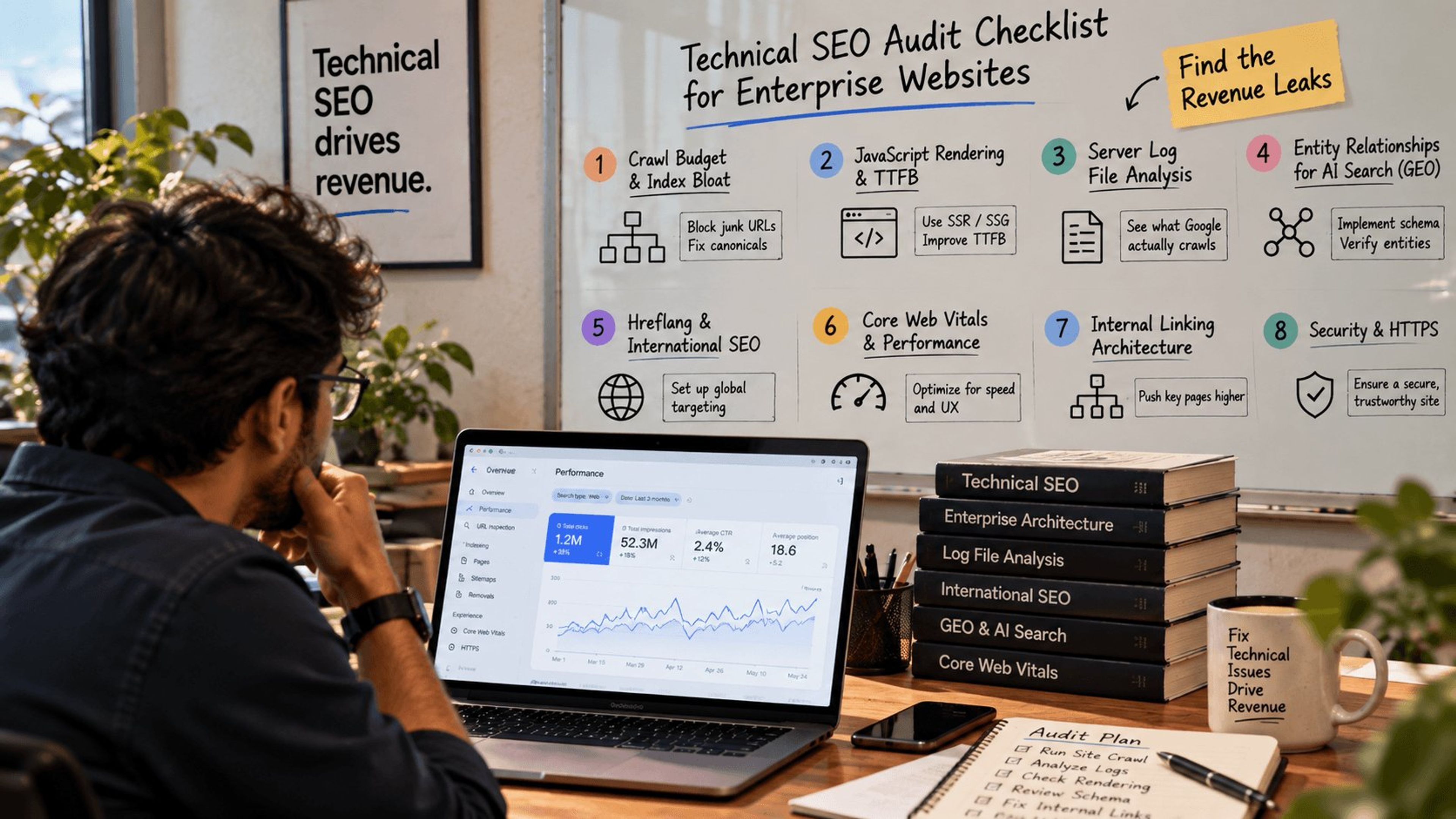
When someone signs up for SEO services through an SEO Company in India or a full service agency in the US, this is usually the bulk of what they are paying for. It includes things like keyword research, on page optimization, technical fixes such as site speed and mobile usability, content creation, and link building to build domain authority.
The goal of SEO has always been clicks. You want your page to show up high enough that the person searching decides to visit your website instead of a competitor's. SEO works on what some marketers call a list model. Google shows ten or so results, and the user picks one.
This still matters a great deal for certain types of searches. Transactional queries, where someone is ready to buy or book, still send plenty of clicks. Local searches, like someone looking for a plumber or a dentist nearby, behave the same way they always have. Branded searches, where people already know your name and just want your website, are also largely untouched by this shift. If you run an Umrah travel agency in the UK and someone searches your brand name directly, SEO is still doing exactly what it is supposed to do.
But for broad, informational searches, the kind that used to drive a huge share of blog traffic, the picture has changed.
AEO: Winning the Answer, Not Just the Click
Answer Engine Optimization is the practice of structuring your content so it gets pulled directly into a quick answer format. Think featured snippets, the "People Also Ask" boxes, voice assistant replies, and the short summary boxes you see at the top of some search results.
AEO is not really a separate website strategy. It is closer to a writing style applied on top of your existing SEO work. The goal is to make your content easy for an algorithm to extract a clean, direct answer from, usually a sentence or two, without needing the user to click through.
A few practical things define good AEO writing. Content is broken into clear questions as headings. Each question is followed immediately by a short, direct answer in the first sentence or two, with supporting detail after. FAQ schema markup is added so search engines can read the structure of your questions and answers more easily. Numbered steps and short lists are used wherever a process is being explained.
The tradeoff with AEO is real and worth being honest about. When your content becomes the answer shown directly on the results page, fewer people need to click through to your website. Industry data from Ahrefs found that AI Overviews can reduce organic click through rate for the number one ranking position by as much as 58 percent. That sounds discouraging at first, but the upside is that you are still winning visibility and brand trust, even without the click. Someone who reads your answer inside Google still associates that helpful information with your brand.
GEO: Becoming the Source AI Trusts
Generative Engine Optimization is the newest and, in some ways, the most misunderstood of the three. GEO is about making sure your content is good enough, structured well enough, and authoritative enough that AI systems like ChatGPT, Perplexity, Gemini, and Google's AI Overviews choose to use it when building a longer generated answer.
The difference between AEO and GEO comes down to what the machine is trying to do. AEO is about giving a search engine "the best single sentence" to display. GEO is about giving a generative AI model "the best raw material" to build a complete, synthesized response, often pulling together information from several sources at once.
Where SEO rewards backlinks and domain authority, GEO rewards something researchers call information gain. This means unique data, original research, real numbers, and details that cannot be found anywhere else. You could rank number one on Google for a competitive topic, but if your article reads like every other generic listicle out there, an AI model may skip right past you in favor of a smaller site that included a specific statistic, a unique case study, or a first hand insight nobody else published.
This is also where AI Agent behavior is starting to matter. As AI tools move from simply answering questions to actually completing tasks, like comparing service providers or even booking something on a user's behalf, having clean, structured, and consistent information about your brand becomes part of how these systems decide whether to trust you enough to recommend you.
A few things genuinely move the needle for GEO. Specific, sourced statistics instead of vague claims. Clear author credentials and real world experience visible on the page. Consistent business information repeated correctly across your own site, directories, and review platforms. Fresh, regularly updated content, since AI systems appear to favor information that has been verified or updated recently.
Where The Three Actually Overlap?
It would be a mistake to think of SEO, AEO, and GEO as three separate departments fighting for budget. In practice, they share more ground than people assume.
Strong technical SEO, things like fast load times, clean site structure, and mobile friendliness, makes it easier for both traditional search crawlers and AI crawlers to access and understand your content in the first place. Good quality writing that genuinely answers a reader's question tends to perform well across all three disciplines at once. And authority signals, whether that is backlinks for SEO or citations and brand mentions for GEO, still come from the same root cause: being a credible, trusted source in your industry.
Research referenced by WITHIN, a digital marketing agency, points to something useful here. AI generated answers often pull from content that is already ranking well in traditional Google search results. That tells us the overlap is real. Strong SEO fundamentals still give your content a much better shot at being picked up by generative engines, even though the two systems are not identical.
The practical takeaway for any business is this. You do not need three separate strategies running in three separate directions. You need one strong content foundation, built the right way from the start, with AEO and GEO layered on top as enhancements rather than replacements.
A Simple Way To Tell Them Apart
If the technical explanations still feel like a lot to hold in your head at once, here is the simplest possible breakdown.
SEO helps people find you in a list of results, and the goal is a click. AEO helps you become the direct answer shown on the results page, and the goal is visibility without necessarily needing a click. GEO helps AI systems understand, trust, and represent your brand correctly inside generated answers, and the goal is being cited as a reliable source.
None of the three works well in isolation anymore. A business running only old fashioned SEO tactics, while ignoring how AI search engines are changing user behavior, is going to lose visibility over the next two years even if their rankings on paper look fine. A business that chases AEO and GEO trends while neglecting solid technical SEO and genuinely useful content is building on sand, because the underlying authority signals that GEO depends on still come from consistent, well optimized SEO work.
What This Means For Your Marketing Budget?
This is usually the question business owners actually care about. Do you need to hire three different specialists, or find an agency that bundles all of it?
In most cases, a single experienced team can manage this transition well, as long as they understand how the disciplines connect. When you are evaluating an SEO Company in India or anywhere else, it is worth asking direct questions. Do they track AI citations, not just keyword rankings? Can they show you examples of content that has been picked up inside an AI Overview or a ChatGPT answer? Do they understand schema markup well enough to implement FAQ and HowTo structured data correctly?
A genuinely capable Digital Marketing Agency in 2026 should be comfortable talking about all three areas without dodging the question. If an agency's entire pitch is still built around the same keyword density tactics from a decade ago, that is a sign their approach has not kept pace.
It is also worth thinking about how this connects to other parts of your marketing mix. PPC Services still matter a great deal here, maybe even more than before, because as organic clicks shrink for informational searches, paid placements remain one of the more reliable ways to guarantee visibility for high intent, transactional keywords. Smart Growth Optimization means looking at your entire funnel, not just rankings, and figuring out where AI search behavior is actually costing you customers versus where it does not matter much at all. And Video Services deserve a mention too, since AI systems increasingly pull from video transcripts and YouTube content when building answers, which means a strong video presence is becoming part of the GEO conversation as well, not just a separate marketing channel.
Practical Steps You Can Take Starting Today
You do not need to overhaul your entire content strategy overnight. A few focused changes make a real difference.
Start by auditing your existing high traffic pages and asking whether they answer the core question clearly within the first two sentences. If a reader, or an AI model, has to dig through three paragraphs of introduction before getting to the point, that page is losing ground on both AEO and GEO.
Add FAQ schema to your most important pages, especially ones built around common customer questions. This is one of the lowest effort, highest return changes available right now.
Replace vague claims with specific numbers wherever you can. Instead of saying a service "improves results quickly," say exactly what kind of improvement and over what time frame, backed by a real source. AI models are far more likely to cite specific, verifiable information than generic marketing language.
Keep your business information, name, address, services, and pricing structure, consistent everywhere it appears online. Inconsistent details across your website, directories, and social profiles make it harder for AI systems to trust what they are reading about you.
Finally, do not abandon the fundamentals. Site speed, mobile usability, clean internal linking, and genuinely useful content are not old fashioned ideas being replaced by AI search. They are still the foundation that AEO and GEO are built on top of.
Conclusion:
GEO, AEO, and SEO are not three competitors fighting over the same budget line. They are three layers of the same goal: making sure people, and increasingly machines, can find, trust, and choose your business. SEO gets you found. AEO gets you the answer spot. GEO gets you cited inside the AI generated response itself.
Ignoring any one of these in 2026 means leaving visibility on the table somewhere along the customer journey. The businesses that win over the next few years will be the ones that treat all three as one connected system, built on a foundation of genuinely useful, well structured, and consistently accurate content, rather than picking just one and hoping it carries the whole weight.
If you are weighing whether to handle this in house or bring in outside help, working with a team that already understands SEO services at this level, rather than learning it on your account, tends to save both time and budget in the long run.
Explore Services & Solutions
SEO Services Hub
Access our comprehensive vertical strategies, core processes, and expert resources.
View service hub Specialized SolutionEnterprise Technical SEO
Drive high-intent organic traffic with our advanced technical auditing and optimization frameworks.
Learn moreReady to grow your digital presence?
Connect with our execution specialists for a customized roadmap.