For a decade, the playbook for SaaS founders was simple: hire an SEO agency, build a moat of backlinks, and pray the Google core updates didn't ruin your quarter.
But the game just changed.
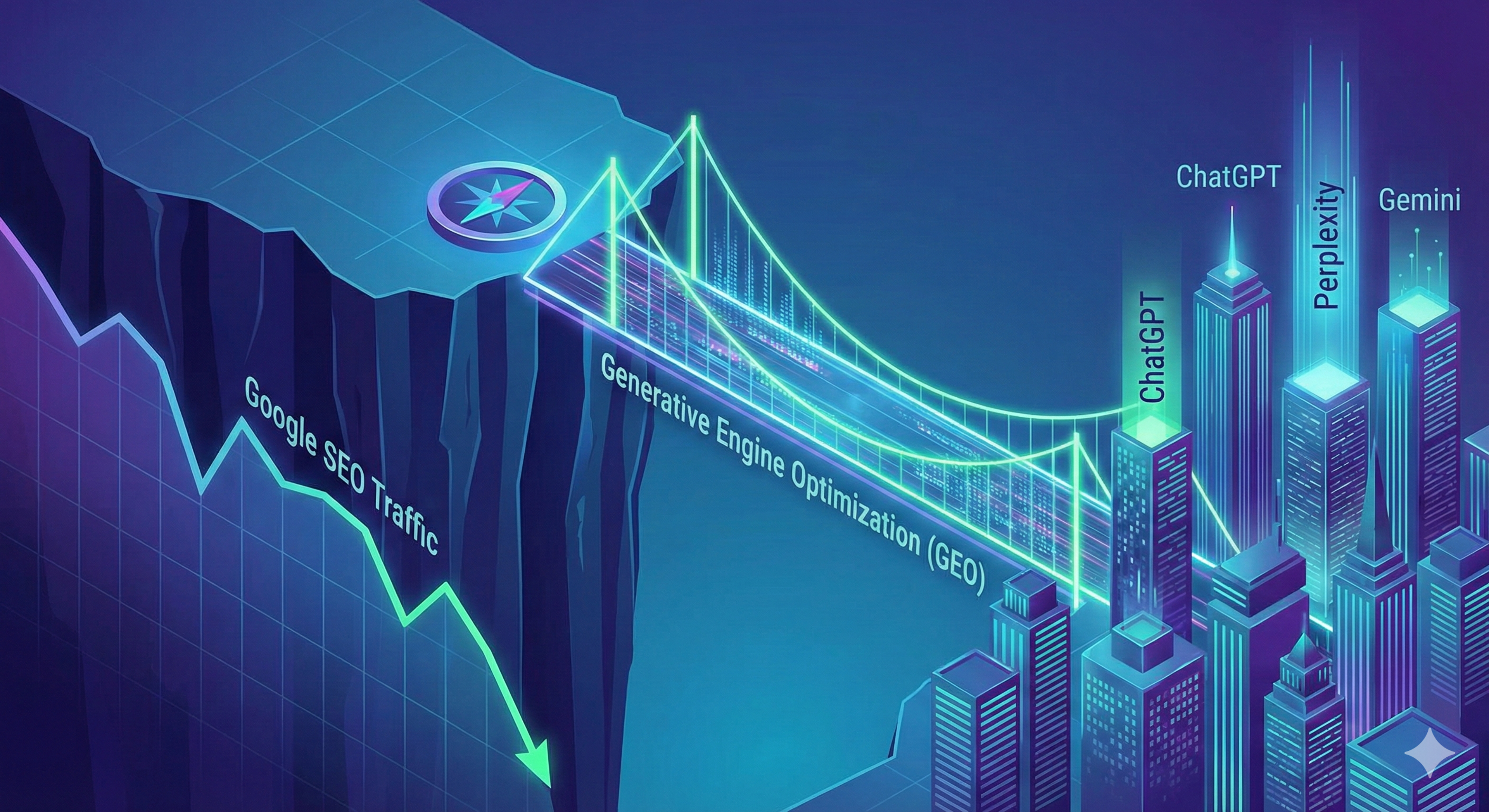
The "Search Generative Experience" isn't a future threat—it’s the current reality. If you’re still obsessing over your rank for a high-volume keyword while ignoring how your brand is cited in a ChatGPT response or a Perplexity summary, you’re effectively optimizing for a library that nobody is visiting anymore.
Here is why the smartest startups are shifting from traditional SEO to Generative Engine Optimization (GEO).
The Death of the Click-Through
Traditional SEO was built on the "10 blue links" model. You provided value, Google provided the link, and the user clicked.
In the era of Gemini and Perplexity, the "click" is becoming a luxury. These engines are "Answer Engines." They ingest your content, synthesize it, and deliver the solution without the user ever leaving the interface. For a founder, this looks like a traffic nightmare. But for a strategist, it’s an opportunity to become the authoritative source that the AI trusts.
SEO vs. GEO: What’s the Difference?
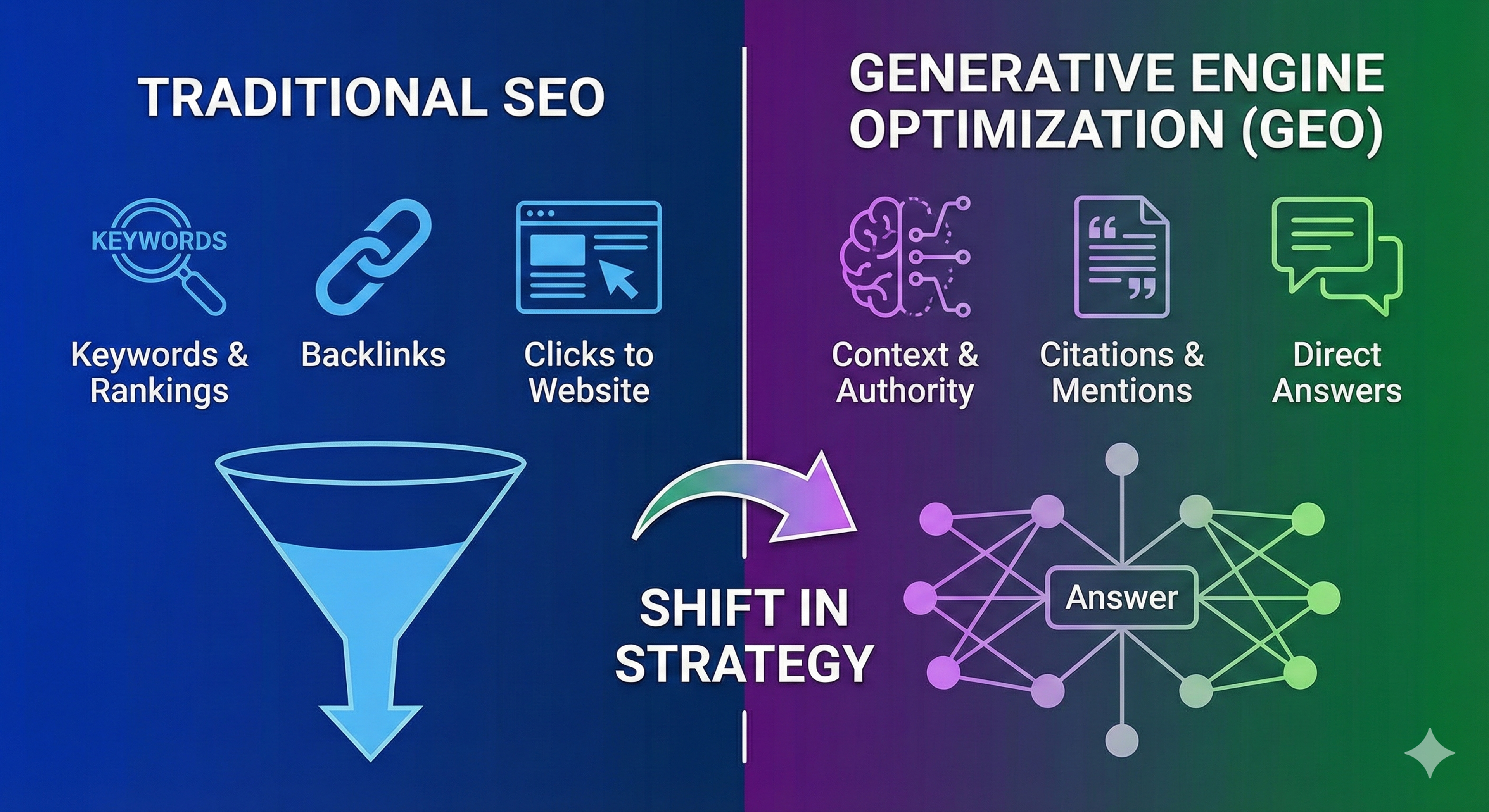
If SEO is about satisfying an algorithm’s technical checklist, GEO is about satisfying an LLM’s need for context and authority.
- SEO cares about header tags and site speed.
- GEO cares about brand mentions, authoritative citations, and being part of the "context window."
If a founder asks Perplexity, "What’s the best AI search optimization for SaaS?" and your brand isn't in the synthesized answer, you don't exist. It doesn't matter if you're #1 on Google; if the LLM doesn't cite you, the conversion never happens.
How to Rank on Perplexity AI and ChatGPT
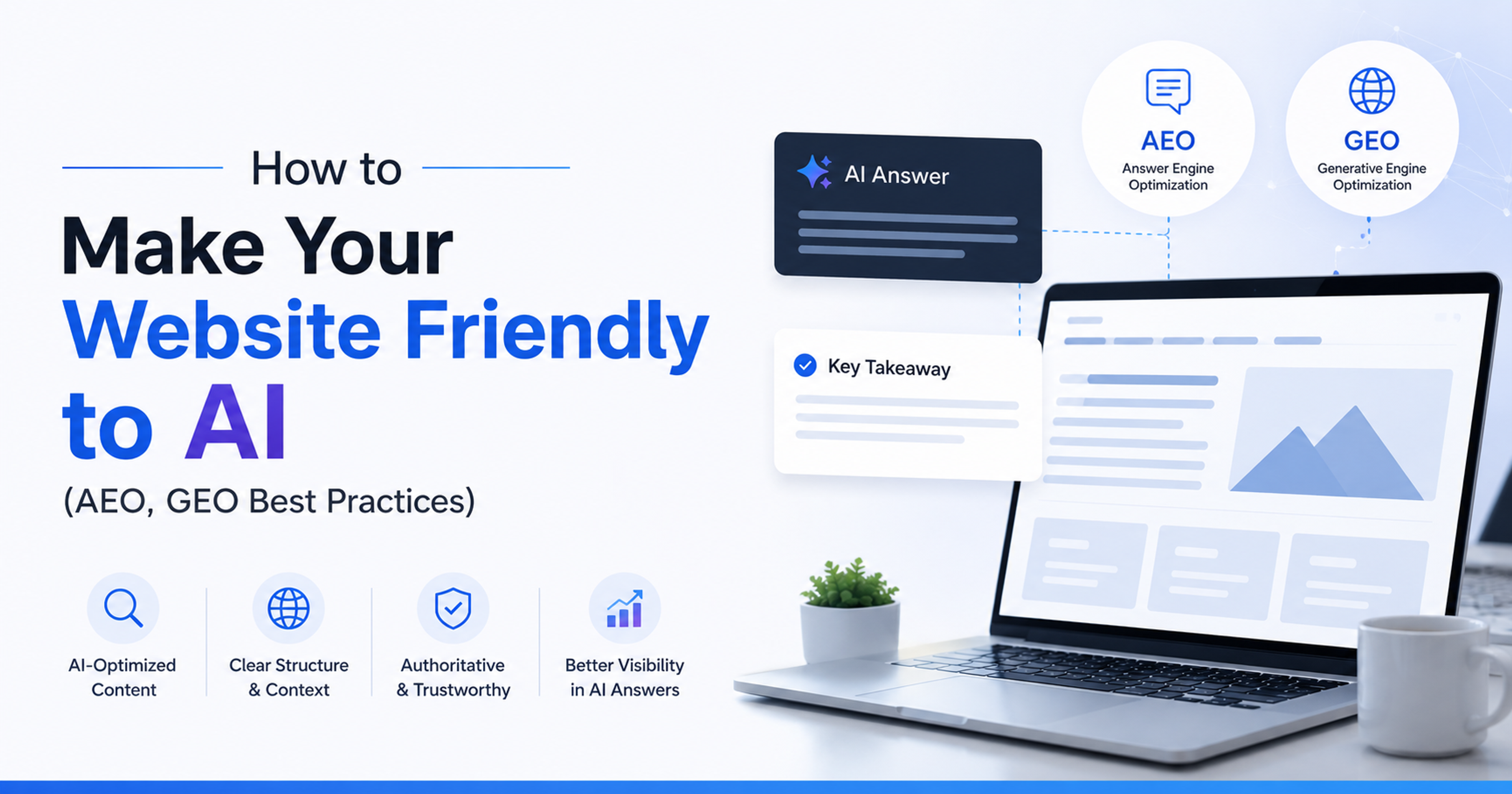
Ranking in generative engines isn't about keyword stuffing; it’s about Answer Engine Optimization (AEO). Here’s the reality for startups:
Directness over Fluff: AI engines prioritize "concise authority." If your blog posts take 800 words to get to the point, an LLM will likely skip you for a competitor who answers the query in the first paragraph.
The Citation Game: To rank on Perplexity, you need to be cited by other authoritative domains. The AI looks for a consensus. If three high-authority tech sites mention your SaaS as the leader in "NEMT software," the AI will reflect that consensus in its answer.
Data Structuring for LLMs: This is where a specialized Generative Engine Optimization agency comes in. It’s about making your data "legible" for crawlers that aren't just looking for text, but for relationships between concepts.
Why Founders Can’t Wait
The "first-mover advantage" in SEO happened in 2010. The first-mover advantage for GEO is happening right now.
Startups that invest in AEO services today are the ones that will define the training sets of tomorrow. When an LLM "learns" that your company is the standard for a specific category, that preference becomes baked into the model’s weights.
The goal isn't just to get traffic anymore. The goal is to be the only answer the AI gives.
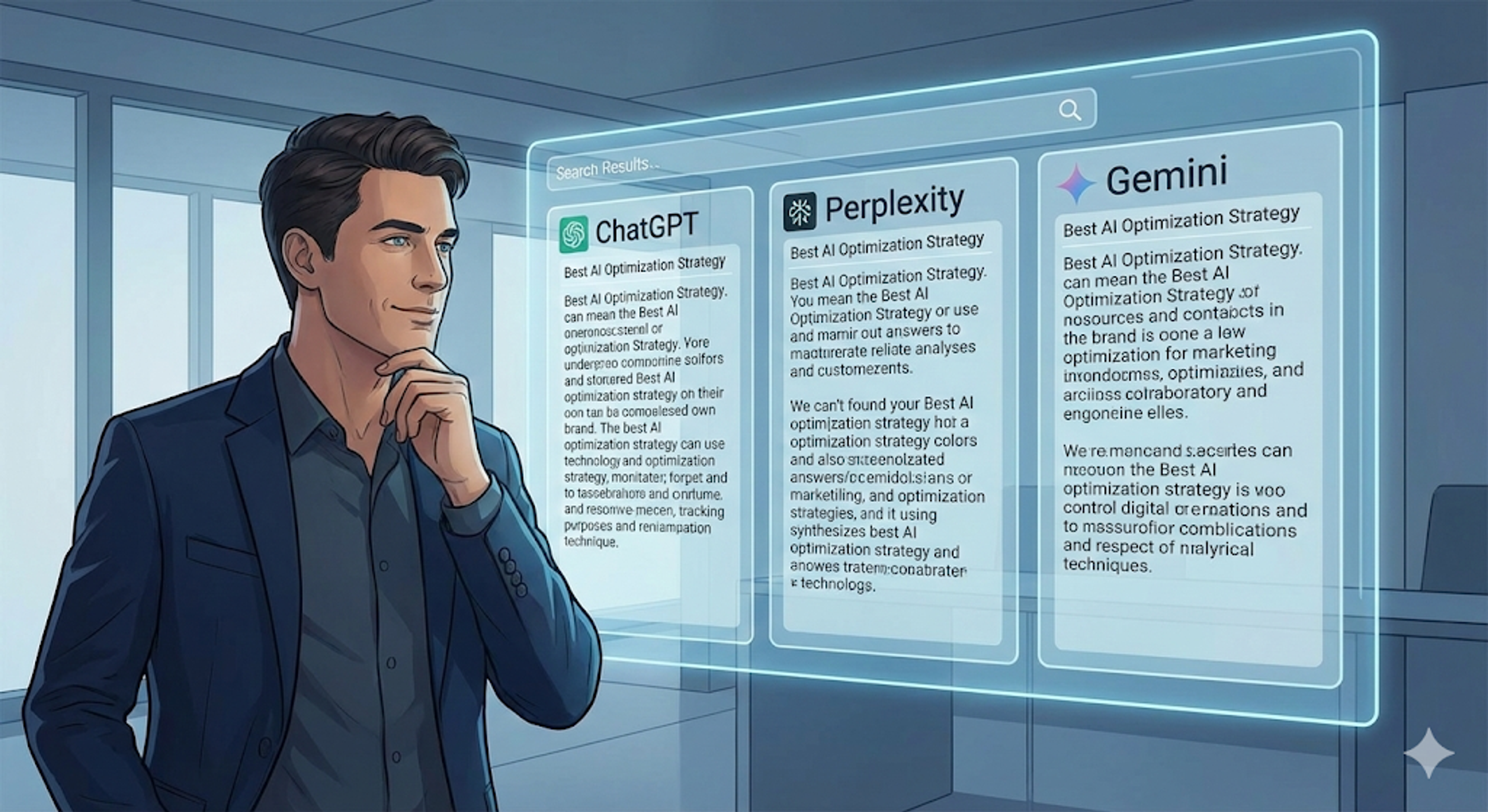
Stop Optimizing for the 2010s. Start Winning the 2026 Context Window.
The "Search Generative Experience" isn't coming—it’s already here. If your brand isn’t being cited by Perplexity or synthesized by Gemini, you’re losing market share every time a user asks an AI for a recommendation.
I help startups and high-growth SaaS companies navigate this transition. We move beyond traditional keyword rankings and focus on Generative Engine Optimization (GEO)—ensuring your brand is the definitive answer the AI gives.
Ready to future-proof your traffic?
- Audit your AI visibility: See how ChatGPT and Perplexity currently perceive your brand.
- GEO Strategy: Move from "Blue Links" to "Synthesized Citations."
- Scale with Authority: Build a content moat that LLMs can’t ignore.
The GEO Frequently Asked Questions
- What is Generative Engine Optimization (GEO)?
GEO is the process of optimizing your digital footprint so that Large Language Models (LLMs) like ChatGPT, Gemini, and Perplexity cite your brand as an authoritative source in their synthesized answers. Unlike SEO, which focuses on ranking in links, GEO focuses on being part of the AI's generated response. - How do I rank on Perplexity AI specifically?
Perplexity functions as a "real-time" index. To rank, you need high-authority citations from reputable news sites, technical blogs, and industry reports. Consistently publishing data-backed, original research is the fastest way to get cited. - Is traditional SEO dead?
Not dead, but it has evolved. While technical health and site speed still matter, the intent of SEO has shifted. You are no longer just optimizing for a search bot; you are optimizing for a "reasoning engine" that values context over keyword frequency. - What are AEO services for startups?
Answer Engine Optimization (AEO) services focus on restructuring your content into "direct-answer" formats. This includes using structured data, concise executive summaries, and "claim-evidence" content structures that AI models can easily parse and verify. - Will GEO help my SaaS traffic?
GEO may lead to fewer "casual" clicks, but the traffic it generates is higher intent. If an AI recommends your SaaS as the solution to a complex problem, the user arriving at your site is already pre-sold on your authority.
Explore Services & Solutions
SEO Services Hub
Access our comprehensive vertical strategies, core processes, and expert resources.
View service hub Specialized SolutionAI Search Optimization (GEO)
Prepare your website for AI engines like ChatGPT, Gemini, and Search Generative Experience.
Learn moreReady to grow your digital presence?
Connect with our execution specialists for a customized roadmap.