Most people judge a business by its website within a few seconds. If the page loads slowly or looks off, they leave. That is the problem good website development services solve. Not just a site that looks nice, but one that loads fast, works on every phone, ranks in search, and turns visitors into customers.
This guide breaks down what these services actually include, what shapes the price, and how to pick a team you will not regret hiring. No jargon for the sake of it. Just the parts that matter.
What website development services actually cover
"Web development" gets used as a catch-all term. In practice it splits into a few clear areas. A full-service team usually handles all of them.
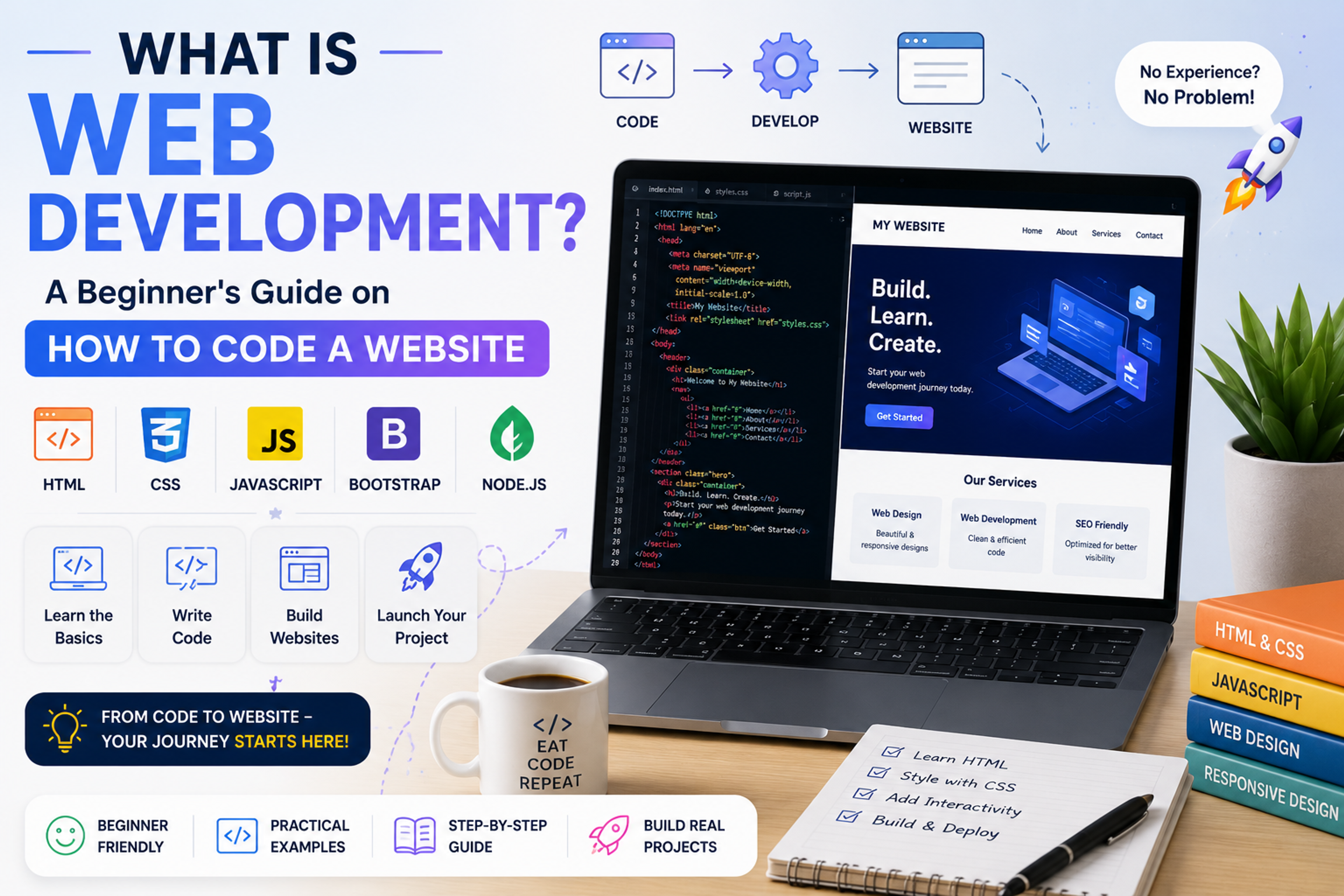
Front-end development. This is everything a visitor sees and clicks. Buttons, menus, layouts, animations. Developers build it with HTML, CSS, and JavaScript, often using frameworks like React, Angular, or Vue. The goal is a clean interface that feels quick and behaves the same on a laptop, a tablet, and a phone.
Back-end development. This is the engine behind the site. It handles databases, user accounts, logins, payments, and anything that stores or processes data. Common tools here include Node.js, Python, PHP, Laravel, and .NET. You never see the back end, but you feel it when something breaks.
Full-stack development. A full-stack developer works on both sides. For small and mid-sized projects, this is often the most cost-effective route because one person or team owns the whole build.
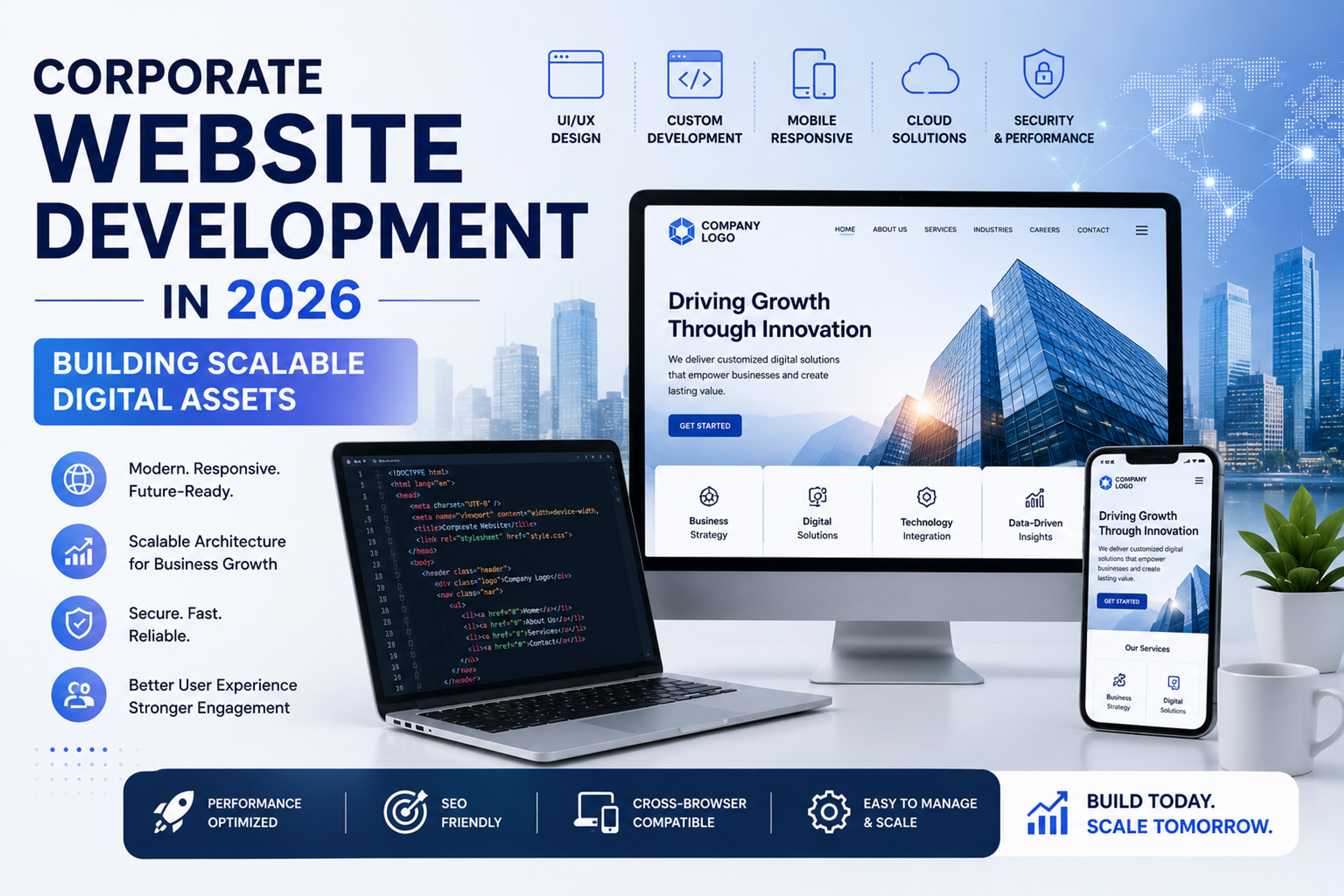
Custom development. Templates are fine for a quick brochure site. But they limit what you can do later. Custom development means the site is built around your business, your workflow, and your goals. It costs more up front and pays off when you need to grow, add features, or connect other tools.
The core services most teams offer
Here is the menu you will see from a serious web development agency, and what each item really means for you.
Responsive and mobile-first design
More than half of web traffic comes from phones. A responsive site adjusts to any screen size so nothing looks broken. Mobile-first means the team designs for the small screen before the desktop, which is the right order given how people actually browse today.
Ecommerce development
If you sell online, this is the heart of your site. It covers product pages, shopping carts, secure checkout, payment gateways, and inventory. Teams often build on Shopify, WooCommerce, or Magento, or code a custom store when the standard platforms cannot do what you need.
CMS setup
A content management system lets you update text, images, and blog posts yourself without calling a developer every time. WordPress powers a huge share of the web for this reason. Drupal suits larger, complex sites. Headless CMS options like Contentful are popular when you want to publish content across a website, an app, and other channels at once.
Web applications and portals
Some businesses need more than a website. They need a tool. Client portals, booking systems, dashboards, internal apps. These are software projects that live in a browser. They take longer to build and need careful planning, but they can remove hours of manual work from your week.
API and third-party integration
Your site rarely works alone. It connects to a CRM, an email platform, a payment processor, a shipping tool, or an analytics service. Good developers wire these together so data flows automatically instead of you copying it by hand.
Website redesign and migration
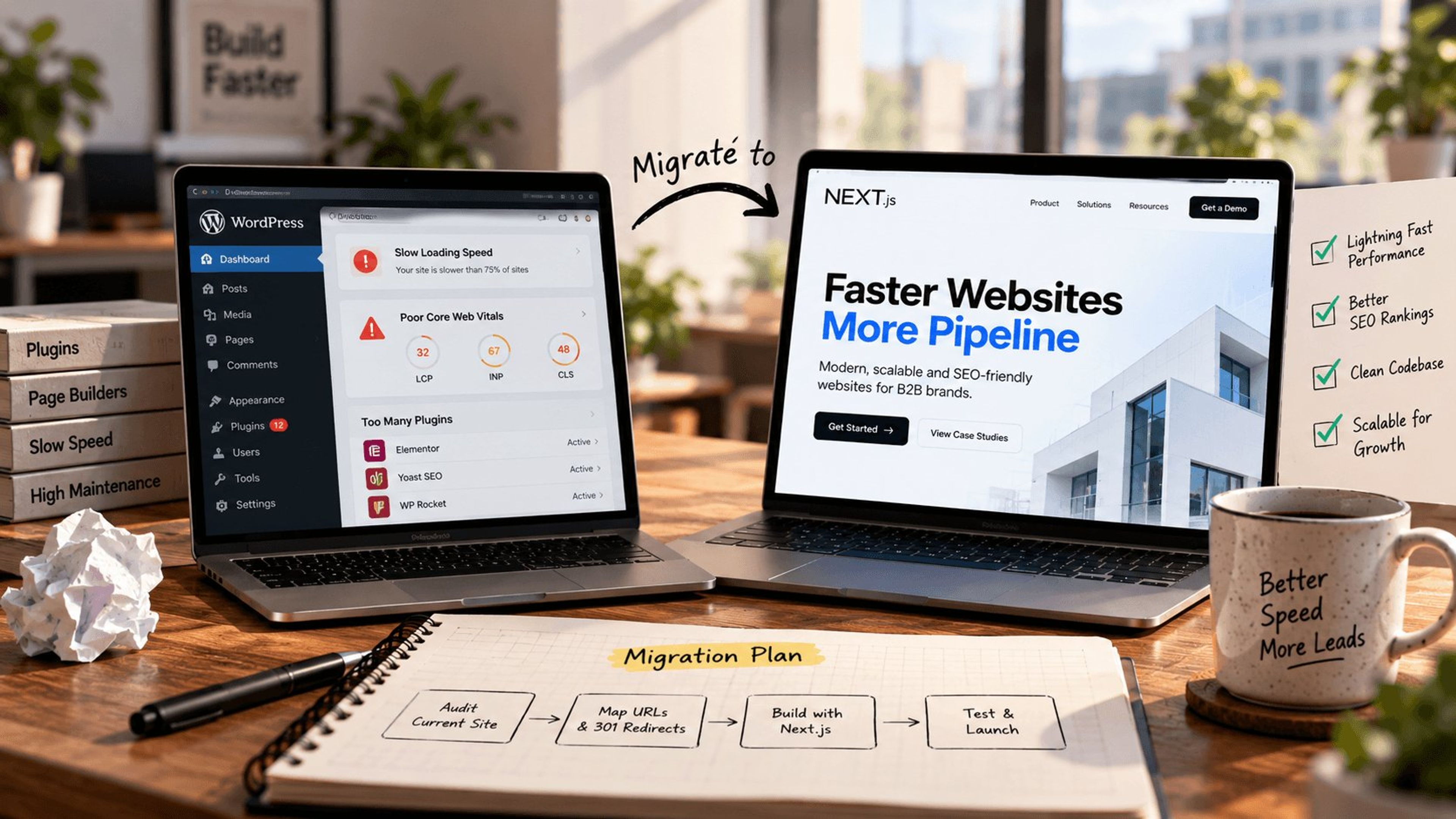
Not every project starts from zero. Plenty of businesses have a site that works but feels dated or slow. A redesign refreshes the look and structure. A migration moves your site to a new platform or host without losing content or search rankings, which is the part amateurs tend to get wrong.
The part clients forget: performance, SEO, and security
A pretty site that nobody finds is a poster in a locked room. This is where the best teams earn their fee.
Speed and Core Web Vitals. Google measures how fast your pages load and how stable they feel while loading. These scores affect your ranking. Skilled developers optimize images, clean up code, and cut anything that slows the page down.
SEO-friendly structure. Search engines read your site through its code. Clear headings, logical URLs, proper tags, and fast load times all help you rank. Development and SEO are not separate jobs. The build either helps your rankings or quietly hurts them.
Security. A hacked site can leak customer data and tank your reputation overnight. Development teams handle SSL certificates, secure code, regular updates, and backups. If you take payments or store personal data, this is not optional.
Accessibility. A site that works for people using screen readers or keyboard navigation reaches more users and keeps you on the right side of accessibility law. It also tends to be cleaner and easier for everyone.
There is a newer angle worth mentioning too. People now find brands through AI tools like ChatGPT, Gemini, and Claude, not only through Google. Sites built with clear structure and clean content are easier for these systems to read and recommend. It is early, but it is already shaping how forward-looking teams build.
How a web development project usually runs
Every good agency follows a version of the same process. Knowing the steps helps you spot a team that has done this before.
- Discovery. They ask about your business, your audience, your goals, and your competitors. Skip this step and you get a generic site.
- Planning and wireframes. A rough map of the pages and how users move through them. Cheap to change now, expensive to change later.
- Design. The visual layer. Colors, fonts, imagery, and the feel of the brand.
- Development. The build itself, front end and back end coming together.
- Testing. Checking every page, form, and link across browsers and devices before anyone sees it.
- Launch. The site goes live, with analytics set up so you can track what happens.
- Maintenance. Updates, backups, fixes, and small improvements after launch.
That last step matters more than people expect. A website is not a one-time purchase. It needs upkeep the same way a car does.
What website development services cost
Prices swing widely because projects do. Here is a realistic guide.
A simple site with a basic design and a handful of pages often runs from a few hundred to a couple of thousand dollars. A custom business website with a CMS, custom design, and integrations typically lands in the mid four figures to low five figures. Ecommerce stores and web applications climb higher, sometimes well into five figures, because of the extra functionality and testing involved.
Three things push the price up: the number of features, the level of custom design, and the amount of back-end logic. If you want to keep costs down, start with a clear list of what you actually need on day one, use a proven platform where it fits, and add advanced features in a later phase.
Be cautious with quotes that seem too low. A cheap site built on a rushed template can cost more in the long run when you have to rebuild it.
Types of websites these services build
- Business and brochure sites that explain what you do and bring in leads.
- Ecommerce stores for selling products or services online.
- Blogs and content sites built for publishing and search traffic.
- Landing pages focused on a single campaign or offer.
- Portfolios for creatives and agencies.
- Web apps and portals for logins, bookings, and internal tools.
How to choose the right web development company
You will find no shortage of options on directories like Clutch and DesignRush. Here is how to narrow the field without wasting weeks.
Look at their recent work. Ask for live sites, not screenshots. Visit those sites on your phone. Check how fast they load.
Read the reviews with a critical eye. Look for comments on communication and hitting deadlines, not just praise for the final design. Missed deadlines and silence are the two most common complaints, so hunt for evidence a team avoids both.
Ask who owns the site. You should own your domain, your content, and your code. Make sure that is clear in writing before you start.
Check what happens after launch. Ask about maintenance, support response times, and hosting. A team that disappears after the invoice is a team to avoid.
Match the tech to your needs. A WordPress shop and a custom React team solve different problems. Pick the one built for the kind of site you actually need.
Get the scope in writing. A clear proposal that lists pages, features, timeline, and price protects both sides. Vague scope is where projects go wrong.
A few honest questions to ask before you sign
- What is the total cost, and what is not included?
- How long will it take, and what could delay it?
- Will the site be built to load fast and rank in search?
- Who fixes things if something breaks after launch?
- Can I update content myself, or do I need you for every change?
Good answers to these five questions tell you almost everything about how the project will go.
The bottom line
A website is the one part of your business that works while you sleep. Good website development services build it to load fast, look right on every device, rank in search, and grow with you. Weigh the team on their recent work, their reviews, and their answers to the hard questions, not on the lowest price. Get that choice right and the site pays for itself many times over.
Explore Services & Solutions
Web Development Hub
Access our comprehensive vertical strategies, core processes, and expert resources.
View service hub Specialized SolutionWordPress Development Services
Build blazing-fast, high-converting custom WordPress and Next.js digital platforms.
Learn moreReady to grow your digital presence?
Connect with our execution specialists for a customized roadmap.