
In the SEO world, LSI keywords are the ghost in the machine. Ask a veteran marketer, and they’ll tell you they are the secret to "contextual relevance." Ask a Google engineer, and they’ll tell you you’re chasing a 1980s relic.
As we move through 2026, the debate around LSI based search engine optimization has reached a boiling point. With the rise of Search Generative Experience (SGE) and AI-led discovery, understanding how search engines actually group concepts is no longer optional—it’s the difference between page one and page ten.
If you’ve ever searched to define LSI keywords or wondered if latent semantic indexing keywords are still worth your time, this guide is for you. We’re stripping away the jargon to reveal the truth about what is LSI keyword in SEO today.
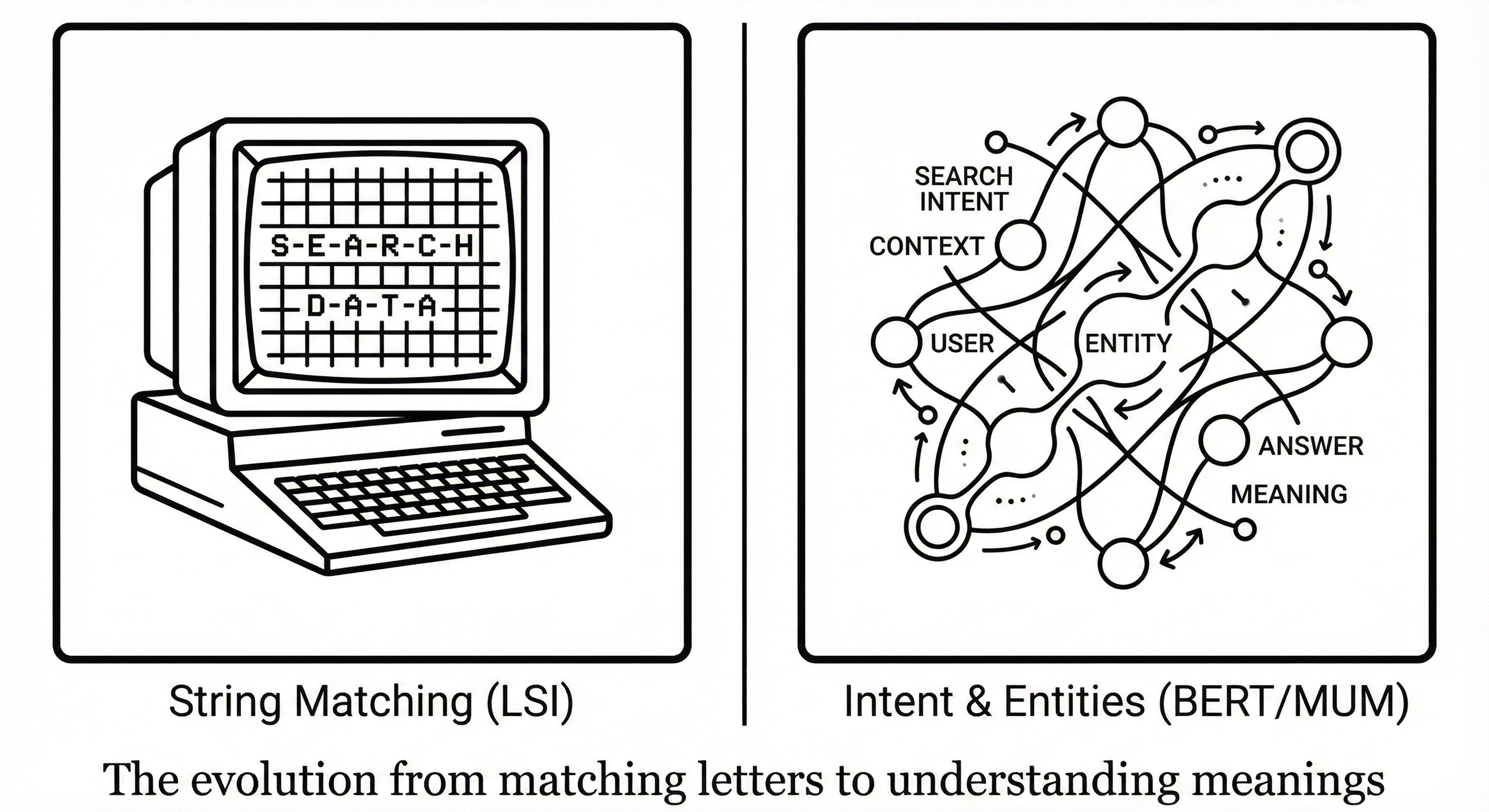
The Origin Story: What Is LSI Keyword?
To understand the myth, we have to look at the LSI keyword full form: Latent Semantic Indexing.
Developed in 1988, LSI was a mathematical method designed to solve a simple problem in small, static databases: synonyms. If you searched for "physician," LSI helped the computer realize that a document about "doctors" was also relevant, even if the exact word wasn't there.
In the early 2000s, SEOs latched onto this. They began to define LSI keywords as "related words" that help Google understand a topic. But here is the technical catch: Google never used LSI.
Why Google Doesn’t Use LSI
Google’s index is trillions of pages long and updates every second. LSI requires a "static" environment to run its complex math (Singular Value Decomposition). Trying to run LSI on the modern web would crash Google’s servers in minutes.
So, when we talk about LSI keywords meaning in 2026, we are actually talking about Semantic SEO—a much more advanced, AI-driven way of understanding language.
The 2026 Reality: If Not LSI, Then What?
If you are still trying to find LSI keywords to sprinkle into your text, you’re using a 2010 playbook. Today, Google uses Entities and Natural Language Processing (NLP).
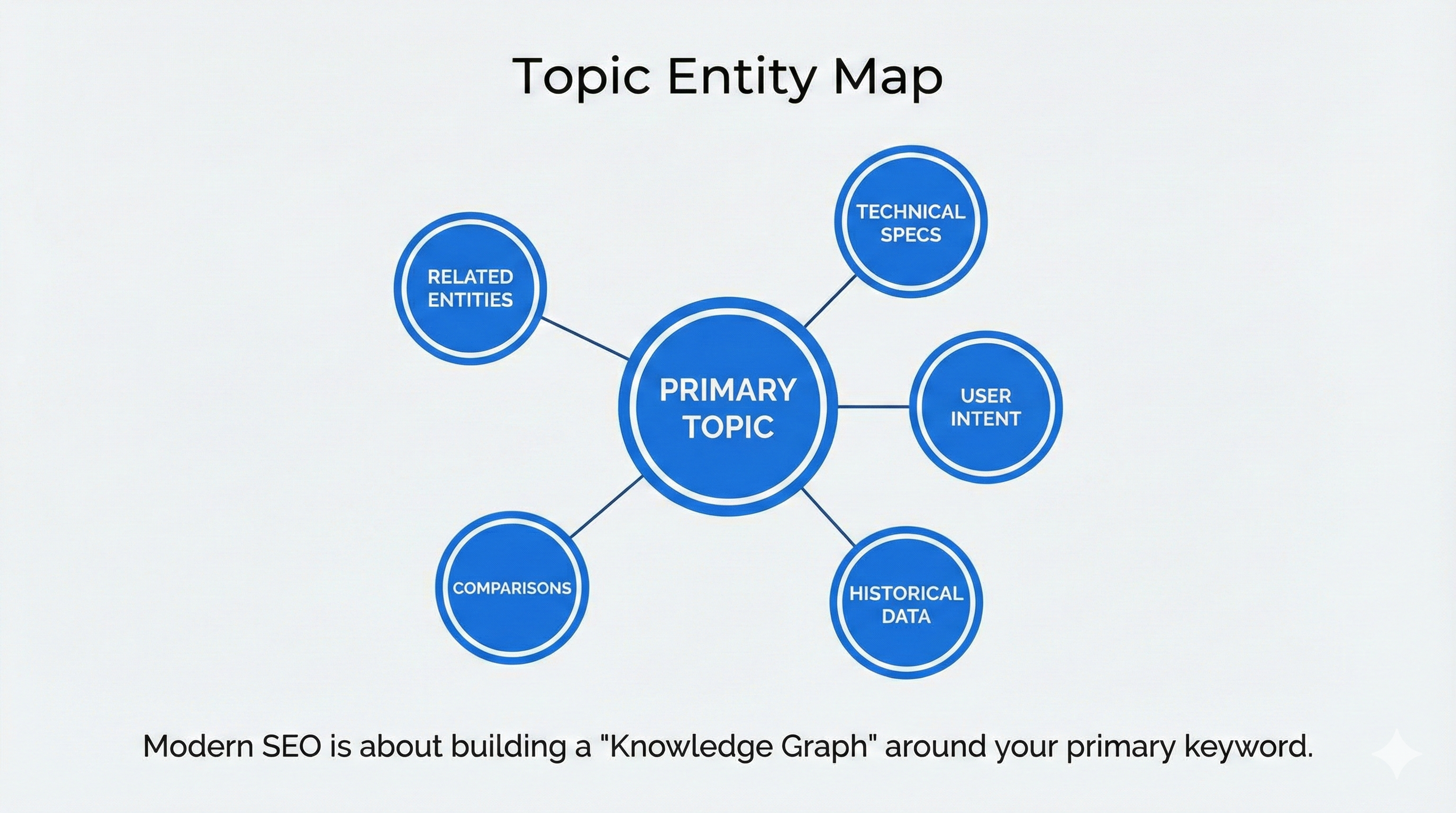
When you use LSI seo strategies today, you aren't just looking for synonyms. You are looking for "Entities" that prove you are an expert.
Example: The "Mars" Test
- If your content includes LSI words like planet, solar system, red, and orbit, Google knows you're talking about astronomy.
- If your content includes latent semantic keywords like chocolate, caramel, wrapper, and snack, Google knows you're talking about the candy bar.
These aren't just "keywords"—they are the DNA of a topic.
How to Find "LSI Keywords" (The Authority Workflow)
To overrank competitors, you can't just use a free LSI graph tool and call it a day. You need a workflow that mirrors how Google’s AI actually "thinks."
1. The Google SERP "Entity" Extraction
Don't just look at keywords; look at the Google Knowledge Graph.
- Search your primary keyword.
- Look at the "People Also Ask" boxes. These are the LSI keywords in seo that Google has already linked to your topic.
- Look at the "Related Searches" at the bottom. These are the intent-shifts Google expects to see on a high-quality page.
2. Semantic Triangulation
Instead of just one list, find terms that sit at the intersection of your topic and your audience's problem.
- Primary: What is LSI keyword
- Intersection Terms: Search intent, entity-based SEO, NLP, topical authority, BERT algorithm.
3. Use an LSI Tool (With Caution)
Tools can help with finding lsi keywords, but treat them as a "thesaurus on steroids" rather than a checklist. If a tool tells you to use "blue widget" five times, but it doesn't fit the flow, ignore it. Google prioritizes E-E-A-T (Experience, Expertise, Authoritativeness, and Trustworthiness) over keyword density.
Strategic Placement: Where to Use LSI Keywords
Knowing what are lsi keywords is useless if you don't know where to put them. To maximize your lsi based search engine optimization, follow this distribution map:
- H2 & H3 Headers: Use latent semantic keywords to frame your sub-topics. (e.g., If the H1 is about "Coffee Makers," an H2 should be about "Brewing Temperature" or "Water Filtration.")
- The First 100 Words: Establish context immediately by using two or three lsi keywords seo terms near your primary keyword.
- Image Alt Text: This is a goldmine. Don't just repeat your primary keyword. Use lsi words to describe the image's context.
- Anchor Text: When linking internally, use variations of your lsi keyword definition to help Google map your site's architecture.
Common Myths vs. 2026 Truths
| The Old Myth | The 2026 Reality |
|---|---|
| LSI is a ranking factor. | Contextual relevance is the factor; LSI is just an outdated name for it. |
| Keyword density matters. | Entity density and Topic Coverage are what Google actually measures. |
| You need 2% LSI keywords. | There is no magic number. Use words that a human expert would naturally use. |
| Google uses the LSI patent. | Google uses BERT, MUM, and Neural Matching to understand language nuances. |
Final Takeaway: Stop Optimizing for Letters, Start Optimizing for Meaning
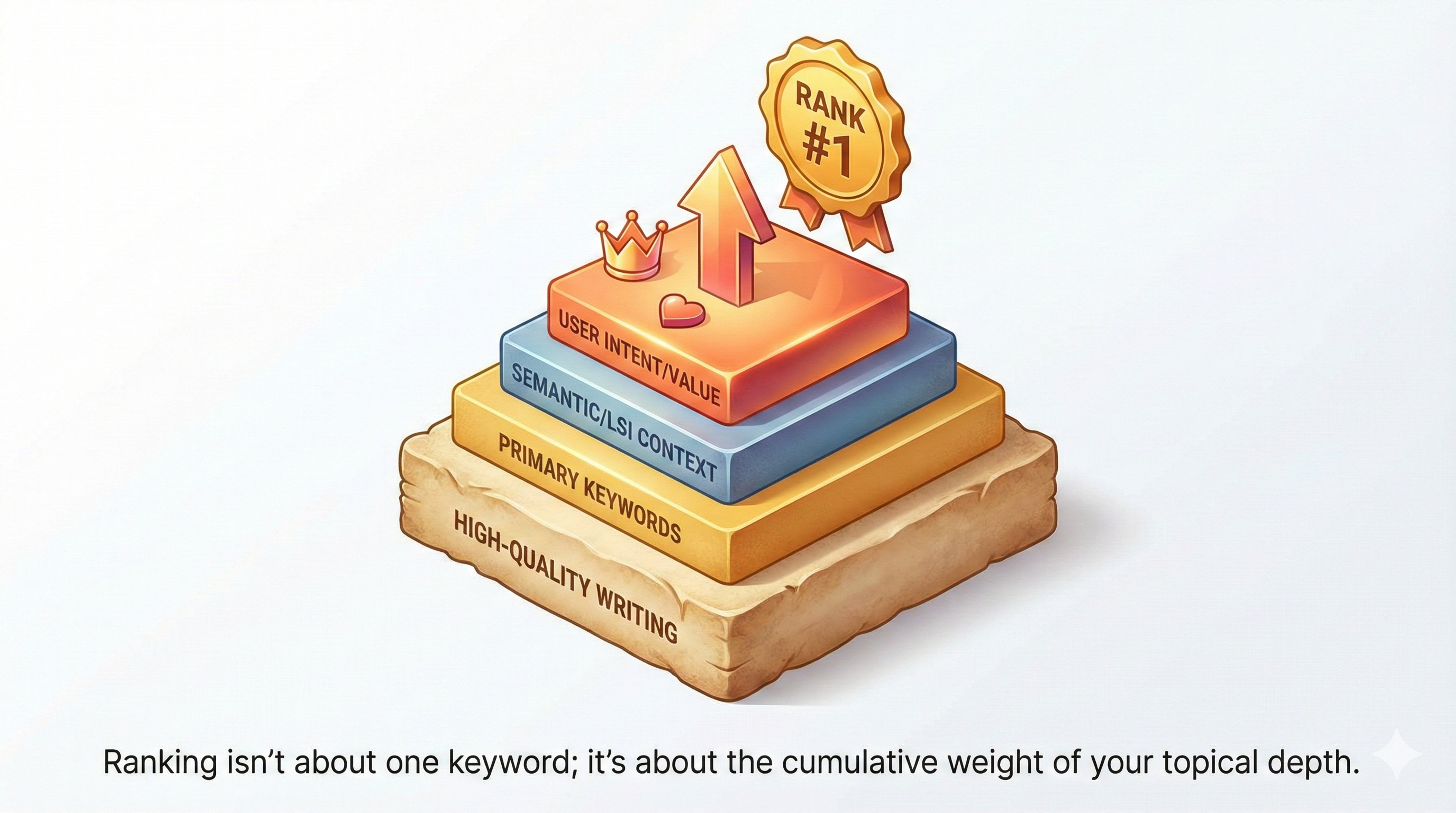
If you came here to find lsi keywords because you thought they were a secret hack, you now know the truth. The "myth" exists because the industry needed a simple name for a complex evolution.
To summarize what is lsi keywords in today’s landscape: they are the vocabulary of an expert.
If you want to rank #1 in 2026:
- Define your topic deeply.
- Understand the intent behind every lsi full form in seo.
- Write for the human, but structure for the AI.
Don't just "add keywords." Build a resource so complete that Google’s AI has no choice but to recognize you as the authority.
Explore Services & Solutions
SEO Services Hub
Access our comprehensive vertical strategies, core processes, and expert resources.
View service hub Specialized SolutionEnterprise Technical SEO
Drive high-intent organic traffic with our advanced technical auditing and optimization frameworks.
Learn moreReady to grow your digital presence?
Connect with our execution specialists for a customized roadmap.