Here is a question worth sitting with for a moment: If your brand appears on the first page of Google but ChatGPT, Perplexity, and Google AI Overviews never mention you are you actually visible?
That is not a rhetorical question anymore. It is the central business challenge of 2026.
Search behavior has shifted faster than most marketing teams expected. Today, a growing share of users ask an AI a question and act on the synthesized answer without ever clicking a single link. If your content is not being cited inside those AI-generated responses, you are losing ground that rankings alone cannot recover.
This is where Generative Engine Optimization (GEO) comes in — and understanding it clearly, right now, is one of the most important things any business or digital marketing agency can do this year.
We have spent time reviewing what the top-ranking articles on this topic are saying and, more importantly, what they are leaving out. This guide fills those gaps. It gives you a clear picture of how GEO works, what the data shows, and exactly what steps to take — whether you are running SEO services for clients, managing in-house growth, or building a strategy from scratch.
What Is Generative Engine Optimization?
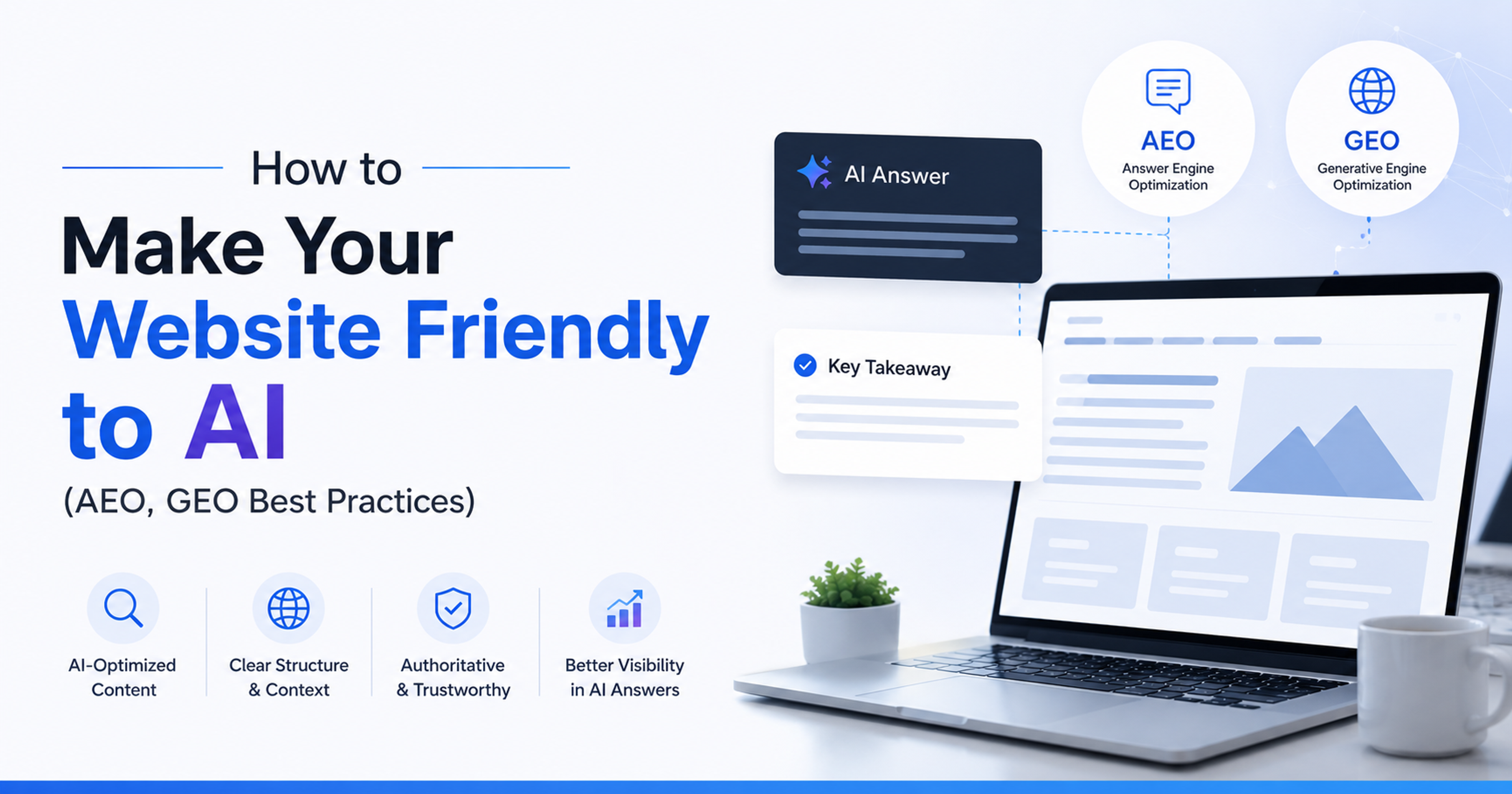
Generative Engine Optimization (GEO) is the practice of optimizing your content so that AI-powered platforms - like ChatGPT, Google AI Overviews, Perplexity, and Gemini - cite your brand, data, or expertise when generating answers to user questions.
It is different from traditional SEO in one important way: the goal is not just to rank in a list of links. The goal is to be the source the AI uses to write its answer.
Think about how this works in practice. A user types: "What is the best PPC strategy for an e-commerce brand in 2026?" ChatGPT does not show ten blue links. It writes a response — drawing from multiple web pages — and attributes the information to a handful of trusted sources. Those sources are the GEO winners.
In simple terms: SEO gets you on the list. GEO gets you into the answer.
The term was formally coined in academic research at Princeton, Georgia Tech, and IIT Delhi in 2024. By 2025, it entered mainstream marketing vocabulary. By early 2026, most enterprise marketing teams have a GEO initiative - while most small and mid-size businesses have not started yet. That gap is a genuine opportunity.
Why 2026 Is the Tipping Point - The Numbers Are Hard to Ignore?
Let us be honest about the scale of what is happening.
- AI-referred sessions jumped 527% year-over-year in the first five months of 2025, according to Previsible's 2025 AI Traffic Report.
- ChatGPT reached 800 million weekly active users as of October 2025, doubling from 400 million just eight months earlier.
- Daily AI search usage in the U.S. jumped from 14% in early 2025 to nearly 30% by late 2025 — almost one in three people now start their queries with an AI assistant.
- 37% of consumers now begin their search with AI tools instead of Google, according to Prismic's 2025 data.
- Gartner predicts traditional search volume will drop 25% by 2026 as users shift to AI-generated answers.
- Google AI Overviews now reaches 1.5 billion users monthly, appearing across an estimated 15-20% of all Google searches.
Here is the number that should get every SEO company in India and every digital marketing agency worldwide paying close attention:
A site on page one of Google can lose 40-45% of its traffic if it is not visible in AI Overview results.
And the conversion data makes the ROI case even more compelling. AI search visitors convert at 15.9% from ChatGPT and 10.5% from Perplexity, compared to the average organic search conversion rate of 1.76%. Ahrefs found that AI search visitors generated 12.1% of signups despite accounting for only 0.5% of total visitors — a 24:1 conversion ratio relative to organic search.
These are not experimental numbers. They are the new baseline.
GEO vs SEO: What Is Actually Different?
A lot of content out there either over claims the differences or dismisses GEO as "just SEO with a new name." Neither is accurate.
Here is the honest picture:
| Factor | Traditional SEO | Generative Engine Optimization (GEO) |
|---|---|---|
| Goal | Rank in search results (position 1-10) | Get cited in AI-generated answers |
| User behavior | User clicks your link | User reads AI's answer (may or may not click) |
| Primary signal | Backlinks, keywords, Core Web Vitals | Authority, structure, data richness, E-E-A-T |
| Content format | Keyword-optimized pages | Answer-first, citation-friendly, structured |
| Measurement | Rankings, organic traffic | Share of Model (SoM), AI referral traffic |
| Competition | Based on domain authority + relevance | Based on trust signals + content extractability |
| Overlap with Google rank | Ranking page 1 matters a lot | Ranking page 1 helps but does not guarantee citation |
Research from GEO firm Brandlight found that the overlap between top Google links and AI-cited sources has dropped from 70% to below 20%. That is the stat most SEO guides skip over. Ranking well organically no longer automatically places you in AI answers.
That said, GEO is not a replacement for SEO. It is a layer on top of it. Research confirms that content with a strong SEO foundation — core web vitals, proper indexation, solid domain authority — still performs better in AI search than technically weak content. Think of it as: SEO earns your seat at the table. GEO determines whether you get quoted.
How AI Search Engines Actually Choose Their Sources?
Before you can optimize for GEO, you need to understand the mechanism. Most guides gloss over this part. Let us be specific.
When a user asks an AI a question, the system does not paste the full query into a search bar. It does something called query fan-out — it breaks the question into several smaller sub-queries, searches for each one separately, retrieves documents, and then synthesizes a response from multiple sources.
Most AI systems use a technique called RAG — Retrieval-Augmented Generation. RAG works like this:
- Query fan-out — The AI splits your question into smaller search-ready fragments
- Retrieval — The AI searches the web and its own knowledge base for relevant sources
- Extraction — It pulls specific passages from those pages
- Synthesis — It rewrites and combines information from several sources into one answer
- Citation — It attributes the answer to the sources it used
The implication is important: your content needs to be written in extractable passages, not just well-written paragraphs. The AI is essentially looking for content it can pick up and use cleanly. Pages that bury their answer in paragraph four, after three paragraphs of preamble, get skipped over in favor of pages that answer directly.
Data from AI+Automation's deep-dive study of 42,000+ cited URLs confirms this. The strongest predictor of AI citation is not backlink count or domain age — it is schema markup presence, followed by answer-first content structure, and primary-source data (i.e., original statistics or research, not just aggregated information).
10 GEO Strategies That Actually Move the Needle in 2026
These strategies are backed by research - not guesswork. We have mapped each one to documented outcomes.
1. Write Answer-First Content (Stop Burying the Lead)
AI retrieval systems reward pages that answer the question in the first two to three sentences. This is the single most counterintuitive change for marketers trained on SEO — where a build-up intro felt natural and Google did not penalize it.
In GEO, your introduction is your answer. Every article, every service page, every blog post should open with a direct, clear response to the primary question it addresses.
The habit of writing a 200-word context-setting intro before getting to the point is, as one study framed it, a "GEO penalty." Write the answer. Then explain it.
2. Add Statistics With Named Sources
This is the single most effective GEO tactic that research has validated. Adding statistics to content improves AI visibility by up to 41%, according to the original Princeton GEO study (Aggarwal et al., KDD 2024).
But there is a specific way to do this. The statistic needs to be attributed to a named source. "Studies show that..." does not count. "According to Gartner's 2026 Search Behavior Report..." does. Named sources give the AI a reason to trust the claim and cite it.
This applies to every piece of content your SEO services team produces. Data-dense, source-rich content is the highest-value content category for AI citation.
3. Implement Schema Markup - The Right Types
Schema markup is the dominant content-level predictor of AI citation, according to a large-scale study of citation patterns across four AI platforms. The key schema types to implement:
- Article schema — signals content type and authorship
- FAQPage schema — explicitly structures question-answer content for AI extraction
- HowTo schema — ideal for instructional content
- Organization schema — builds entity clarity for your brand
- Person/Author schema — links content to credentialed human experts
Content with proper schema markup shows 30-40% higher AI visibility, according to Dataslayer's 2026 analysis. For any SEO company worth its retainer, schema implementation should be a baseline deliverable — not an optional add-on.
One technical point that most guides skip: check your robots.txt file. You need to explicitly allow AI crawlers — GPT Bot, Google-Extended, Perplexity Bot, and Claude Bot. Blocking these crawlers eliminates GEO visibility entirely. A surprising number of websites still do this by accident.
4. Build Topical Authority Through Content Clusters
A single well-written article rarely earns consistent AI citations. AI engines favor sources that demonstrate comprehensive expertise across a topic — not isolated posts.
A content cluster is a network of interlinked articles and pages covering one topic from multiple angles. For example, a digital marketing agency writing about GEO might cluster it alongside articles on: SEO services, AI Overviews optimization, schema markup guides, content strategy, E-E-A-T implementation, and performance measurement.
When an AI system encounters multiple high-quality, interlinked pages from the same domain covering the same topic, it builds stronger entity-level trust for that domain. That trust translates into repeated citation across diverse queries — not just one-time hits.
This is why topical authority matters more than ever in 2026. For any SEO company in India or globally, the agencies that build deep content clusters around their clients' core services will significantly outperform those running one-off blog campaigns.
5. Earn Third-Party Mentions and Digital PR
Here is the finding that changes many agencies' strategies once they see it: your own website is not your strongest GEO asset in isolation. A Princeton study found that AI engines strongly favor earned media — authoritative third-party sources — over brand-owned content.
What this means in practice:
- Press mentions in industry publications
- Expert quotes attributed to your team members in external articles
- Business listings and directory citations (especially for local queries)
- Unlinked brand mentions on credible platforms
- Review site presence (Google Business Profile, G2, Trustpilot, etc.)
Each of these signals tells AI systems that your brand is recognized by sources outside your own ecosystem. Brand mentions correlate 3x more strongly with AI citation than page-level content factors alone, according to omnibound.ai's 2026 GEO statistics analysis.
Digital PR, which was already important for traditional SEO, has become arguably the highest-leverage GEO investment available.
6. Optimize for E-E-A-T Signals Aggressively
Google AI Overviews in particular place heavy weight on Experience, Expertise, Authoritativeness, and Trustworthiness (E-E-A-T) signals. But this principle applies across all AI platforms.
In practice, E-E-A-T for GEO means:
- Named authors on every article, with clear credentials and verifiable external presence (a LinkedIn profile, author bio, speaking credits)
- About pages that clearly explain the organization's background and expertise
- Expert quotes with attribution (name, title, company)
- HTTPS and Core Web Vitals as baseline technical requirements
- Consistent NAP (Name, Address, Phone) across all directories for local businesses
Most content teams still treat author bios as afterthoughts. In GEO, a credentialed named author is a citation signal. Treat it that way.
7. Optimize for Question-Based Headings and FAQs
AI systems perform query fan-out — they break user questions into smaller queries. This means your headings need to match the actual question fragments users ask.
Instead of: "Our Approach to Content Strategy"
Write: "What Does a Good Content Strategy Look Like in 2026?"
Instead of: "PPC Services Overview"
Write: "How Do PPC Services Work and What Results Should You Expect?"
FAQ sections, with proper FAQ Page schema, are among the highest-citation content formats available. AI engines love structured question-answer content because it is easy to extract. Every major piece of content you publish should have a FAQ section — and it should be marked up correctly.
8. Publish Original Data and Research
AI systems are sources, not just aggregators. They are actively looking for content that itself produces original data — not content that summarizes what others found.
Original research, proprietary surveys, case studies with real numbers, A/B test results, and industry benchmarks all signal to AI systems that your content is a primary source, not a re-packaged secondary one.
For a digital marketing agency or SEO company in India, this could look like: publishing a quarterly index of AI search trends in your industry, documenting growth optimization case studies with hard numbers, or surveying your client base and publishing the results. Content that is the source AI engines cite is far more valuable than content that quotes other sources.
9. Keep Content Fresh and Timestamp It Visibly
AI retrieval systems weight recent content for time-sensitive queries. Articles with a visible "Last Updated: [recent date]" timestamp, 2025/2026 statistics, and fresh examples outperform older evergreen content for fast-moving topics.
Add a "What Changed in 2026" section to your most important pages. This signals freshness to both AI systems and human readers. Set a quarterly review cycle for your high-traffic content — update the statistics, refresh the examples, update the date.
For SEO companies managing client content at scale, building a content freshness audit into monthly retainer deliverables is one of the most GEO-effective improvements you can make.
10. Optimize Video Content for AI Citation
This is the piece almost every GEO article skips entirely, and it matters more than most marketers realize.
Video content — particularly YouTube videos — is increasingly being surfaced in AI-generated answers. As video services become a growing part of many brands' marketing mix, the question is whether that video content is structured to be AI-discoverable.
For video to contribute to your GEO strategy:
- Transcripts — Upload clean, accurate transcripts to YouTube and your website. AI systems can extract from transcripts what they cannot extract from video files.
- Video schema markup — Video Object schema tells AI systems exactly what your video covers, who created it, and when.
- Chapter markers — YouTube chapters make content extractable at the topic level, not just the video level.
- Keyword-rich titles and descriptions — AI systems treat video metadata as content. Write titles and descriptions that directly answer user questions.
- Embed videos on keyword-relevant pages — A video embedded on a well-optimized GEO page reinforces both the video's discoverability and the page's authority.
Brands investing in video services in 2026 should treat transcript optimization as part of production — not an afterthought.
GEO + PPC: The Combination Most Strategies Are Missing
Here is a connection that surprisingly few guides draw: Generative Engine Optimization and PPC Services are more intertwined than they look.
When AI-generated answers increasingly intercept users at the top of the funnel, the nature of PPC changes. Users who arrive at your site via a paid click, having already received an AI answer about your category, arrive with more context and higher intent. They are no longer "cold." The AI primed them.
This creates a powerful strategic combination:
- GEO builds category authority — AI tools mention your brand in relevant searches, creating brand familiarity before the user ever sees your ad.
- PPC captures the high-intent moment — When a user is ready to transact, paid search captures the conversion from a pre-warmed audience.
- The overlap reduces CPC waste — Users already familiar with your brand from AI citations convert on PPC clicks at a higher rate, improving your overall PPC return on ad spend.
Conversely, PPC data — specifically, which keywords drive your highest converting ad clicks — is a goldmine for GEO content planning. If users are clicking and converting on ads for "growth optimization services" or "PPC management for e-commerce," those are exactly the topics your GEO content cluster should target.
The agencies winning in 2026 are not running separate SEO, GEO, and PPC strategies. They are running one unified growth optimization strategy with shared data, shared intent insights, and coordinated execution.
GEO for Indian Businesses: A First-Mover Opportunity
India's internet landscape in 2026 is uniquely positioned for GEO to have outsized impact. Here is why this matters specifically for any SEO company in India building strategies right now.
India has over 800 million internet users and AI adoption is accelerating rapidly across Tier 1, Tier 2, and Tier 3 cities. Voice search in regional languages already accounts for over 58% of searches in Tier 2 and Tier 3 cities, primarily in Hindi, Tamil, Telugu, and Bengali. AI-powered search in regional languages is expanding.
For Indian businesses and the digital marketing agencies that serve them, several factors make early GEO adoption especially valuable:
Lower competition, higher upside - Most GEO content in English targets Western markets. For English-language queries about Indian markets, industries, and services, the GEO citation landscape is significantly less crowded than it is in the US or UK. Early movers who establish topical authority now will hold those citation positions for longer before competition intensifies.
Google Business Profile for local GEO - AI engines actively pull from Google Business Profiles when generating location-specific recommendations. An optimized GBP — with complete service descriptions, fresh photos, keyword-rich reviews, and accurate hours — is one of the most powerful GEO signals available for local Indian businesses. Most are still underutilizing it.
The content cluster advantage - Indian businesses in fast-growing sectors — fintech, edtech, D2C e-commerce, SaaS — have an opportunity to establish AI citation authority in their verticals before Western competitors recognize the market. Comprehensive content clusters built around these verticals will earn citations that broad, non-geographically-specific competitors cannot.
For any SEO company in India advising clients in 2026: GEO is not a US-only consideration. It is a competitive moat waiting to be claimed in the Indian digital market, and the window to claim it cheaply is now.
How to Measure GEO Performance: Metrics That Actually Matter?
One of the most common objections to GEO investment is "how do we know if it's working?" This is fair — traditional rankings and traffic dashboards do not capture AI visibility.
Here are the metrics that matter:
Share of Model (SoM): This is the GEO equivalent of Share of Voice. Track how often your brand appears in AI responses for the key questions in your space, compared to competitors. Tools like Semrush's Enterprise AIO, evertune.ai, and Profound now provide this tracking.
AI referral traffic in GA4: Set up a custom channel group in GA4 to segment traffic from ChatGPT.com, Perplexity.ai, Claude.ai, and similar sources. This traffic is already showing up in your analytics — it is just not being isolated or reported on by most teams.
Citation sentiment: Not all citations are equal. Track not just whether your brand is cited but how it is cited — whether the AI frames you positively, neutrally, or negatively.
Zero-click displacement: Measure the gap between impressions (your content being shown in search) and clicks. As AI answers intercept more queries, impressions without clicks is increasingly normal. GEO success means your brand is part of those answers even when no click occurs.
Branded search lift: Brands consistently cited by AI tools see an increase in branded search volume. Users hear your brand from an AI recommendation, then search for you directly. Tracking branded search trends is an indirect but meaningful GEO signal.
One benchmark worth noting: according to BrightEdge's research, AI Overview citations increase adjacent organic CTR by 35%. GEO does not cannibalize traditional SEO — it reinforces it.
The Cost of Not Doing GEO: A Realistic Look
Let us be direct about what happens if a business or SEO agency ignores GEO in 2026.
Traffic does not crash overnight. The shift is gradual — but it is directional and it does not reverse. Organic clicks decline slowly as AI answers intercept an increasing share of queries. The pages that used to drive consistent top-funnel traffic start showing impression data without corresponding clicks. Leads from organic search plateau or fall.
Meanwhile, competitors who established GEO authority early are being cited by ChatGPT, Perplexity, and Google AI Overviews for the exact queries your business used to own organically. Those citations build brand familiarity at scale — without ad spend. The compounding effect of being a trusted AI-cited source is significant and grows over time.
The agencies that are building GEO capability now — refining content structures, earning third-party mentions, implementing schema at scale — will hold citation positions that late movers will find genuinely difficult to displace. Early GEO authority compounds the same way that early SEO authority compounded in 2010. The brands that moved early then still benefit from it today.
97% of digital leaders surveyed by Conductor report positive impact from their GEO efforts. GEO now represents 12% of average digital marketing budgets and 32% of digital leaders have declared it their top priority for 2026.
The cost of waiting is not zero. It is opportunity lost to competitors who move first.
How a Digital Marketing Agency Can Help You Win at GEO?
GEO is not a single-person task. It is a cross-functional strategy that touches content, technical SEO, digital PR, video services, paid media, and analytics. Doing it well requires the kind of coordinated execution that a full-service digital marketing agency is built to provide.
Here is what working with the right agency on GEO should look like:
GEO Content Audit: A review of your existing content to identify what is already citation-ready, what needs restructuring, and what topics need new content to build topical authority clusters.
Technical GEO Foundation: Schema markup implementation across key page types, robots.txt review for AI crawler access, author bio and E-E-A-T signal optimization.
Content Cluster Development: A structured plan for building topical authority through interlinked articles, FAQ pages, comparison content, and original data reports — all written answer-first.
Digital PR and Third-Party Citation Building: Proactive outreach to earn brand mentions, expert quotes, and coverage on credible industry publications.
AI Traffic Tracking Setup: GA4 channel configuration, Share of Model baseline measurement, and competitive citation benchmarking.
Integrated Growth Optimization: Connecting GEO insights to PPC targeting, aligning video services content with AI-discoverable transcripts and schema, and building unified reporting across all channels.
The strongest SEO companies and digital marketing agencies in 2026 are not treating GEO as a separate service line. They are weaving it into every SEO engagement, every content strategy, every PPC brief, and every video production workflow. That integration is what turns GEO from a tactic into a durable competitive advantage.
Conclusion: The Window to Move First Is Still Open - But Not for Long
Generative Engine Optimization is not a trend. It is a structural shift in how information is discovered and consumed — and the numbers confirm that the shift is already well underway.
The businesses and agencies that treat GEO as a "thing to watch" are ceding citation territory to early movers right now. The good news is that the competitive landscape, especially in markets like India, is still relatively open. Establishing topical authority, building citation-worthy content, and earning third-party mentions today will compound over the next two to three years in ways that will be very hard for late movers to replicate.
The practical starting point is simpler than many guides make it seem:
- Audit your best-performing content and restructure it to answer questions in the first two sentences
- Add named statistics with source attribution throughout your key pages
- Implement FAQPage, Article, and Organization schema across your site
- Check your robots.txt file to ensure AI crawlers have access
- Set up AI referral traffic tracking in GA4 today
- Start tracking your Share of Model against two or three key competitors
If you are working with a digital marketing agency that has not raised GEO in strategy conversations yet, that is worth raising yourself. The agencies defining 2026 are the ones integrating GEO alongside SEO services, PPC services, video services, and growth optimization — not treating it as a separate experiment.
Search has always rewarded those who understood the new rules before everyone else did. The rules have changed again. The question is whether you move now or catch up later.
Explore Services & Solutions
SEO Services Hub
Access our comprehensive vertical strategies, core processes, and expert resources.
View service hub Specialized SolutionAI Search Optimization (GEO)
Prepare your website for AI engines like ChatGPT, Gemini, and Search Generative Experience.
Learn moreReady to grow your digital presence?
Connect with our execution specialists for a customized roadmap.