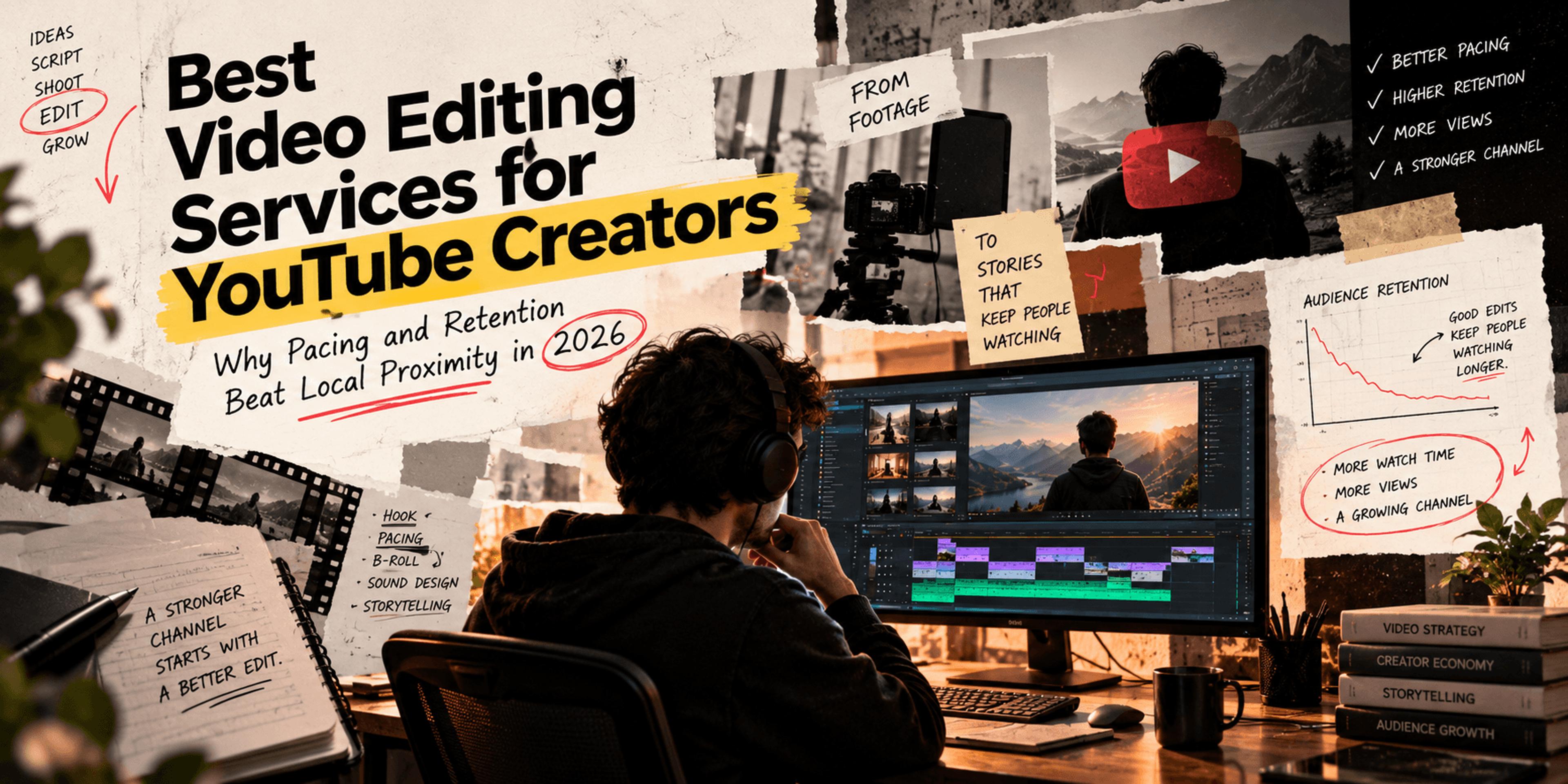
Let's be real for a second. We are living in a video-first world. From the cinematic blockbusters on our screens to the fifteen-second clips we doom-scroll through on our phones, video is how we connect, learn, and get entertained. But have you ever stopped to think about what makes a video good? What takes a pile of raw camera footage and turns it into a story that makes you laugh, cry, or click "buy"?
The answer is video editing.
It’s the invisible art. When it’s done well, you don’t even notice it. You’re just lost in the story. But becoming one of those invisible magicians? That takes a mix of technical skill, creative vision, and understanding a few golden rules. Whether you dream of cutting feature films or just want your TikToks to pop, this guide is for you.
What Is Video Editing, Anyway?
At its core, video editing is storytelling. It’s the process of selecting, arranging, trimming, and combining video clips, audio, images, and graphics to create a cohesive final product.
Think of it like writing. The raw footage is your jumbled mess of notes and ideas. Editing is where you structure those sentences, cut the fluff, and polish the paragraphs until your message sings. It's where the magic happens, transforming disjointed shots into a narrative that flows, has rhythm, and evokes emotion.
Historically, this was a physical process. Editors would literally cut and paste strips of film together—a linear, destructive method. Today, we live in the glorious age of non-linear editing (NLE). Digital software lets us move clips around endlessly without ever damaging the original files, opening up a universe of creative possibilities.
The Modern Toolkit: From Powerhouses to AI Wizards
The tools at an editor’s disposal have changed dramatically. It used to be that you needed an expensive suite and a powerful computer to even get started. Now? The barrier to entry has practically vanished.
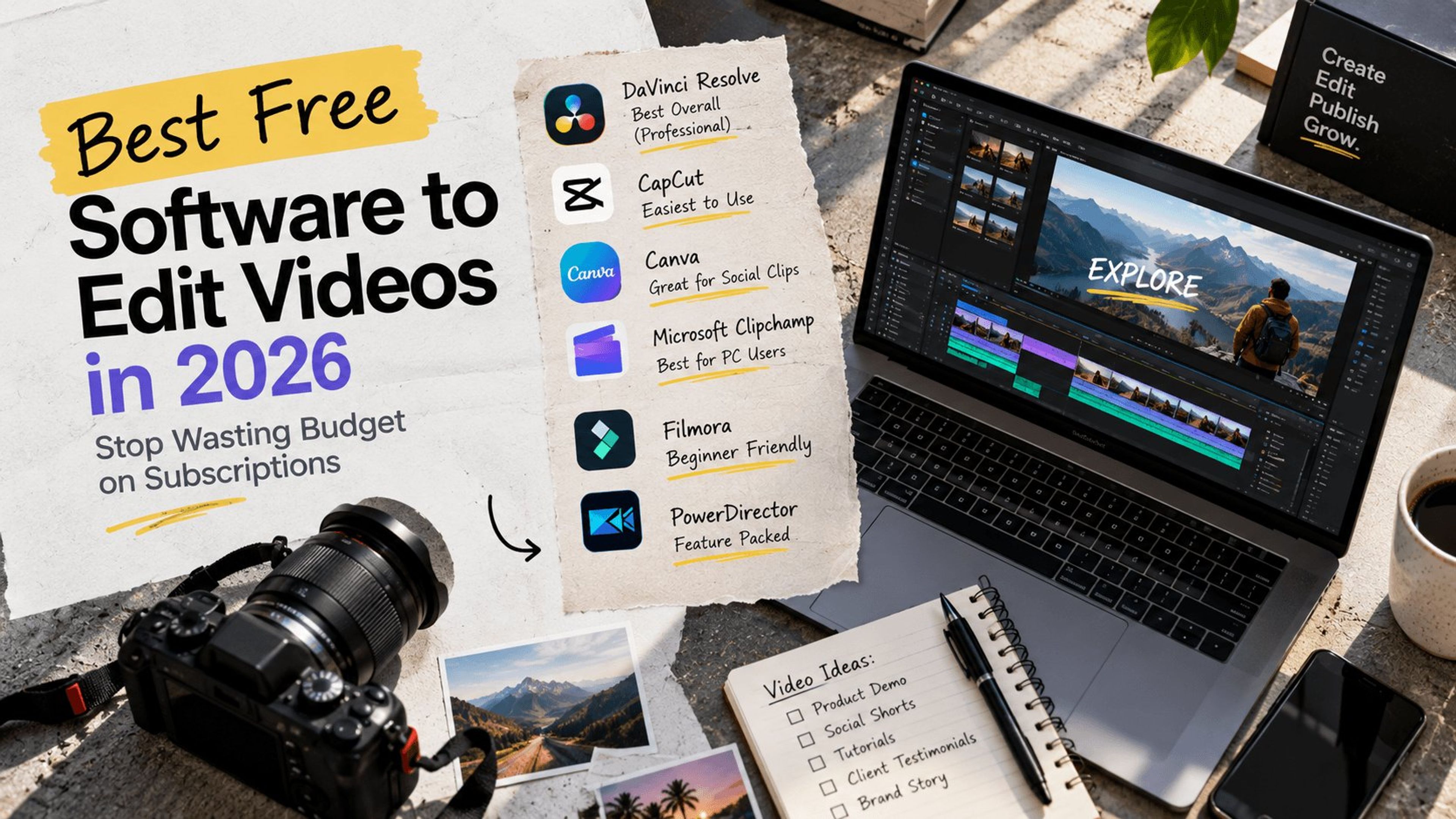
- The Industry Standards: For professional filmmakers and broadcast editors, heavy-hitters like Adobe Premiere Pro, Final Cut Pro, DaVinci Resolve, and the Invideo editor are the go-to tools. They offer unparalleled control over every single frame, color grade using AI, and audio waveform. Mastering these is a rite of passage for anyone looking for a career in film or TV.
- The New Wave of Creators: But let’s not ignore the revolution happening in your browser and on your phone. Tools like CapCut have democratized editing, packing powerful, AI-driven features into incredibly user-friendly interfaces. Need to remove a background without a green screen? Add auto-captions in seconds? Turn a long video into a short, punchy social post? These tools make complex tasks push-button simple, perfect for the fast-paced world of social media content.
- Editing with Text: Then there are innovators like Descript, which completely rethink the process. Imagine editing a video by just editing the transcript text—delete a word in the document, and the corresponding video clip disappears. It’s mind-bendingly efficient for podcasters and interview-based content.
The Golden Rules: Principles Every Editor Should Know
Having a fancy hammer doesn’t make you a carpenter. The same applies to editing software. To make great videos, you need to understand the fundamental principles of the craft.
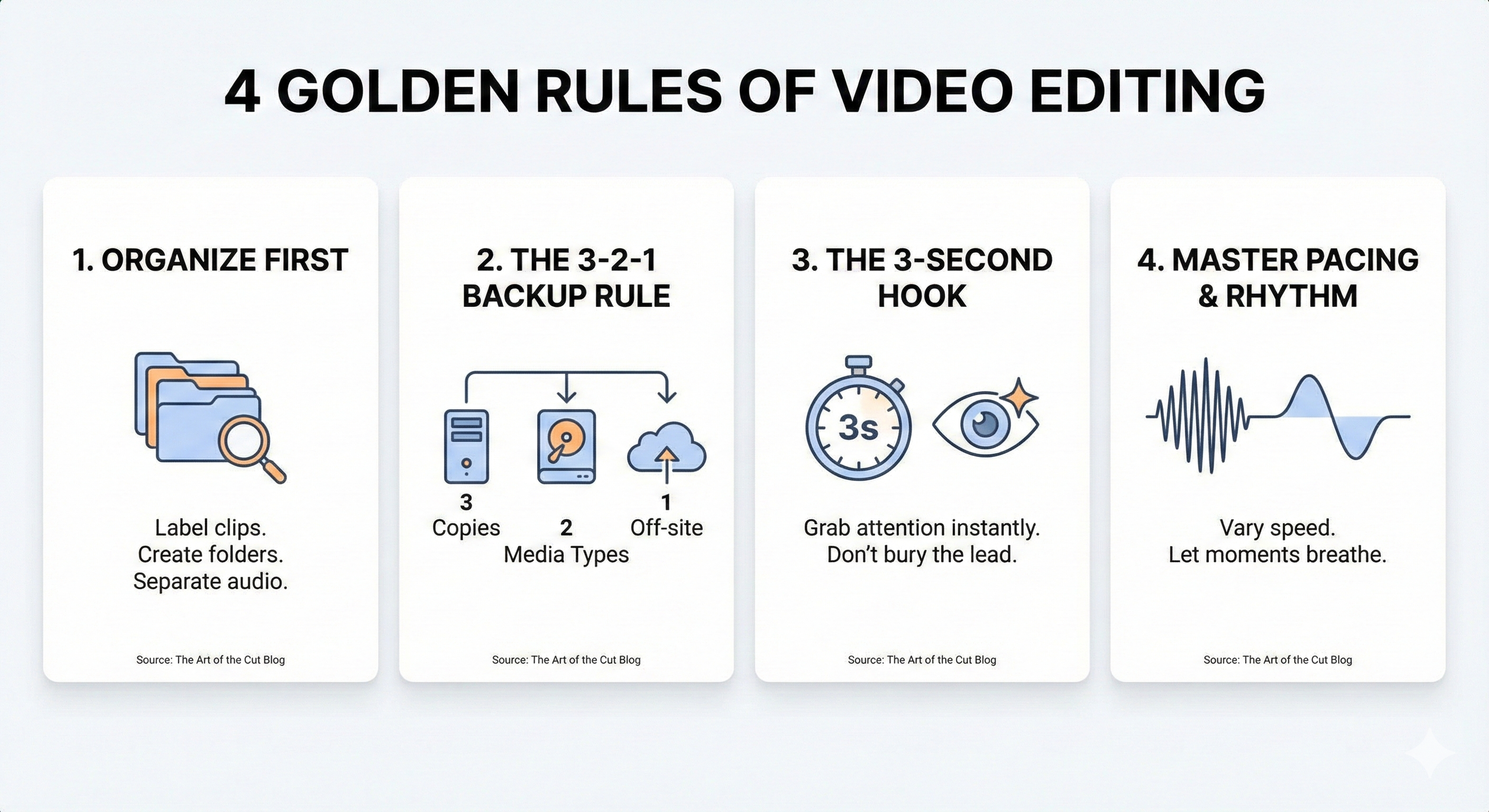
Organization is Your Best Friend: Before you make a single cut, organize your footage. Create folders, label your clips, and separate your audio. A messy project file is a one-way ticket to a creative meltdown.
The "3-2-1 Rule" Will Save Your Life: This isn't an editing technique; it's a survival strategy. Always have three copies of your precious footage, stored on two different types of media (like your computer's drive and an external hard drive), with one copy stored off-site (like in the cloud). Hard drives will fail. Don't learn this lesson the hard way.
Hook Them Fast: In the age of the endless scroll, you have about three seconds to grab a viewer's attention. Start with your most compelling visual or an intriguing question. Don't bury the lead.
Pacing and Rhythm: A good edit has a heartbeat. It knows when to speed up with quick cuts for action and excitement, and when to slow down to let an emotional moment breathe. The pacing should always serve the story you're trying to tell.
A World of Career Possibilities
Video editing isn't a single job; it's an entire ecosystem of careers.
- The Storytellers: You have the lead Video Editors working on films, documentaries, and TV shows, collaborating with directors to shape the narrative.
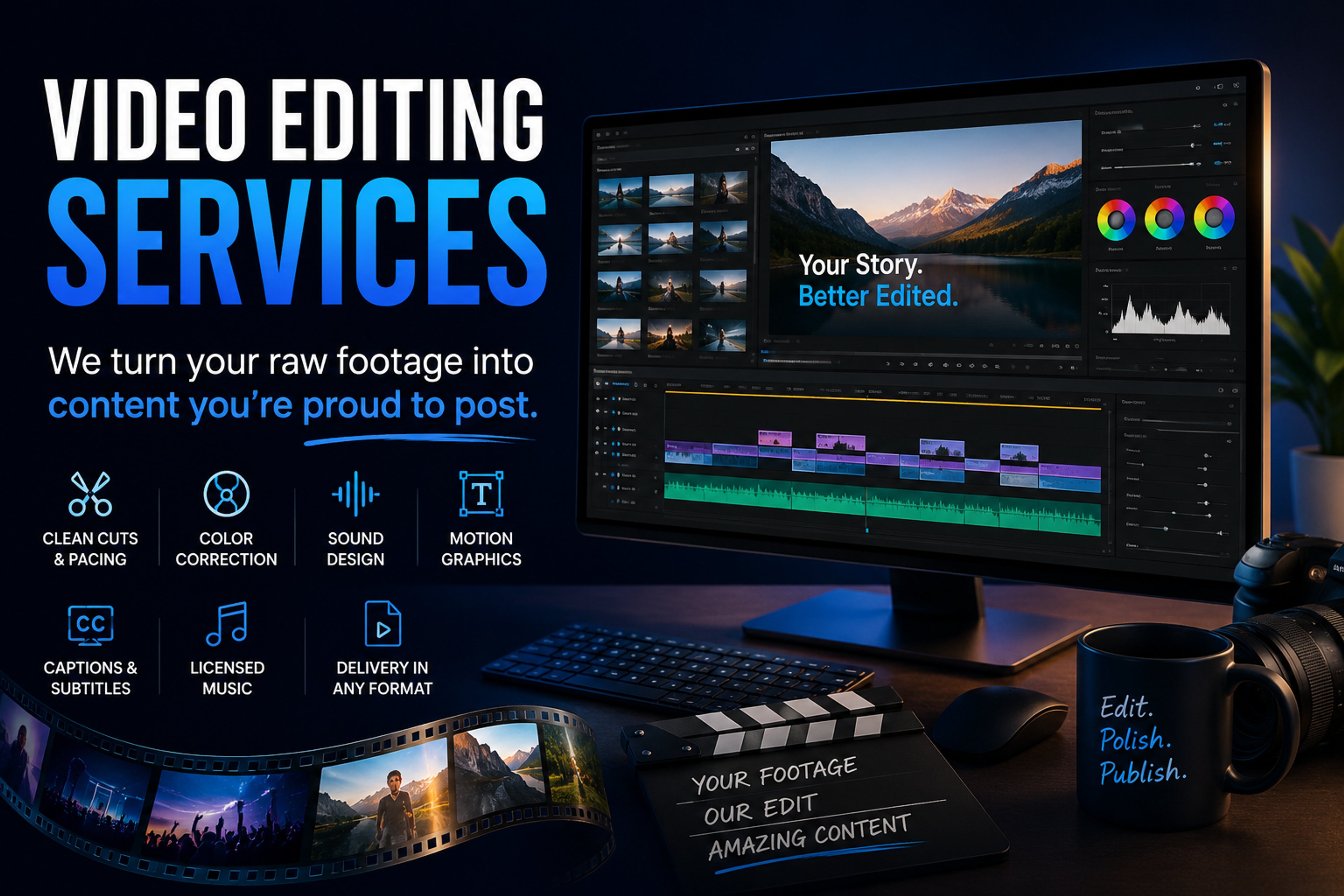
- The Specialists: There are Assistant Editors who handle the crucial organizational work, Colorists who give a film its distinct visual mood, and Motion Graphics Designers who create the animated titles and effects that blend seamlessly with live-action footage.
- The New Media Pros: Then there's the exploding world of social media editors, brand content creators, and commercial editors who specialize in short-form, high-impact videos designed for specific platforms like Instagram, TikTok, and YouTube.
The Final Cut
At the end of the day, the best video editors aren't just technicians who know every keyboard shortcut. They are creative problem-solvers with a strong sense of story, rhythm, and empathy for the audience.
The tools have never been more powerful or accessible. Whether you're sitting at a triple-monitor battle station or editing on your phone on the bus, the core challenge remains the same: take the raw pieces and build something that connects. So, grab your footage, open up an editor, and start telling your story.
Key Takeaways
The secret to great video editing lies in the balance between storytelling principles and modern technology. Whether you're a YouTuber using Adobe Premiere or a social media creator leveraging CapCut’s AI, your primary goal is to hook the audience within the first 3 seconds and maintain a rhythmic pace. Success starts before the first cut: organize your files religiously, follow the 3-2-1 backup rule to protect your work, and always prioritize the narrative over flashy effects. By mastering the fundamental "Art of the Cut" and staying adaptable to new tools, you can transform raw footage into a professional, engaging story without needing a Hollywood budget.
Explore Services & Solutions
Video Production Hub
Access our comprehensive vertical strategies, core processes, and expert resources.
View service hub Specialized SolutionProfessional Video Editing
Scale your brand narrative with explainer videos, social media reels, and motion graphics.
Learn moreReady to grow your digital presence?
Connect with our execution specialists for a customized roadmap.