If you've been chasing rankings for a year and your link profile still looks thin, you're not alone. Most teams we talk to are doing the on-page work, publishing the content, even running a guest-post programme and the needle barely moves. The piece that's missing, almost every time, is digital PR.
Not the old-school "send a press release and pray" kind. The modern kind: data stories, expert commentary, surveys, and reactive pitching that journalists actually want to write about. Done well, it does two things at once - it earns you the kind of high-authority backlinks Google has spent a decade rewarding, and it puts your brand in front of the people most likely to buy from you.
This guide walks through what a digital PR agency actually does, why earned media moves SEO so much harder than guest posts or paid placements, and how to tell whether what you're paying for is working. We'll be straight about pricing, timelines, and the parts no agency likes to talk about.
Quick context on Traficxo: we run link-building and digital PR as part of our SEO services, with a dedicated link-building team. The numbers and frameworks below are the same ones we use with clients — feel free to lift them.
What a digital PR agency actually does (in plain English)
A digital PR agency builds your brand's visibility on websites your customers already read - news sites, trade publications, industry blogs, and increasingly, the answer panels inside ChatGPT and Google's AI Overviews.
The deliverable is usually a backlink, a brand mention, or a quote in someone else's article. You don't pay the publisher. You don't pay the journalist. You pay the agency to do the research, the pitching, and the relationship work that gets you placed.
Compare that with the three things people often confuse it with:
| Digital PR | Traditional PR | Link building | |
|---|---|---|---|
| Primary goal | Coverage on websites that move SEO + brand | Print, TV, radio, brand reputation | Backlinks, full stop |
| Main asset | Data, surveys, expert commentary, reactive comment | Press releases, media events | Outreach to webmasters with content offers |
| KPIs | Links, referring domains, brand mentions, share of voice | Impressions, AVE, sentiment | DR, link count, anchor diversity |
| Typical placement | Forbes, BBC, TechCrunch, niche trade blogs | Newspapers, TV segments | Industry blogs, resource pages |
The line between digital PR and link building has gotten blurry on purpose — the best agencies do both, because both feed the same SEO outcome. But if you're hiring an agency and they can't explain which campaigns are designed for links versus brand awareness versus AI citations, that's a yellow flag.
Why earned media moves SEO harder than almost anything else
Here's the short version. Google's algorithm is a popularity contest with credibility weighting. A backlink from the BBC is worth a few hundred backlinks from sites you've never heard of, because Google trusts the BBC's editorial judgement more than a random blog's.
Earned media is the only scalable way to get those backlinks without either (a) writing a cheque to a private blog network which Google can detect and penalise or (b) waiting five years for people to discover you organically.
Three SEO levers digital PR pulls that nothing else does as well:
1. Referring domains, not just links
The single best-correlated link metric with rankings isn't the number of backlinks. it's the number of unique referring domains pointing at you. (Ahrefs has published correlation studies on this for years; Backlinko's analysis of 11.8M Google results found the same.) One brilliant data study getting picked up by 40 different publications gives you 40 new referring domains. One guest post gives you one.
2. Topical authority and E-E-A-T
When your founder gets quoted as the expert in a Forbes piece on, say, B2B marketing, Google's systems see your domain and your author entity associated with that topic in a context Google trusts. That feeds the "Expertise, Experience, Authoritativeness, and Trustworthiness" signals Google's Search Quality Rater Guidelines spend pages on. It's the kind of signal you can't fake with on-page tweaks.
3. Citations in AI Overviews and LLM answers
This is the part most agency websites haven't updated for yet. When ChatGPT or Google's AI Overview cites a source, it's overwhelmingly drawing from the same high-authority publications digital PR targets. A study by SE Ranking in 2024 found that AI Overviews cite Forbes, Wikipedia, Reddit, and a handful of trade publications disproportionately often. If your brand is quoted inside those articles, you become part of the answer the AI gives, even when nobody clicks through. This is the GEO and AEO work we're seeing become a real revenue driver for clients.
There's a fourth, softer lever branded search volume. Every time someone reads about you in The Guardian and Googles your name afterwards, that's a branded-search query. Branded search volume is one of the cleanest brand-strength signals there is, and it indirectly lifts your rankings on non-branded queries too.
What a real digital PR campaign looks like, end to end
If you're hiring an agency, here's the workflow you should be paying for. We've broken it into the five stages we run internally.
Stage 1: Story angle research (week 1)
Before anyone pitches anything, the agency should be doing two things: figuring out what journalists in your niche are actively writing about right now, and identifying the gaps where your brand has a credible story to tell.
Tools used: media databases (Cision, Muck Rack, Roxhill), Google Trends, Twitter/X journalist lists, Ahrefs' Content Explorer to see what's already going viral in your space.
The output is usually three to five "campaign concepts" with a rough hypothesis — for example, "We survey 1,000 SaaS founders about their AI spend; the headline finding is X; this is pitchable to TechCrunch, The Information, and SaaStr."
Stage 2: Asset creation (weeks 2–4)
This is where the budget actually goes. The asset is the thing that gives the journalist a reason to write about you. The five formats that work in 2026:
- Original survey data. Run a survey of 500–2,000 people in a defined audience. Find one or two genuinely surprising findings. This is the highest-link-yielding format by a wide margin.
- Proprietary data studies. If you have internal data — anonymised customer data, platform data, app data — you have a goldmine most competitors don't.
- Reactive expert commentary. Your founder or a senior team member is available, on Slack, to comment on breaking news within 90 minutes. This wins citations even without a campaign.
- Interactive tools and calculators. A free tool that produces a personalised number journalists can quote.
- Big "hero" creative. Maps, indexes, rankings (the "best cities for X" pieces you see everywhere). Higher production cost, but they keep earning links for years.
Stage 3: Pitching (weeks 4–6)
The pitch itself is short. Three sentences, one number, a clear "what's in it for your reader". Good agencies will pitch each angle individually to between 30 and 80 named journalists, not blast a press release to a list of 5,000. Quality of the list beats size every time.
Stage 4: Coverage tracking and link reclamation
Half of the wins come after publication. The agency should be monitoring brand mentions daily, chasing follow-up coverage when one outlet picks the story up, and politely asking for links where you've been mentioned without one. Industry data from BuzzStream and others suggests around 30% of brand mentions in earned media are unlinked on first publication, link reclamation can claw most of those back.
Stage 5: Reporting that actually means something
Anyone can hand you a list of URLs. A real digital PR report shows you, at minimum:
- New referring domains (and their DR, traffic, topical relevance)
- Brand mentions, linked and unlinked
- Estimated traffic value of placements (Ahrefs' Traffic Value metric is the standard)
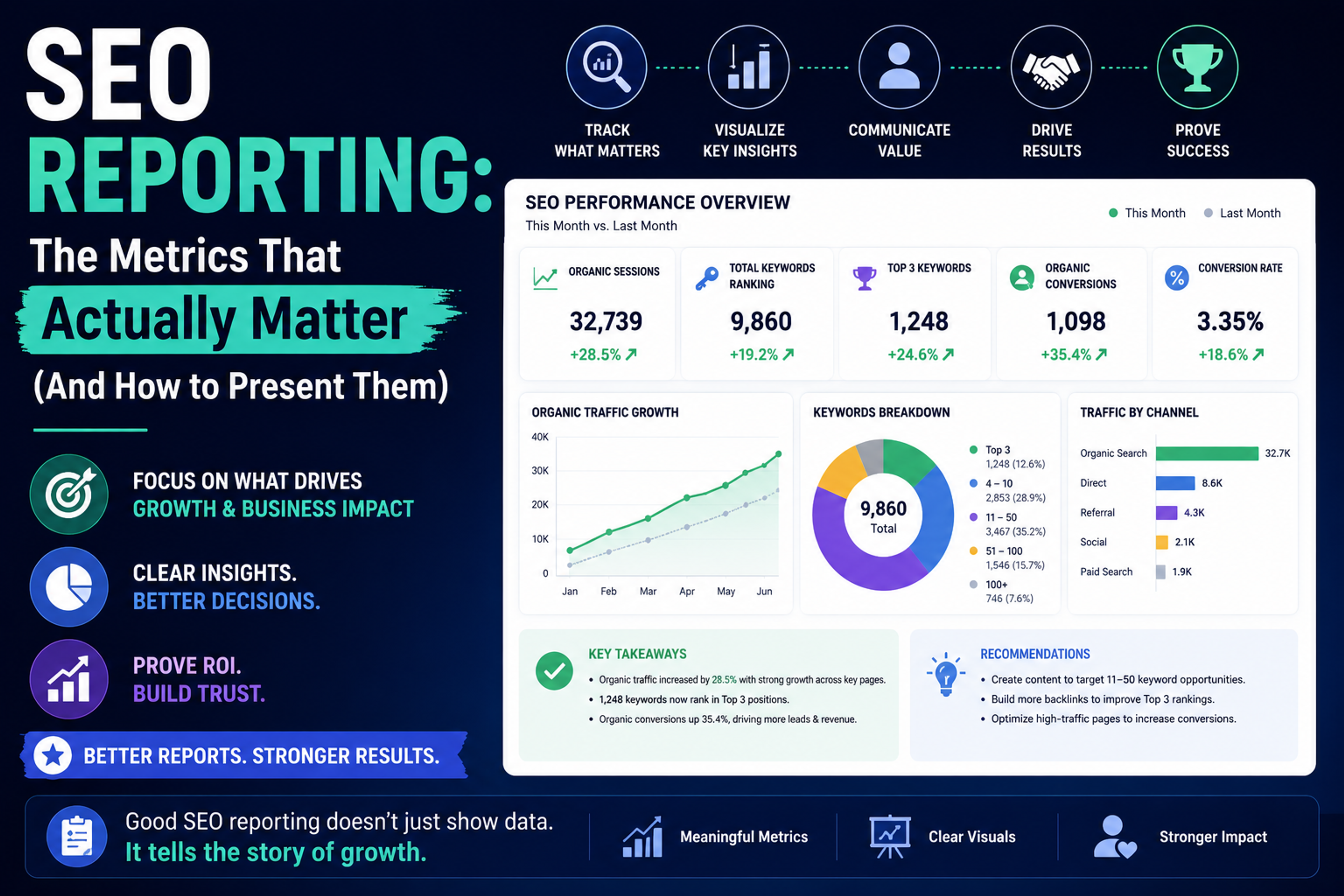
- Movement in the keyword set the campaign was designed to support
- Share of voice versus named competitors
If your agency is reporting "domain authority" without showing referring-domain growth or traffic movement, push back.
How much does a digital PR agency cost?
Honest answer: it varies more than any other SEO service, because so much depends on what you're paying for.
Rough US/UK market rates as of 2026, based on what we see when prospects come to us with quotes from other agencies:
- Retainer (small/mid-market): $4,000–$8,000/month. Usually 1–2 campaigns plus ongoing reactive pitching.
- Retainer (enterprise / competitive niches): $10,000–$25,000/month. Multiple campaigns, dedicated account team, faster turnaround on reactive work.
- Project (one-off campaign): $6,000–$20,000 per campaign, depending on data acquisition cost.
- Hourly: $150–$300/hour for senior strategists, less for execution.
Anyone quoting you under $3,000/month for "digital PR" is almost certainly selling you something else under the label — usually low-quality guest-post placements or untargeted press-release distribution. Both are bad for your link profile and can actively hurt rankings.
How to tell if a digital PR agency is actually any good
Six questions to ask on the sales call. The wrong answers are obvious once you know what to listen for.
- "Can you show me three campaigns from clients in our niche, with the actual links earned and the rankings movement that followed?" Vague case studies are a red flag.
- "Which journalists at [the publication you most want coverage in] have you placed clients with in the last 12 months?" Should be a specific name, not a general "we have relationships there".
- "What's your pitch-to-placement ratio?" Strong agencies sit around 1 in 8 to 1 in 12 for tier-1 publications. Anyone claiming 1 in 2 is either lying or pitching very weak targets.
- "How do you handle reactive pitching?" Listen for the response window — anything slower than 2 hours from breaking news is too slow.
- "How do you measure success beyond link counts?" They should mention referring domains, traffic value, branded search lift, and share of voice.
- "What's your stance on no-follow links from major publications?" A good answer acknowledges that Forbes and Bloomberg often no-follow links, but the brand authority signal is still worth it. A bad answer says "we only pursue do-follow links" — that filter eliminates most of the highest-value placements.
Common ways to waste your digital PR budget
We've audited campaigns from a lot of other agencies for clients switching over. The patterns repeat:
- Pitching the same stale data study to every journalist on a 4,000-person list. It burns relationships and gets you blocked.
- Paying for "press release distribution" services. PR Newswire, Business Wire and similar give you a syndicated link from a low-quality source. Google has effectively discounted these.
- Treating digital PR as separate from SEO strategy. If the campaigns aren't designed around topics that build authority for your money pages, you're earning links to your "about" page, which does almost nothing.
- Ignoring internal linking after coverage. When a link comes in to a blog post, you need to be passing that authority through to your service or product pages with strong internal links. Most teams don't, and 60% of the SEO value evaporates.
- No anchor text strategy. Brand-name anchors are safe but they don't help you rank for non-branded terms. A balanced anchor profile takes deliberate planning.
How earned media compounds (the part that surprises clients)
The first three months of digital PR usually look slow. You'll get a handful of placements, a few new referring domains, and a small uptick in branded search. The temptation is to pull the plug.
What we see happen between months 4 and 9, almost without exception, is a compounding effect:
- The links from months 1–3 finish getting crawled and re-indexed
- Rankings on the supported pages start to move
- Journalists who covered you the first time become much more responsive to your second pitch
- Your author entities (founder, head of marketing) start showing up in Google's Knowledge Graph
- AI Overviews and ChatGPT start surfacing you as a source
This is why we structure most digital PR engagements as 6-month minimums not because we want a longer contract, but because anything shorter is statistically unlikely to give you a representative result.
When digital PR is not the right move
We'll talk teams out of this regularly. Digital PR is a poor fit if:
- You're pre-product or pre-revenue and need leads this quarter. Performance marketing will move the needle faster.
- Your domain has a manual action or a major technical SEO problem. Fix that first, links into a broken site won't rank. Start with a technical SEO audit.
- You have nothing genuinely interesting to say. Data, opinion, internal expertise, you need at least one. "We're a great SaaS company" is not a story.
- Your category is so regulated (gambling, supplements, crypto) that mainstream publications won't cover you. Specialist link building is a better path.
Where digital PR fits inside a wider SEO programme
The mental model we use with clients: digital PR is the engine that drives the authority layer of an SEO programme. It pairs with two other layers.
- Foundation layer: Technical SEO, site architecture, crawlability. Without this, links don't compound.
- Content layer: Topical depth, internal linking, content design. This is what the links from digital PR actually point at.
- Authority layer: Digital PR, earned media, brand building. This is what makes the content layer rank.
Most agencies sell you one slice. The teams that win consistently invest in all three at once. If you want the long version of how we sequence this, we've written it up in our B2B SEO strategy guide.
Bottom line
If you're already doing the on-page and technical work and your rankings aren't where you want them, the missing layer is almost always authority — and digital PR is the cleanest way to build authority that compounds.
The right agency will be honest with you about timelines, transparent about which placements are designed for which outcome, and able to show ranking and traffic movement, not just a list of links.
If you want a second opinion on a digital PR proposal you've already received, or you're thinking about adding earned media to your existing SEO programme, the Traficxo link-building team is happy to walk through it with you. No deck, no pitch — just a look at whether the numbers make sense for your situation.
Sources and further reading
- Backlinko — Search Engine Ranking Factors Study (analysis of 11.8M Google search results on referring-domain correlation): https://backlinko.com/search-engine-ranking
- Ahrefs — Domain Rating and referring-domain correlation studies: https://ahrefs.com/blog/ahrefs-domain-rating/
- Google — Search Quality Rater Guidelines (E-E-A-T framework): https://services.google.com/fh/files/misc/hsw-sqrg.pdf
- Google Search Central — Qualify your outbound links to Google (no-follow as a hint, 2019): https://developers.google.com/search/blog/2019/09/evolving-nofollow-new-ways-to-identify
- SE Ranking — AI Overviews study (which domains get cited most often): https://seranking.com/blog/ai-overviews-research/
- BuzzStream — State of digital PR reports (link-reclamation benchmarks)
Explore Related Services
Enterprise Technical SEO
Drive sustainable, high intent organic traffic and dominate search rankings with our advanced search engine optimization frameworks.
Accelerate organic growthData Driven Paid Advertising
Lower your customer acquisition costs and maximize return on ad spend with highly targeted Google and Meta PPC campaigns.
Scale your ROAS