You've probably heard it a hundred times already. "Start with SEO, it's cheaper in the long run." Or from the other camp, "PPC is the only way to get leads fast." Both statements are partially true. But neither one gives you the full picture.
The real question isn't which channel is better. It's which one is right for your business, at this specific moment, with your current budget and goals.
I've spent years working with brands across industries, from bootstrapped startups to mid-size B2B companies, helping them decide where to put their money first. The answer is almost never the same for every business. But there is a clear, logical way to arrive at it.
This guide breaks down SEO vs PPC across every dimension that matters: cost, ROI, timeline, trust, and long-term sustainability. By the end, you'll know exactly where to start.
What Most Articles Get Wrong About This Debate?
Most content on this topic treats SEO and PPC like a binary choice. You either do one or the other. That framing is outdated and, frankly, misleading.
Here's what articles currently ranking in Google tend to miss:
- They don't account for your business stage (new site vs established brand)
- They skip the industry-specific data that changes everything
- They avoid the budget thresholds below which PPC becomes a money pit
- They don't explain how video content and multi-channel signals now influence both SEO rankings and paid ad quality scores
- They barely touch on AI's impact on how both channels will perform in 2026 and beyond
This guide covers all of that.
A Quick Refresher: What SEO and PPC Actually Are?
Before we compare them, let's be clear on what each channel does.
SEO (Search Engine Optimization) is the process of improving your website so it shows up organically in search engine results for keywords your customers are already searching. You earn your position through relevant content, quality backlinks, and solid technical structure. You don't pay per click. Instead, you invest time, content, and effort upfront, and the returns compound over months and years.
PPC (Pay-Per-Click Advertising) is paid visibility. You choose your keywords, write your ads, set a daily or monthly budget, and your business can appear at the top of Google within hours. The moment you stop spending, the traffic stops. PPC is renting your position in the search results. SEO is building one you own.
Both approaches have a legitimate role in a complete digital marketing strategy. The issue is sequence and allocation, not whether to use them.
The Numbers You Need to Know Before Deciding
Let's look at what the data actually says. These are real benchmarks that should shape your thinking.
Traffic and Visibility
Organic search is still the dominant traffic source online. According to recent research, 53% of all web traffic comes from organic search, while paid search drives approximately 27% of web traffic. That alone tells you something important about where the bulk of your potential visitors are coming from.
At the same time, 65% of all high-intent searches result in a paid ad click, which shows that PPC still captures a significant portion of ready-to-buy shoppers. Both channels are actively driving results. Neither is irrelevant.
Click-Through Rates
Position matters enormously in organic search. The first result on Google captures close to 28% of all clicks. By the time you get to position five, CTR drops below 10%. This is why SEO done well is such a powerful growth lever, but it only works if you actually get to the top.
Conversion Rates
Here's where it gets interesting, and where most decision-makers don't look closely enough.
Organic search has a 14.6% conversion rate, compared to traditional outbound methods at just 1.7%. When you look specifically at SEO vs PPC head-to-head across industries, SEO conversion rates average 2.4%, nearly double PPC's 1.3% average. Legal services top the SEO conversion rate chart at 7.5%.
That doesn't mean PPC converts poorly. It means SEO traffic often carries more trust, and users coming from organic results are further along in their decision-making.
ROI Over Time
This is the most cited, and most misunderstood, comparison in digital marketing.
SEO can deliver a minimum ROI of 500% over a 6 to 12 month period, with peak returns compounding in the second and third year of dedicated investment. Some estimates place the long-term value of SEO as high as $12.20 for every $1 spent.
PPC averages around $2 in return for every $1 invested, which is still a solid ROI, but nowhere near SEO at scale.
The catch? SEO takes time to build. PPC delivers results within hours. That time gap is what makes this decision complicated for businesses that need leads now.
Cost Per Lead
The cost difference is significant and not talked about enough.
According to industry data, the average cost per lead from organic search is approximately $14, compared to $44 for PPC, representing a 68% cost advantage for SEO. In high-competition sectors like legal services, PPC cost per lead can reach $131.63. That's not a typo.
This is exactly why working with an experienced SEO Company in India or a globally competitive agency can offer tremendous cost leverage, especially for businesses in expensive-to-advertise verticals.
The Core Tradeoff: Speed vs Sustainability
Think of it this way.
PPC is like turning on a tap. Water flows immediately. The moment you turn it off, the water stops. You're always dependent on the tap staying open, and the cost of water keeps going up.
SEO is like building a water well. It takes months of digging. But once it's built, water flows on its own, at almost no incremental cost, for years.
Most businesses need both in their growth mix. The question is where you start.
When PPC Should Come First
There are specific scenarios where starting with PPC Services before heavily investing in SEO makes clear strategic sense.
You've just launched and need revenue now. A brand-new domain has zero authority. SEO will take 6 to 12 months to produce meaningful results. PPC gives you traffic while organic rankings build in the background.
You're entering a market and testing offers. PPC lets you test different messaging, landing pages, and keyword sets at a fraction of the cost of committing months to an SEO content strategy. Once you see what converts, you build SEO content around those proven terms.
You have a time-sensitive promotion. A product launch, a seasonal campaign, a limited-time offer. SEO cannot respond in real time. PPC can be live within the hour.
Your competitors are dominating organic results. If the top 5 organic positions are locked up by brands with years of domain authority, the realistic path to organic traffic is long. PPC can still get you in front of the right audience while SEO slowly chips away at those rankings.
Your average sale value is high and your margins support the CPC. If you sell enterprise software at $50,000 ARR, paying $15 per click to get a demo request makes complete sense financially.
When SEO Should Come First
You're in a high-CPC industry. Legal, insurance, finance, and healthcare keywords can cost $15 to $50+ per click. If you're spending $5,000 per month on ads and your conversion rate is average, you may be generating just 10 to 15 leads. SEO in these industries, done well, produces leads at a fraction of that cost.
You're building a long-term brand. SEO services build credibility that PPC simply cannot replicate. Ranking at the top of organic results signals to users that you are a trusted authority in your space. That perception compounds over time.
You have content that can compound. If your business model benefits from thought leadership, comparison guides, tutorials, or informational content, SEO will continue paying off for years after the content is published.
You're a local business with a defined service area. Local SEO remains one of the most underutilized advantages in digital marketing. Research shows that 76% of people who perform a local search on their smartphone visit a physical location within 24 hours, and 28% of those searches end in a purchase. Local SEO, when paired with a digital marketing agency that understands your market, can deliver exceptional results with far less spend than PPC.
Industry-Specific Guidance: Where Each Channel Performs Best
Generic advice only gets you so far. Here's how the SEO vs PPC equation shifts by industry.
E-Commerce
E-commerce is one of the few verticals where PPC often earns its place in the budget from day one. PPC accounts for 23.6% of e-commerce traffic, and Google Shopping Ads generate conversion-ready traffic from users who are actively looking to buy.
That said, SEO matters enormously for e-commerce long-term. Category pages and product content that rank organically create a compounding traffic engine that PPC can never fully replace at scale. Smart e-commerce brands use both: PPC for product launches and peak seasons, SEO for evergreen category visibility.
B2B and Professional Services
In B2B, trust is everything. The sales cycle is long. Buyers do extensive research before they ever fill out a form. This environment strongly favors SEO. Thought leadership content that ranks at the top of organic results builds authority over months and converts at rates that PPC struggles to match.
For B2B, SEO conversion rates run 3x higher than PPC in manufacturing and distribution. In financial services and medical devices, companies that invest in SEO-driven content see dramatically higher conversion rates because buyers view organic rankings as a mark of expertise.
Local Service Businesses
Contractors, dentists, law firms, HVAC companies, restaurants. For these businesses, local SEO combined with Google Business Profile optimization is the most cost-effective channel available. PPC can supplement, especially for specific services or seasonal demand, but organic local rankings and reviews are the core growth engine.
SaaS and Tech Companies
Early-stage SaaS companies typically start heavy on PPC to validate product-market fit and messaging. As the product matures and the team knows what converts, SEO content strategy becomes the primary growth optimization lever, with PPC supporting bottom-of-funnel terms and retargeting.
What AI and Changing Search Behavior Mean for Both Channels?
This is the part most content skips entirely, and it's increasingly important.
Google's AI-generated search results, AI Overviews, and zero-click experiences are changing how both channels perform.
For SEO, this means that generic informational content is losing traffic to AI-generated answers. What still wins is original, authoritative, experience-backed content. The brands investing in real expertise, credible backlink profiles, and high-quality content are holding and growing their positions. For businesses working with a serious SEO Company in India or anywhere globally, this means depth and authority matter more than volume.
For PPC, AI has actually improved targeting precision. Smart bidding, automated creative optimization, and AI-driven audience segmentation are giving advertisers better performance. But CPC costs keep rising. According to recent data, 87% of industries saw their Google Ads CPC increase in 2025. That inflation trend is not reversing.
The practical implication: both channels are getting harder. The floor for entry is rising. And that makes integrated strategy, not single-channel betting, the only sustainable approach.
The Role of Video in Your SEO and PPC Strategy
Here's something almost no SEO vs PPC article addresses: the growing role of video services in both channels.
Video content on YouTube, which is the world's second-largest search engine, creates dual opportunity. A well-optimized YouTube video can rank both in YouTube search and in Google's organic results, giving you SEO value from video at relatively low incremental cost.
On the PPC side, YouTube video ads often deliver lower CPCs than search ads in competitive industries, and they build brand familiarity before a user ever searches for your product. That brand lift translates into higher Quality Scores and lower costs in your search campaigns.
If you're deciding where to invest and you have a visual product, a strong presenter, or a complex service that benefits from explanation, video should absolutely be part of your plan. Many brands working with a digital marketing agency are finding that a single well-produced video series can drive meaningful SEO traffic, reduce paid ad costs, and build a level of brand trust that text content alone cannot match.
A Practical Budget Framework: Where to Start
Budget is usually the deciding factor, not strategy preferences. Here's a realistic framework based on where you are.
Under $1,500 per month total
At this budget, PPC is usually a mistake. The average meaningful PPC presence in most competitive markets requires at least $2,000 to $5,000 per month in ad spend before agency fees. Splitting a small budget across both channels gets you mediocre results on each.
Recommended allocation: 80% to SEO (content, technical improvements, local listings), 20% to light retargeting on social if you have existing traffic.
$1,500 to $5,000 per month
You have enough to do one channel properly or two channels modestly.
Recommended allocation: 60% SEO, 40% PPC. Use PPC for your highest-intent, most specific keywords while SEO builds momentum. Avoid broad, competitive PPC keywords at this budget level.
$5,000 to $15,000 per month
This is where genuine two-channel strategy becomes viable.
Recommended allocation: 50/50, gradually shifting to 60% SEO over 12 to 18 months as organic rankings mature. Use PPC services for branded terms, competitor terms, and bottom-of-funnel searches. Use SEO for informational and top-of-funnel content.
$15,000+ per month
At this scale, you can and should run both channels aggressively. Most successful brands at this budget level start at a 70/30 PPC-heavy split, then shift toward 30/70 in favor of SEO as organic traction builds. The PPC data informs which organic content to prioritize, and the SEO authority improves overall Quality Scores.
How SEO and PPC Work Better Together Than Separately?
The smartest brands don't choose. They integrate.
Here's how the two channels make each other more effective.
PPC data informs SEO strategy. When you run PPC campaigns, you learn which keywords convert, not just which ones get clicks. That conversion data tells you exactly which organic content to prioritize. Without PPC data, you're often guessing.
SEO improves PPC Quality Scores. Google's Quality Score, which directly affects your cost per click, is partly determined by your landing page relevance and user experience. A well-optimized organic page that already ranks for a keyword will typically have a better Quality Score as a landing page than a standalone paid page built in isolation.
Combined SERP presence builds trust. When a user sees your brand in both the paid results and the organic results for the same search, brand recall increases significantly. Data suggests that appearing in both can deliver up to 2x higher brand recall compared to appearing in only one position.
Retargeting bridges the gap. Organic visitors who don't convert on their first visit can be retargeted through PPC display or social ads. This turns your SEO investment into a top-of-funnel audience that your PPC budget can follow up with at relatively low cost.
This kind of integrated approach is exactly what a full-service digital marketing agency should be building for you, where the SEO team and PPC team are sharing data and strategy rather than working in silos.
A Decision Matrix: Which Channel to Start With?
Use this framework to figure out where your investment should go first.
| Your Situation | Start With |
|---|---|
| Brand new domain, no traffic | PPC while building SEO |
| Established site, good content, weak backlinks | SEO investment |
| High-CPC industry (legal, insurance, finance) | SEO first, PPC for high-intent terms only |
| Product launch or seasonal campaign | PPC |
| Limited budget under $1,500/month | SEO |
| E-commerce, ready-to-buy audience | PPC + Shopping Ads, build SEO in parallel |
| Local service area business | Local SEO first |
| Need to validate messaging before long-term content | PPC for testing, then SEO |
| B2B with long sales cycles | SEO (thought leadership) + PPC retargeting |
| SaaS startup, pre-product-market fit | PPC for speed, then shift to SEO |
What to Watch Out For: Common Mistakes in Both Channels?
SEO Mistakes That Waste Your Budget
Chasing high-volume keywords before you have domain authority. A new site trying to rank for "digital marketing agency" is going up against domains with 10 years of backlinks. Start with lower competition, higher-intent terms and build from there.
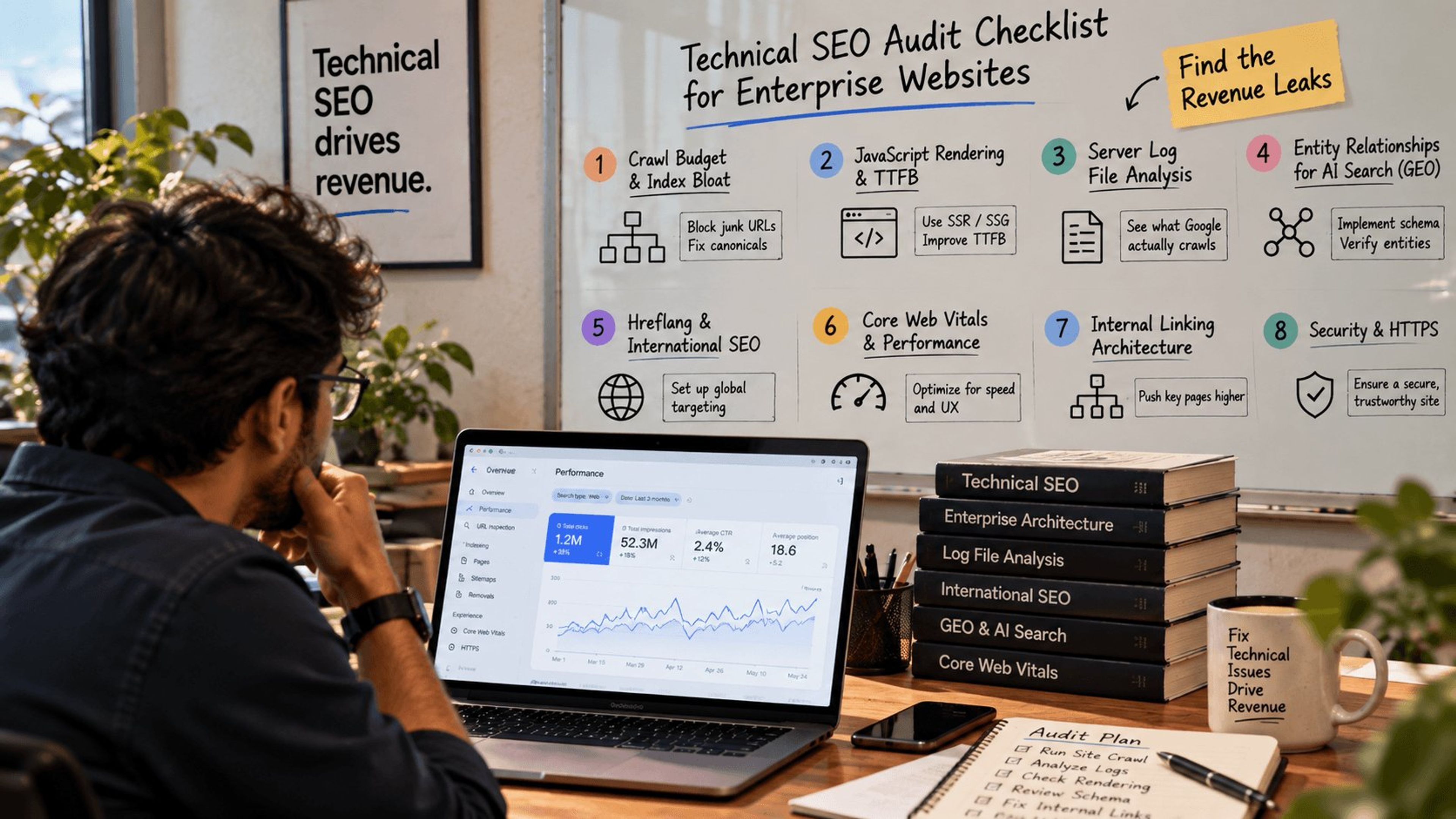
Ignoring technical SEO. Content without a technically sound website is like writing great ads for a landing page that won't load on mobile. Site speed, crawlability, and mobile optimization are table stakes for SEO services to work effectively.
Treating SEO as a one-time project. Algorithm updates, new competitors, and changing search behavior mean SEO requires ongoing attention. Quarterly audits and consistent content updates are non-negotiable.
Underinvesting in link building. According to industry data, content and keyword research delivers the highest SEO ROI at 748%, but without quality backlinks, even the best content struggles to rank.
PPC Mistakes That Drain Your Spend
Not having a dedicated landing page. Sending paid traffic to your homepage is one of the most expensive mistakes in digital marketing. Every PPC campaign needs a purpose-built page aligned with the exact search intent of the ad.
Ignoring negative keywords. Without a proper negative keyword list, your ads show for irrelevant searches and you pay for clicks that will never convert.
Setting and forgetting. PPC requires active management. Bids, ad copy, audience targeting, and Quality Scores all need regular review. A digital marketing agency managing your PPC should be in the account weekly, not monthly.
Scaling spend before optimizing conversion. More budget on a poorly converting landing page just generates more expensive failures. Fix conversion rates first, then scale.
The Role of a Digital Marketing Agency in Getting This Right
Whether you choose to start with SEO, PPC, or both, the execution gap is where most businesses lose money.
A skilled digital marketing agency brings two things that are hard to build internally: channel expertise and cross-channel perspective. They can look at your specific situation, your competitors, your budget, and your goals and build a plan that doesn't favor one channel out of preference or habit.
The best agencies, particularly those that offer SEO services, PPC services, growth optimization, and video services under one roof, can integrate your strategy in a way that makes each channel more effective. Your PPC team informs your SEO content roadmap. Your SEO rankings reduce your paid cost per click. Your video content drives both organic traffic and brand lift across paid channels.
If you're evaluating agencies, look for teams that can speak fluently about both channels and show you integrated results, not just isolated metrics from one service line.
Working with an SEO Company in India that also offers paid media, video production, and conversion optimization gives you the full capability stack at a cost structure that often outperforms US and UK agency rates for the same quality of output. That cost advantage, when reinvested into content and ads, accelerates results significantly.
A Note on Measuring Results from Both Channels
One reason people often conclude that PPC is better than SEO is that PPC results are easier to measure immediately. You can see exactly how many clicks you got, at what cost, and how many of them converted. That clarity feels reassuring.
SEO is messier to attribute in the short term, but the long-term signals are equally measurable. Track organic traffic growth month over month, ranking position changes for target keywords, organic conversion rate, and the cost per organically acquired lead. When you compare those numbers to your PPC cost per lead over the same time period, the case for SEO investment becomes very clear by month 12 and beyond.
The mistake is measuring SEO on a PPC timeline. Give it 6 months before drawing conclusions. Then compare the cost per lead and total traffic contribution side by side.
Final Verdict: Where Should You Invest First?
Here's the honest answer that most people don't want to hear: it depends, but not in the vague way that phrase usually implies.
If you have less than 6 months of runway or need leads in the next 30 days, start with PPC. It is the only channel that can deliver qualified traffic fast enough to matter.
If you have a 12-month horizon, a content-rich business, and you're in a high-CPC industry, start with SEO. The compound returns and dramatically lower cost per lead will outperform PPC spend by a wide margin within the first year.
If you have the budget to do both, do both, but do them differently. Let PPC drive conversions on your most important bottom-of-funnel keywords while SEO builds authority and long-term organic traffic across a broader keyword universe.
And regardless of which you start with, integrate the two. Use PPC data to inform SEO decisions. Use SEO rankings to improve PPC Quality Scores. Use retargeting to convert organic visitors who didn't take action on the first visit.
That integrated approach, executed by a team that understands both channels deeply, is what separates brands that grow sustainably from those that are constantly chasing traffic and wondering why their marketing budget never seems like enough.
Explore Services & Solutions
SEO Services Hub
Access our comprehensive vertical strategies, core processes, and expert resources.
View service hub Specialized SolutionEnterprise Technical SEO
Drive high-intent organic traffic with our advanced technical auditing and optimization frameworks.
Learn moreReady to grow your digital presence?
Connect with our execution specialists for a customized roadmap.